The Lamborghini Temerario: A New Benchmark in Extreme Performance
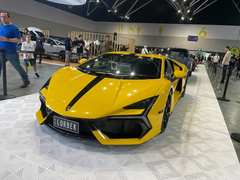
The automotive world has been set ablaze by the arrival of the Lamborghini Temerario. More than just another supercar, this revolutionary hybrid has officially shattered records, claiming the title of the quickest internal combustion engine (ICE) vehicle ever tested by MotorTrend. In a stunning display of raw power and technological prowess, the Temerario clocked an astonishing 9.58-second quarter-mile run at a blistering 148.5 mph, edging out the celebrated 2021 Ferrari SF90 Stradale Assetto Fiorano by a razor-thin 0.03 second.
While electric vehicles (EVs) like the Tesla Model S Plaid, the Lucid Air Sapphire, and various Porsche Taycan Turbo variants may have bested the Temerario in outright speed during testing, none can rival the visceral emotion and unmatched theater of the Lamborghini experience. This machine is a symphony of brutal engineering—a plug-in hybrid powertrain that marries the instantaneous low-end surge of three electric motors with the sustained, high-octane ferocity of a twin-turbo, flat-plane-crank 4.0-liter V-8. It delivers a driving thrill that few modern supercars can match.
The Theater of Speed: Precision and Power
Lamborghini has long mastered the art of supercar spectacle. For those seeking peak performance, the process begins by toggling steering-wheel-mounted knobs into the most aggressive settings: Corsa handling mode and Performance powertrain mode. A final press of the small checkered-flag button activates launch control. The driver floors both pedals, and the engine responds by spooling to 4,000 rpm before the car launches forward with controlled, savage fury.
The all-wheel-drive system, clad in Bridgestone Potenza Race tires, howls as it grips the asphalt. The V-8 howls higher, reaching its stratospheric 10,250-rpm redline before the eight-speed dual-clutch transmission rips off a brutal upshift into second gear. The tires chirp again, and the process repeats, a relentless cascade of violent power delivery that defines the supercar experience.
The Pace: From 0 to 60
To achieve a sub-10-second quarter mile, a car must be explosive off the line. The Lamborghini Temerario proves its mettle by launching from 0 to 60 mph in a mere 2.2 seconds. While this is exceptionally fast, it places the Temerario in third place among ICE vehicles in MotorTrend’s all-time records. It trails only the Ferrari SF90 Stradale Assetto Fiorano and the 2026 Porsche 911 Turbo S. However, the lead is only temporary. It takes just 4.6 seconds for the Temerario to hit 100 mph, at which point it has already overtaken the Ferrari and Porsche, showcasing its relentless acceleration curve.
The Trade-Off: Weight and Braking
The demands of a plug-in hybrid powertrain inevitably add weight, which can negatively impact braking distances. Standard carbon-ceramic brakes on the Temerario haul the car from 60 mph in 96 feet—a respectable figure, but hardly world-beating. The added heft of the hybrid system is the likely culprit. Even with the $84,100 Alleggerita package, which shaves 55 pounds, the car still weighs in at a hefty 4,185 pounds. However, when pushing the vehicle harder, the braking improves relative to its contemporaries. Stopping from 100 mph in 266 feet, the Temerario lands in a respectable 12th position on the comprehensive list of thousands of vehicles MotorTrend has tested.
The Handling Arena: Precision and Grip
The MotorTrend figure-eight course is the ultimate benchmark for testing a vehicle’s performance, combining lateral grip, braking, and acceleration into a single, demanding lap that reveals both objective data and subjective driving feel. Put to the test, the Temerario clings to corners with 1.14 g of grip while completing the lap in 22.3 seconds. This places it 0.7 seconds behind the fastest cars ever recorded on the course—a three-way tie between the 2026 Chevrolet Corvette ZR1, the 2025 Porsche 911 GT3 Touring, and the 2022 McLaren 765LT Spider.
Interestingly, the Temerario’s lap time matches that of the 2015 Porsche 918 Spyder, the 2025 Lucid Air Sapphire, and two lighter predecessors: the 2020 Huracán Evo AWD (3,645 pounds) and the 2021 Huracán STO (3,390 pounds).
A secondary metric MotorTrend uses is the average g-force experienced over the entire lap—a calculation that accounts for acceleration, braking, and cornering. The Temerario’s 1.05 g average demonstrates that for the duration of the lap, the driver is continuously subjected to forces—whether from acceleration, braking, or cornering—that exceed the force of gravity.
More Than Just Numbers: The Emotion of Driving
While the performance metrics are undeniably impressive, the most significant takeaway from the Lamborghini Temerario’s testing is that the brand has refused to sacrifice the emotional thrill of driving in the pursuit of numbers. In Corsa mode, the car remains sharp, composed, and focused, perfect for targeted, fast laps. Yet, in Sport mode, the Lamborghini unleashes a playful, controllable rotation that invites sliding. For those craving ultimate excitement, the three-stage Drift mode sets the stage for spectacular, controlled slides.
The Lamborghini Temerario is more than a car; it is a potent cocktail of caffeine, adrenaline, and pure testosterone. It redefines what a modern supercar can be—a machine that is both technologically advanced and viscerally thrilling.
Beyond the Test Track: Exploring Future Possibilities
Looking ahead, the Lamborghini Temerario represents a pivotal moment for the Italian marque. As the world transitions toward electrification, Lamborghini must navigate the challenging balance between preserving its iconic V-12 heritage and embracing next-generation hybrid and fully electric technology.
The strategy appears to be clear: leverage hybridization to bridge the gap between gasoline power and the electric future. The hybrid powertrain of the Temerario serves as a powerful proof of concept, demonstrating that electrification doesn’t mean sacrificing the high-revving drama and visceral engagement that defines the Lamborghini experience.
The Cost of Exclusivity: Understanding the Price Tag
As with any halo product from Lamborghini, performance comes at a steep price. The Lamborghini Temerario is priced in the upper echelon of the supercar market, positioning itself as a direct competitor to established titans like Ferrari and Porsche. This strategic pricing reflects the advanced engineering, exclusive materials, and limited production volume that define the brand.
For collectors and enthusiasts, the price is more than just a number; it is a barrier to entry that ensures exclusivity and exclusivity that drives value. The market for these extreme performance vehicles is characterized by demand that often outstrips supply, and Lamborghini leverages this exclusivity to maintain strong resale values and a premium brand image.
The Technical Specifications: A Deep Dive
To understand the Temerario’s performance, one must dissect the powertrain architecture. The core of the car is a V-8 engine, but not just any V-8. Lamborghini has opted for a twin-turbo, flat-plane-crank design. This configuration is typically reserved for high-revving race engines, offering a distinctive exhaust note and sharper throttle response compared to traditional cross-plane crankshafts.
The flat-plane design allows the engine to breathe more freely, reaching higher RPMs more quickly and producing a unique, higher-pitched sound signature that is instantly recognizable.
When combined with three electric motors, the powertrain delivers a staggering 907 horsepower. This massive power output is managed by an eight-speed dual-clutch transmission (DCT). The DCT is crucial for performance driving as it allows for instantaneous shifts under heavy load, minimizing power interruption during hard acceleration.
The Alleggerita package, while expensive, offers a tangible reduction in weight. This weight saving is critical in high-performance vehicles, where every pound counts. Reducing weight improves acceleration, braking, and handling, essentially making the car more agile and responsive. The fact that Lamborghini offers such a performance package underscores the brand’s commitment to pushing the limits of what is possible.
The Driving Dynamics: More Than Just Straight-Line Speed
While the quarter-mile times are impressive, the true test of a supercar is its ability to handle the corners and navigate challenging environments. The MotorTrend figure-eight test is designed to simulate real-world driving where cars are pushed to their absolute limits. The 1.14 g of grip demonstrates that the Temerario has incredible mechanical grip, likely aided by its advanced all-wheel-drive system and performance tires.
The 22.3-second lap time places the car in elite company. This performance is not just about power; it’s about balance, chassis tuning, and driver engagement. When a driver can maintain control through complex maneuvers while maintaining high speeds, it speaks volumes about the car’s engineering and design. The average g-force of 1.05 g means that for the entire lap, the driver is experiencing forces stronger than gravity. This is what drivers mean when they describe an extreme supercar—the sensation of being pressed into the seat and pinned against the side bolsters.
The Future of Lamborghini: Hybridization and Electrification

 The Lamborghini Temerario: A New Benchmark in Extreme Performance
The automotive world has been set ablaze by the arrival of the Lamborghini Temerario. More than just another supercar, this revolutionary hybrid has officially shattered records, claiming the title of the quickest internal combustion engine (ICE) vehicle ever tested by MotorTrend. In a stunning display of raw power and technological prowess, the Temerario clocked an astonishing 9.58-second quarter-mile run at a blistering 148.5 mph, edging out the celebrated 2021 Ferrari SF90 Stradale Assetto Fiorano by a razor-thin 0.03 second.
While electric vehicles (EVs) like the Tesla Model S Plaid, the Lucid Air Sapphire, and various Porsche Taycan Turbo variants may have bested the Temerario in outright speed during testing, none can rival the visceral emotion and unmatched theater of the Lamborghini experience. This machine is a symphony of brutal engineering—a plug-in hybrid powertrain that marries the instantaneous low-end surge of three electric motors with the sustained, high-octane ferocity of a twin-turbo, flat-plane-crank 4.0-liter V-8. It delivers a driving thrill that few modern supercars can match.
The Theater of Speed: Precision and Power
Lamborghini has long mastered the art of supercar spectacle. For those seeking peak performance, the process begins by toggling steering-wheel-mounted knobs into the most aggressive settings: Corsa handling mode and Performance powertrain mode. A final press of the small checkered-flag button activates launch control. The driver floors both pedals, and the engine responds by spooling to 4,000 rpm before the car launches forward with controlled, savage fury.
The all-wheel-drive system, clad in Bridgestone Potenza Race tires, howls as it grips the asphalt. The V-8 howls higher, reaching its stratospheric 10,250-rpm redline before the eight-speed dual-clutch transmission rips off a brutal upshift into second gear. The tires chirp again, and the process repeats, a relentless cascade of violent power delivery that defines the supercar experience.
The Pace: From 0 to 60
The Lamborghini Temerario: A New Benchmark in Extreme Performance
The automotive world has been set ablaze by the arrival of the Lamborghini Temerario. More than just another supercar, this revolutionary hybrid has officially shattered records, claiming the title of the quickest internal combustion engine (ICE) vehicle ever tested by MotorTrend. In a stunning display of raw power and technological prowess, the Temerario clocked an astonishing 9.58-second quarter-mile run at a blistering 148.5 mph, edging out the celebrated 2021 Ferrari SF90 Stradale Assetto Fiorano by a razor-thin 0.03 second.
While electric vehicles (EVs) like the Tesla Model S Plaid, the Lucid Air Sapphire, and various Porsche Taycan Turbo variants may have bested the Temerario in outright speed during testing, none can rival the visceral emotion and unmatched theater of the Lamborghini experience. This machine is a symphony of brutal engineering—a plug-in hybrid powertrain that marries the instantaneous low-end surge of three electric motors with the sustained, high-octane ferocity of a twin-turbo, flat-plane-crank 4.0-liter V-8. It delivers a driving thrill that few modern supercars can match.
The Theater of Speed: Precision and Power
Lamborghini has long mastered the art of supercar spectacle. For those seeking peak performance, the process begins by toggling steering-wheel-mounted knobs into the most aggressive settings: Corsa handling mode and Performance powertrain mode. A final press of the small checkered-flag button activates launch control. The driver floors both pedals, and the engine responds by spooling to 4,000 rpm before the car launches forward with controlled, savage fury.
The all-wheel-drive system, clad in Bridgestone Potenza Race tires, howls as it grips the asphalt. The V-8 howls higher, reaching its stratospheric 10,250-rpm redline before the eight-speed dual-clutch transmission rips off a brutal upshift into second gear. The tires chirp again, and the process repeats, a relentless cascade of violent power delivery that defines the supercar experience.
The Pace: From 0 to 60