Hybrid Supercars: Not Your Grandma’s Prius Anymore
The perception of hybrid vehicles shifted dramatically over the last decade. Once defined by the utilitarian efficiency of the first-generation Toyota Prius and Honda Insight, “hybrid” became synonymous with eco-focused commuting, often dismissed by performance enthusiasts as lacking soul. But today, electrification is infiltrating every corner of the automotive spectrum, from luxury sedans to hypercars. With the electric vehicle (EV) market facing growing pains and automakers hedging their bets, the percentage of electrified vehicles is expected to climb. For automotive purists, this doesn’t necessarily mean a future of compromised performance. It actually means more high-octane hybrid supercars—machines that prove power, passion, and electrification can coexist without sacrificing style or attitude.
Chevrolet Corvette ZR1X: The American Nürburgring Conqueror
Corvettes have a long-established reputation for punching well above their weight class, but the Chevrolet Corvette ZR1X takes that legacy to an entirely new dimension. Building upon the legendary performance of the ZR1, this electrified beast incorporates an enhanced version of the Corvette E-Ray’s hybrid system. Powered by a 5.5-liter twin-turbo V-8 with a flat-plane crank, the ZR1X generates a staggering 1,250 horsepower and 973 lb-ft of torque, propelling the all-wheel-drive machine from 0 to 60 mph in less than 1.7 seconds. In July 2025, it set a new Nürburgring lap time of 6:49.275, marking it as the fastest American production car on the legendary German circuit.
While the ZR1X’s sticker price of $207,305 makes it the most expensive production Corvette in history, it remains a performance bargain. The ability of this American icon to embarrass exotics costing several times its price tag underscores its value proposition.
Porsche 911 GTS T-Hybrid: The Legend Gets an Electric Kick
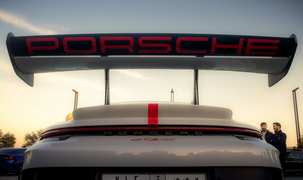
For years, Porsche aficionados feared the day the iconic 911 would be hybridized. However, with the introduction of the Porsche 911 GTS T-Hybrid, those concerns were largely dismissed. Unlike many hybrid models, the GTS T-Hybrid offers no all-electric driving range, and its compact 1.9-kWh battery pack adds minimal weight, leaving the driving dynamics virtually unchanged. The real game-changer is the “eTurbo.” This innovative system integrates an electric motor into the turbocharger’s housing, allowing it to spin the turbo independently of exhaust gas flow. This eliminates turbo lag, providing near-instant boost pressure. Excess energy captured by the eTurbo recharges the battery, which then assists the engine through the transmission-integrated motor during acceleration.
The technical sophistication might sound complex, but the results are undeniable. Beyond the performance and efficiency gains, the fact that you might not even realize this 911 is a hybrid without looking at the badge speaks volumes about the integrity of the driving experience.
Lamborghini Revuelto: The Hybrid V12 Masterpiece
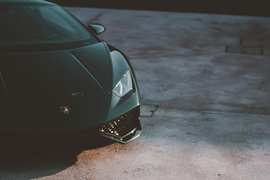
Lamborghini’s successor to the Aventador has successfully joined the 1,000-horsepower club without sacrificing its beloved naturally aspirated V-12 engine. The Lamborghini Revuelto achieves this feat through a robust plug-in hybrid system. Two electric motors drive the front wheels, while a third motor is integrated into the flagship’s eight-speed dual-clutch transmission. This powerful trio assists the 6.5-liter V-12, which revs to nearly 10,000 rpm, while also keeping the 3.8-kWh lithium-ion battery pack topped off.
Setting aside the Revuelto’s dramatic styling and blistering performance, it is significantly easier to live with than its predecessor. The Aventador’s automated single-clutch transmission was infamously unrefined during daily driving, but the Revuelto is a different beast entirely. While the new dual-clutch gearbox plays a crucial role, the hybrid system also contributes to the remarkably seamless power delivery. Add in the vastly improved ergonomics and signature Lamborghini flair, and you have a seriously compelling Italian hybrid that requires very few compromises—assuming your wallet is sufficiently robust.
Aston Martin Valkyrie: Track DNA for the Street
The Aston Martin Valkyrie might look like a prototype built for Le Mans, but this breathtaking halo car is a street-legal hypercar. It features a 6.5-liter naturally aspirated V-12 engine that produces 1,001 horsepower on its own and revs to a searing 11,000 rpm. This monstrous mill is supplemented by a KERS-style hybrid system that adds 141 hp and 207 lb-ft of torque, resulting in a total system output of 1,139 horsepower and 682 lb-ft. All that power is sent to the rear wheels in a car weighing less than 3,000 pounds.
The aerodynamic figures are equally staggering: the Valkyrie generates 2,425 pounds of downforce between 137 and 220 mph, which is nearly half a ton more than a Formula 1 car. It is an extreme machine by any measure, and it won’t surprise anyone to learn we were immediately smitten with it.
Mercedes-AMG S63 E Performance: Posh Power
We tend to associate the Mercedes S-Class with luxurious amenities and cutting-edge technology, but the story changes drastically when AMG gets involved. While its elegant exterior and opulent cabin create the expectation of “adequate” performance, the devastating thrust delivered by the Mercedes-AMG S63 E Performance when you drop the hammer is guaranteed to catch the uninitiated off guard.
Equipped with a 4.0-liter twin-turbo V-8 and a hybrid system that produces 201 hp and 236 lb-ft on its own, the S63 E Performance boasts staggering output figures of 791 hp and 1,025 lb-ft of torque. This prodigious power is sent to all four wheels, enabling this large luxury sedan to rival the Lamborghini Huracán LP 640-2 Tecnica in the sprint from 0 to 60 mph. Despite a curb weight of nearly 6,000 pounds, the big Benz maintains composure on winding roads without resorting to overly abusive suspension tuning.
Audi RS6 Avant: Electrified Wagon Warrior
The fourth-generation Audi RS6 Avant isn’t a hybrid in the traditional sense, but its mild hybrid 48-volt belt alternator starter system harvests and stores up to 12 kW of electrical energy. This allows the stop/start system to operate at speeds up to 14 mph and gives the RS6 the ability to coast for up to 40 seconds with the engine off at speeds between 35 and 100 mph when the driver lifts off the throttle. And frankly, we’ll take any opportunity available to celebrate a 600-horsepower track-tuned wagon.
For those craving more electrification, the next-generation RS6 Avant is expected to debut in 2027 with a full plug-in hybrid system, promising even greater performance and efficiency.
Mercedes-AMG One: The F1 Car for the Road
Although Mercedes-AMG’s ambitious attempt to build what is essentially a road-legal Formula 1 car was fraught with development issues, the Mercedes-AMG One eventually set a new benchmark for road-legal track performance that is unlikely to be surpassed for a long time. Its powertrain combines a 1.6-liter turbo V-6 derived from the F1 W06 Hybrid race car with four electric motors, two of which power the front wheels. Total system output reaches 1,049 horsepower. An 8.4-kWh lithium-ion battery pack provides up to 11 miles of all-electric range, while a seven-speed single-clutch automated manual transmission handles gear changes.
The use of a carbon monocoque and carbon-fiber bodywork keeps the One lightweight, while five-link suspension setups at the front and rear, paired with pushrod-activated Multimatic dampers, ensure that the car handles as well as it accelerates. The Mercedes-AMG One carried a price tag of approximately $2.5 million, with 275 examples produced in total. Despite the hefty MSRP, the automaker reportedly received interest from roughly four times the number of potential buyers.
Porsche 918 Spyder: The Hybrid Hypercar Pioneer
Much like the McLaren P1, the Porsche 918 Spyder represented a new era of hypercar performance when it debuted in 2013. Powered by a 4.6-liter naturally aspirated V-8 derived from the engine in Porsche’s RS Spyder LMP2 race car, the 918 Spyder received an additional boost from two electric motors mounted at the front and rear, giving it a total output of 887 hp and 944 lb-ft. A 6.8-kWh liquid-cooled lithium-ion battery offered about 12 miles of all-electric range, but much like the P1, the hybrid system’s primary mission was to enhance performance.
With power sent to all four wheels, the 918 hit 60 mph from rest in 2.4 seconds on its way to a 211-mph top speed, but it was far from a one-trick pony. In fact, the 918 Spyder achieved the top spot in our figure-eight testing in

 Hybrid Supercars: Not Your Grandma’s Prius Anymore
The perception of hybrid vehicles shifted dramatically over the last decade. Once defined by the utilitarian efficiency of the first-generation Toyota Prius and Honda Insight, “hybrid” became synonymous with eco-focused commuting, often dismissed by performance enthusiasts as lacking soul. But today, electrification is infiltrating every corner of the automotive spectrum, from luxury sedans to hypercars. With the electric vehicle (EV) market facing growing pains and automakers hedging their bets, the percentage of electrified vehicles is expected to climb. For automotive purists, this doesn’t necessarily mean a future of compromised performance. It actually means more high-octane hybrid supercars—machines that prove power, passion, and electrification can coexist without sacrificing style or attitude.
Chevrolet Corvette ZR1X: The American Nürburgring Conqueror
Corvettes have a long-established reputation for punching well above their weight class, but the Chevrolet Corvette ZR1X takes that legacy to an entirely new dimension. Building upon the legendary performance of the ZR1, this electrified beast incorporates an enhanced version of the Corvette E-Ray’s hybrid system. Powered by a 5.5-liter twin-turbo V-8 with a flat-plane crank, the ZR1X generates a staggering 1,250 horsepower and 973 lb-ft of torque, propelling the all-wheel-drive machine from 0 to 60 mph in less than 1.7 seconds. In July 2025, it set a new Nürburgring lap time of 6:49.275, marking it as the fastest American production car on the legendary German circuit.
While the ZR1X’s sticker price of $207,305 makes it the most expensive production Corvette in history, it remains a performance bargain. The ability of this American icon to embarrass exotics costing several times its price tag underscores its value proposition.
Hybrid Supercars: Not Your Grandma’s Prius Anymore
The perception of hybrid vehicles shifted dramatically over the last decade. Once defined by the utilitarian efficiency of the first-generation Toyota Prius and Honda Insight, “hybrid” became synonymous with eco-focused commuting, often dismissed by performance enthusiasts as lacking soul. But today, electrification is infiltrating every corner of the automotive spectrum, from luxury sedans to hypercars. With the electric vehicle (EV) market facing growing pains and automakers hedging their bets, the percentage of electrified vehicles is expected to climb. For automotive purists, this doesn’t necessarily mean a future of compromised performance. It actually means more high-octane hybrid supercars—machines that prove power, passion, and electrification can coexist without sacrificing style or attitude.
Chevrolet Corvette ZR1X: The American Nürburgring Conqueror
Corvettes have a long-established reputation for punching well above their weight class, but the Chevrolet Corvette ZR1X takes that legacy to an entirely new dimension. Building upon the legendary performance of the ZR1, this electrified beast incorporates an enhanced version of the Corvette E-Ray’s hybrid system. Powered by a 5.5-liter twin-turbo V-8 with a flat-plane crank, the ZR1X generates a staggering 1,250 horsepower and 973 lb-ft of torque, propelling the all-wheel-drive machine from 0 to 60 mph in less than 1.7 seconds. In July 2025, it set a new Nürburgring lap time of 6:49.275, marking it as the fastest American production car on the legendary German circuit.
While the ZR1X’s sticker price of $207,305 makes it the most expensive production Corvette in history, it remains a performance bargain. The ability of this American icon to embarrass exotics costing several times its price tag underscores its value proposition.