The Electrified Supercar Revolution: 2025’s Most Thrilling Hybrid Performance Machines
The word “hybrid” used to evoke images of sensible sedans and fuel-sipping crossovers—a nod to environmental consciousness at the expense of driving excitement. Yet, the automotive landscape has undergone a radical transformation. Today, electrification is the primary driver of performance innovation, giving rise to hybrid supercars that blend the visceral thrill of internal combustion with the intoxicating torque of electric power.
As the world grapples with evolving energy policies and the demand for cleaner transportation, performance car manufacturers have embraced hybrid technology not as a compromise, but as a strategic advantage. The results are nothing short of breathtaking, producing vehicles that rewrite the definition of speed and handling. These are not mere green machines; they are engineering masterpieces that combine staggering horsepower with cutting-edge technology, delivering performance that was once the exclusive domain of purebred race cars.
From the asphalt-shredding capability of the Chevrolet Corvette ZR1X to the groundbreaking innovation of the Porsche 911 GTS, hybrid technology has elevated the supercar to unprecedented levels. This list showcases the pinnacle of this electrified revolution, featuring hypercars and performance sedans that prove electrification is the new frontier of extreme automotive performance.
The Cutting Edge of Electrified Power
Chevrolet Corvette ZR1X
The Chevrolet Corvette has long been lauded for its ability to challenge exotics that cost multiple times more. However, the ZR1X takes this legacy to an entirely new dimension. This isn’t just a performance upgrade; it’s a full-blown hypercar designed to dominate the world’s most challenging racetracks.
At the heart of the ZR1X lies the ZR1’s 5.5-liter twin-turbo flat-plane crank V-8 engine, delivering the raw, mechanical symphony that Corvette enthusiasts crave. This powerhouse is paired with an enhanced version of the Corvette E-Ray’s hybrid system, creating a synergy of combustion and electrification that results in staggering output figures.
The ZR1X churns out a monumental 1,250 horsepower and 973 lb-ft of torque, capable of propelling the car from 0 to 60 mph in under 1.7 seconds. This level of acceleration places the ZR1X in the rarified air of hypercars like the Bugatti Chiron and Rimac Nevera. To further prove its mettle, the ZR1X achieved a lap time of 6:49.275 at the Nürburgring in July 2025, making it the fastest American production car on the iconic German racetrack.
Despite its astronomical performance capabilities, the ZR1X commands a starting price of $207,305, making it the most expensive production Corvette in history. Yet, considering its ability to outperform hypercars costing many times more, it represents a formidable performance bargain for those seeking extreme performance without a billion-dollar price tag.
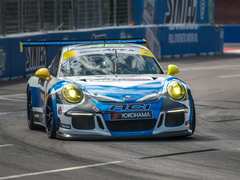
Porsche 911 GTS T-Hybrid
For years, Porsche aficionados harbored a deep-seated fear that electrification would dilute the purity of the 911 legend. However, the 992.2 911 GTS T-Hybrid has proven that innovation, when executed with Porsche’s precision engineering, can enhance rather than compromise the driving experience.
Unlike many hybrid models that prioritize all-electric range, the 911 GTS T-Hybrid offers no all-electric driving mode and features a compact 1.9-kWh battery pack. This approach minimizes the weight penalty, ensuring that the car feels every bit the traditional 911. What is truly revolutionary, however, is the eTurbo integrated into the turbocharger’s design. This electric motor can spin the turbo independently of exhaust gas flow, effectively eliminating turbo lag.
The stored energy recovered by the eTurbo is used to assist the engine through the gearbox motor, providing instant throttle response and exhilarating acceleration. The performance gains are undeniable, but the true triumph of the T-Hybrid system is its seamless integration. Without the badges and subtle aerodynamic tweaks, many drivers would never know this iconic sports car is electrified. The 911 GTS T-Hybrid proves that Porsche has mastered the art of hybrid integration, delivering a thrilling driving experience without sacrificing its legendary heritage.
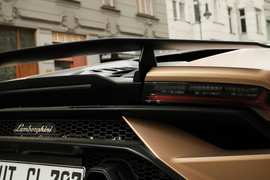
Lamborghini Revuelto
Lamborghini’s successor to the iconic Aventador has arrived, and it does so with a bang—and a V12. The Lamborghini Revuelto has joined the exclusive 1,000-horsepower club without ditching its naturally aspirated V12, thanks to a sophisticated plug-in hybrid system.
The Revuelto features two electric motors driving the front wheels and a third motor integrated into the eight-speed dual-clutch transmission. This setup works in harmony with the 6.5-liter V12, which revs to nearly 10,000 rpm. The hybrid system not only boosts performance but also helps keep the 3.8-kWh lithium-ion battery pack charged, ensuring the car is always ready for extreme performance.
Beyond its mind-bending speed and performance, the Revuelto represents a significant leap forward in usability. Lamborghini’s previous flagship, the Aventador, was notorious for its woefully unrefined automated single-clutch transmission during daily driving. The Revuelto, however, offers a vastly improved driving experience thanks to its new dual-clutch gearbox and the seamless power delivery of the hybrid system. Add a futuristic, aerospace-inspired interior with vastly improved ergonomics, and the Revuelto emerges as a compelling Italian hybrid that offers extreme performance with surprisingly comfortable everyday usability—provided your pockets are deep enough.
Aston Martin Valkyrie
Aston Martin’s Valkyrie is less a car and more a street-legal Formula 1 machine. Its jaw-dropping design evokes the paddock at Le Mans, but this is no track toy—it’s a hypercar engineered for the road. The Valkyrie features a 6.5-liter naturally aspirated V12 that produces 1,001 horsepower on its own and revs to a searing 11,000 rpm.
This monstrous mill is supplemented by a KERS-style hybrid setup that adds another 141 hp and 207 lb-ft of torque, for a total system output of 1,139 horsepower and 682 lb-ft of torque. All this power is sent to the rear wheels in a car with a curb weight of less than 3,000 pounds.
The aerodynamic figures are equally staggering. The Valkyrie generates 2,425 pounds of downforce at speeds between 137 and 220 mph, which is nearly half a ton more than a Formula 1 car. It is an extreme machine in every sense, and those fortunate enough to experience it report an unparalleled level of performance. The Valkyrie stands as a testament to the pursuit of pure speed, demonstrating that hybrid technology can be pushed to its absolute limits to achieve unprecedented performance.
Mercedes-AMG S63 E Performance
We typically associate the Mercedes S-Class with opulence, luxury, and cutting-edge technology. However, when the engineers at Mercedes-AMG get their hands on one, the S-Class transforms into an automotive beast. The S63 E Performance is a testament to AMG’s ability to inject brutal performance into even the most comfortable luxury sedan.
While its handsome exterior and opulent cabin suggest refined motoring, the devastating thrust of the S63 E Performance when you drop the hammer is guaranteed to catch the uninitiated off guard. The car is equipped with a 4.0-liter twin-turbo V-8 combined with a hybrid system that develops 201 hp and 236 lb-ft on its own. This synergy yields staggering output figures of 791 hp and 1,025 lb-ft of torque.
The prodigious grunt is sent to all four wheels, enabling this large luxury sedan to give the Lamborghini Huracán LP 640-2 Tecnica a run for its money in the sprint from 0 to 60 mph. Despite a curb weight of nearly 6,000 pounds, the AMG S63 E Performance maintains its composure during spirited driving, doing so without resorting to an overly stiff or harsh suspension tune. It’s a car that manages to blend everyday luxury with extreme performance, a feat that only the best hybrid engineering can achieve.
Audi RS6 Avant
The Audi RS6 Avant has long been a beloved icon in the automotive world, known for combining the utility of a station wagon with the heart of a race car. While it may not be a hybrid in the traditional sense, the fourth-generation RS6 Avant utilizes a mild hybrid 48-volt belt alternator starter system that significantly enhances its efficiency and performance characteristics.
This system can harvest and store up to 12 kW of electrical energy, enabling the stop/start system to operate at speeds of up to 14 mph. More importantly, it gives the RS6 the ability to coast for up to 40 seconds with the engine off at speeds between 35 mph and 100 mph if the driver lifts off the throttle. While this may seem like a subtle enhancement, the fact that we are celebrating a 600-horsepower track-tuned wagon that utilizes hybrid technology speaks volumes about the evolution of performance cars.
For those who crave even more electrification, the next-generation

 The Electrified Supercar Revolution: 2025’s Most Thrilling Hybrid Performance Machines
The word “hybrid” used to evoke images of sensible sedans and fuel-sipping crossovers—a nod to environmental consciousness at the expense of driving excitement. Yet, the automotive landscape has undergone a radical transformation. Today, electrification is the primary driver of performance innovation, giving rise to hybrid supercars that blend the visceral thrill of internal combustion with the intoxicating torque of electric power.
As the world grapples with evolving energy policies and the demand for cleaner transportation, performance car manufacturers have embraced hybrid technology not as a compromise, but as a strategic advantage. The results are nothing short of breathtaking, producing vehicles that rewrite the definition of speed and handling. These are not mere green machines; they are engineering masterpieces that combine staggering horsepower with cutting-edge technology, delivering performance that was once the exclusive domain of purebred race cars.
From the asphalt-shredding capability of the Chevrolet Corvette ZR1X to the groundbreaking innovation of the Porsche 911 GTS, hybrid technology has elevated the supercar to unprecedented levels. This list showcases the pinnacle of this electrified revolution, featuring hypercars and performance sedans that prove electrification is the new frontier of extreme automotive performance.
The Cutting Edge of Electrified Power
Chevrolet Corvette ZR1X
The Electrified Supercar Revolution: 2025’s Most Thrilling Hybrid Performance Machines
The word “hybrid” used to evoke images of sensible sedans and fuel-sipping crossovers—a nod to environmental consciousness at the expense of driving excitement. Yet, the automotive landscape has undergone a radical transformation. Today, electrification is the primary driver of performance innovation, giving rise to hybrid supercars that blend the visceral thrill of internal combustion with the intoxicating torque of electric power.
As the world grapples with evolving energy policies and the demand for cleaner transportation, performance car manufacturers have embraced hybrid technology not as a compromise, but as a strategic advantage. The results are nothing short of breathtaking, producing vehicles that rewrite the definition of speed and handling. These are not mere green machines; they are engineering masterpieces that combine staggering horsepower with cutting-edge technology, delivering performance that was once the exclusive domain of purebred race cars.
From the asphalt-shredding capability of the Chevrolet Corvette ZR1X to the groundbreaking innovation of the Porsche 911 GTS, hybrid technology has elevated the supercar to unprecedented levels. This list showcases the pinnacle of this electrified revolution, featuring hypercars and performance sedans that prove electrification is the new frontier of extreme automotive performance.
The Cutting Edge of Electrified Power
Chevrolet Corvette ZR1X