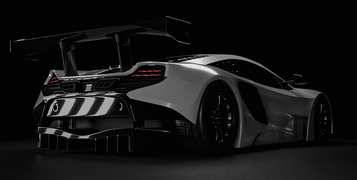
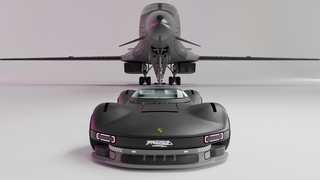
Czinger 21C VMax: The Hypercar of Tomorrow, Today
For years, the automotive world has anticipated the moment Czinger, the enigmatic Southern California hypercar manufacturer, would finally allow us behind the yoke. Our chance arrived with the inaugural Velocity Tour, a 500-mile rally through California’s wine country. While the allure of the track—where the $2.5 million Czinger 21C has already set an astonishing five production-car lap records in five days—is undeniable, the real question remains: What is this 3D-printed, seven-figure, 1,250-horsepower marvel like when you’re just, well, driving it?
This experience wasn’t just a drive; it was a pilgrimage to the forefront of automotive innovation. To call the 21C VMax “different” is a colossal understatement. It represents the pinnacle of engineering, where artificial intelligence and additive manufacturing converge to create a machine that blurs the line between automotive art and pure, unadulterated madness.
The Factory of the Future
My journey began at the headquarters of Divergent Technologies, the parent company of Czinger. To enter the facility, I needed my U.S. passport—a necessity because Divergent serves not only the automotive elite but also the Department of Defense. While the military hardware, including a particularly striking resemblance to a rocket, was kept under wraps, the tour provided a jaw-dropping glimpse into the future of manufacturing.
Lukas Czinger, the young CEO of both companies, guided me through the heart of the operation. Inside one of the massive 3D printers, lasers vaporized powdered aluminum, fusing it into complex mechanical components that mimicked organic structures, resembling avian bone. It was like watching evolution on fast-forward.
Czinger’s design philosophy is driven by what they call “Pareto optimality.” The software generates thousands of iterations to find the strongest, lightest shape, ensuring that even a single gram added or subtracted would degrade performance. Beyond the DOD, nine automotive OEMs—including Aston Martin, Bugatti, and McLaren—leverage Divergent’s additive technology. While these manufacturers remain tight-lipped, whispers of Ferrari’s F80 utilizing these 3D-printed control arms circulate through the industry.
Under the Carbon Fiber Canopy
Czinger produces two versions of the 21C. The high-downforce track monster, known as the 21C (named for the 21st century), and the wingless, long-tailed VMax. For the Velocity Tour, I found myself piloting a silver 21C VMax—a car where the “21C” branding is notably absent.
Piloting is the operative word. The cabin feels less like a car interior and more like a jet fighter’s cockpit, a sentiment Czinger readily acknowledges. Having experienced the confined space of an Extra 330LT stunt plane, I can confirm the similarity. With glass less than a foot from either side of your head, the visibility is unparalleled. However, the process of ingress and egress is nothing short of an acrobatic feat: Sit on the massive sill, pull your knees to your chest, pivot like a ballerina, and tuck your feet into the footwell. It’s a ridiculous dance that makes the cabin feel exclusive and otherworldly.
The reason for those enormous sills? Batteries. The 21C VMax is a hybrid hypercar, with each sill containing a 2.2-kWh battery pack, totaling 4.4 kWh. The car isn’t a plug-in hybrid; a motor powered by the mid-mounted V8 keeps the pack charged. This allows the front axle to receive up to 500 horsepower, delivered via individual motors at each wheel.
The heart of the beast is a Czinger-designed 2.9-liter twin-turbo V8. On California’s 91-octane premium fuel, it churns out 750 hp. Bump the octane to 100, and that figure climbs to 850 hp. Czinger also offers ethanol fueling, which promises even greater power, although the official figures remain under wraps.
Power is channeled to the rear wheels through an Xtrac single-clutch automated semi-sequential gearbox. While similar to the seven-speed Pagani Utopia transmission, Czinger adds an additive manufacturing twist: the gearbox case itself is 3D-printed, and small 48-volt electric motors ensure seamless shifts at low speeds, eliminating the notorious “drunken surging” typical of automated single-clutch transmissions. The twin-barrel actuators execute their duty flawlessly, making low-speed maneuvers—navigating gas stations, restaurants, and hotel parking lots—surprisingly civilized.
Track Trauma and Touring Terrors
For the first day of the tour, the VMax was chauffeured by pro driver Evan Jacobs, ensuring this $2.5 million machine didn’t become a casualty of my enthusiasm. Thankfully, Jacobs vouched for my abilities, allowing me to drive solo for the rest of the rally.
Our stop at Laguna Seca offered a taste of the track, though non-Czinger personnel are forbidden from driving the VMax even during a parade lap. However, I was invited to ride shotgun with Jacobs, and it was a visceral experience. While I’ve ridden in some of the most extreme machinery in the world, including an Aston Martin Valkyrie LMH, the Czinger VMax now sits at the top of the leaderboard. Even without pushing the car to its absolute limit, Jacobs delivered a staggering “6/10ths” hot lap that showcased the car’s potential. Without the massive rear-downforce wing, it was easy to understand how the 21C achieved the California Gold Rush—five lap records at five different tracks in five days. Czinger later returned to Laguna to reclaim the crown from the Koenigsegg Jesko Sadair’s Spear, clocking a jaw-dropping 1:22.30, a time faster than the fastest MotoAmerica Superbike lap ever recorded at the circuit.
Czinger claims a vehicle weight of around 3,600 pounds, a remarkable feat for a 1,250-hp hybrid. For comparison, the Ferrari SF90 Stradale Asseto Fiorano, a three-motor, twin-turbo V8 hybrid with only 986 hp, weighs 3,839 pounds. Even the new Lamborghini Temerario, another three-motor twin-turbo V8 powerhouse that makes less power than the Czinger, tips the scales at a hefty 4,185 pounds.
Given that the SF90 and Temerario are the two fastest gasoline-powered cars MotorTrend has ever tested—the Ferrari for 0–60 mph and the Lambo for the quarter-mile—Czinger’s weight claims are astonishing. If accurate, this California startup has managed to eclipse two Italian titans right out of the gate. And it’s even more impressive considering that while Southern California is renowned for its automotive culture, it lacks the deep-rooted supercar building heritage found in places like Modena.
The Ordinary in the Extraordinary
The Velocity Tour led us through tight, winding back roads—the kind of imperfect asphalt that hypercar dream trips are usually made of. We spent most of the time navigating traffic, following the group, and hanging with the camera car. While I felt slightly disappointed at the time, I realize now that this is what most owners will experience: a car that’s surprisingly civilized in everyday life.
Take everything out of your pockets; the seats are tight. Drink your water before you get in; there are no cupholders. And prepare for constant attention; males between 16 and 24 will be watching you, following you, and revving at you, likely shouting friendly obscenities.
Despite the VMax’s brutal performance, it rides exceptionally well. The engineers deserve applause for avoiding the stiff, unforgiving ride common in hypercars. Even the air conditioning works brilliantly. My only complaint about this everyday aspect of the VMax is the deafening cabin noise. I’m not talking about the unique V8 symphony, but rather a complete lack of sound deadening. While acceptable in a track-focused 21C, it’s an oversight in a road car. After hours behind the wheel, the constant drone becomes annoying. Weight is the enemy of performance, but how much does sound-deadening foam weigh? Twenty or twenty-five pounds? Google AI suggests between 10 and 50 pounds. Just 10 pounds of the stuff would make a massive difference.
Reaching the Limit
Finally, we hit some proper California canyon roads, and I was able to unleash the Czinger 21C VMax. But just as quickly as my right foot moved past the throttle’s kickdown point, my left foot was already on the brake pedal. I’ve driven electric vehicles with similar power, but they feel heavier. I’ve driven the Ferrari F80, which makes comparable power with less electric assistance and a larger gas engine. The Czinger is a different breed of acceleration animal.
For the first time in my career, I can honestly say: this car might be too much for public roads. I hate even typing that, but every time I accelerated, the next braking zone appeared instantly. It’s like warp drive, the car bending the road rather than rolling over it. I despise admitting it, but in this singular case, the Czinger VMax on 91-octane fuel is simply too much. It handles beautifully and has a prodigious amount of grip, but Southern California’s canyons are bigger and faster than the ones we navigated up

 Czinger 21C VMax: The Hypercar of Tomorrow, Today
For years, the automotive world has anticipated the moment Czinger, the enigmatic Southern California hypercar manufacturer, would finally allow us behind the yoke. Our chance arrived with the inaugural Velocity Tour, a 500-mile rally through California’s wine country. While the allure of the track—where the $2.5 million Czinger 21C has already set an astonishing five production-car lap records in five days—is undeniable, the real question remains: What is this 3D-printed, seven-figure, 1,250-horsepower marvel like when you’re just, well, driving it?
This experience wasn’t just a drive; it was a pilgrimage to the forefront of automotive innovation. To call the 21C VMax “different” is a colossal understatement. It represents the pinnacle of engineering, where artificial intelligence and additive manufacturing converge to create a machine that blurs the line between automotive art and pure, unadulterated madness.
The Factory of the Future
My journey began at the headquarters of Divergent Technologies, the parent company of Czinger. To enter the facility, I needed my U.S. passport—a necessity because Divergent serves not only the automotive elite but also the Department of Defense. While the military hardware, including a particularly striking resemblance to a rocket, was kept under wraps, the tour provided a jaw-dropping glimpse into the future of manufacturing.
Czinger 21C VMax: The Hypercar of Tomorrow, Today
For years, the automotive world has anticipated the moment Czinger, the enigmatic Southern California hypercar manufacturer, would finally allow us behind the yoke. Our chance arrived with the inaugural Velocity Tour, a 500-mile rally through California’s wine country. While the allure of the track—where the $2.5 million Czinger 21C has already set an astonishing five production-car lap records in five days—is undeniable, the real question remains: What is this 3D-printed, seven-figure, 1,250-horsepower marvel like when you’re just, well, driving it?
This experience wasn’t just a drive; it was a pilgrimage to the forefront of automotive innovation. To call the 21C VMax “different” is a colossal understatement. It represents the pinnacle of engineering, where artificial intelligence and additive manufacturing converge to create a machine that blurs the line between automotive art and pure, unadulterated madness.
The Factory of the Future
My journey began at the headquarters of Divergent Technologies, the parent company of Czinger. To enter the facility, I needed my U.S. passport—a necessity because Divergent serves not only the automotive elite but also the Department of Defense. While the military hardware, including a particularly striking resemblance to a rocket, was kept under wraps, the tour provided a jaw-dropping glimpse into the future of manufacturing.