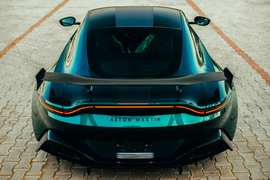
The Aston Martin Valhalla: Engineering Marvel or Modern Performance Madness? A Deep Dive
An almost predictable question is asked of someone who has just driven the nearly $1.1 million Aston Martin Valhalla. “So, how was it?!” But this classic tradition of reviewing supercars has taken an even more surreal turn in recent years. It’s so surreal that when friends and colleagues asked me this question the day after driving the 2026 Aston Martin Valhalla, I paused before answering with something like, “Exactly how you’d expect it to be.” I immediately realized that while I wasn’t trying to be dismissive, my response only made sense if you’ve had the privilege of experiencing the cutting edge of supercar performance yourself in the once inconceivable 2020s.
A Long Time in the Making
Seven years ago feels like a lifetime, no doubt exacerbated by the mind-bending isolation of the pandemic years, which made time feel non-linear for many. But that’s how long it has been since the 2019 Geneva Motor Show, where Aston Martin first unveiled what was then called the AM-RB 003.
That original name, which has since been changed to one derived from Norse mythology—Valhalla being the glorious afterlife realm where heroic dead warriors go to prepare for an epic final battle—reflected the automaker’s sponsorship ties with the Red Bull Racing Formula 1 team.
A lot has changed since then, and not just the name. Aston and Red Bull cut ties after the 2020 F1 season when the company’s then-new chairman, Lawrence Stroll, rebranded his Racing Point team as the famous British marque. More importantly, the automotive landscape was rapidly evolving, and so was Aston Martin.
There was a period of chaotic executive turnover, and the Valhalla’s hybrid powertrain—initially planned as an in-house-designed turbocharged 3.0-liter V-6 with performance to match rivals like the then-contemporary LaFerrari and Porsche 918 Spyder—evolved into a hybridized twin-turbo V-8 derived from the Mercedes-AMG GT Black Series. Compared to the GT Black Series, Aston equipped the Valhalla with larger turbos, a new inlet manifold, stronger pistons, and different camshafts to boost output by nearly 100 horsepower and 50 lb-ft of torque. The Valhalla is now the exclusive home of this engine.
When I sat in a mockup of the car on the Pebble Beach Concours lawn in August 2022, grinning at the Valhalla’s F1-inspired reclined and elevated-leg seating position, the projected specifications for the V-8 powertrain had jumped from a combined 937 hp and 738 lb-ft of torque to 1,012 hp and an undisclosed torque figure. Aston stated that none of this was finalized, but it was more than enough to prompt me to say, “Please, I want to drive it, whenever it’s ready.”
Worth the Wait…
Based on Aston Martin’s projections at the time about the Valhalla’s development cycle, I didn’t anticipate another three and a half years passing before I got the chance to drive it, but the production version’s hardware exceeds all those earlier expectations.
The flat-plane-crank, dry-sump, twin-turbo 4.0-liter V-8 produces 817 hp. Combined with a total of 248 hp from two Aston-designed radial-flux permanent-magnet motors on the front axle and a third motor integrated into the new eight-speed dual-clutch gearbox (an Aston first), the peak outputs reach 1,064 hp and 811 lb-ft.
Along with the motors, the hybrid system includes a 560-cell battery pack. Engineers say it is an off-the-shelf AMG battery, which is the only part of the hybrid system that Aston does not manufacture. The cells are fully immersed in dielectric oil for cooling. The simplified result, as chief engineer Andrew Kay explained, is, “We are able to push energy into the battery and cycle it out very quickly [meaning recharge and deployment of electrical energy]. This is very good for track use, in particular.”
Unlike the original Valhalla concept and its big brother, the Valkyrie, the production model is also a plug-in hybrid, capable of driving in EV-only mode for up to 8.7 miles with a top speed of 80 mph. For a more in-depth look at the technology, you can refer to our previous review.
…But Something Else Happened Along the Way
Uber-nerdy/semi-pedantic readers might take issue with the earlier use of the term “supercar,” but the company itself refers to the Valhalla as its first mid-engine supercar. Surely, though, it’s a hypercar?
Yes, except for the existence of the Valkyrie. Apparently, marketing descriptions and talking points about “first-ever” achievements are cornered into the use of “super” rather than “hyper” as the preferred prefix. Regardless, the Valkyrie is hardly a street car; its starting price of over $3 million and a production run of 285 units make the Valhalla’s MSRP of around a million dollars and its 999-unit inventory seem relatively pedestrian.
This is, of course, an absurd statement in the real world, but it speaks to something larger in the realm of modern high-performance automobiles, both in terms of price and capability.
Perhaps car enthusiasts among millennials, Gen Z, and Gen Alpha are long accustomed to yet another new million-dollar car appearing on their social media feeds on a seemingly monthly, if not weekly, basis. Each one boasts once-unheard-of power and torque figures, acceleration and lap times, and a list of tech specs, features, options, and bespoke luxury choices longer than the Nürburgring’s full endurance layout.
For those who are a bit older but certainly not members of AARP, however, it is easy to recall the shockwave delivered by something like the 627 hp, approximately $800,000 McLaren F1 back in 1993–94. Or even more so, the Bugatti Veyron a mere 20 years ago, the car generally considered to be the first million-dollar, 1,000 hp hypercar.
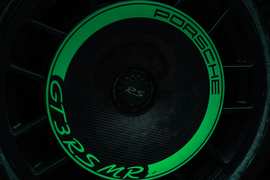
Nowadays? Since the day I sat in the Valhalla prototype at Pebble Beach, we have, as just one example, driven the Porsche 911 GT3 RS which has only about half the horsepower and overall “exotic” tech but brings so much race-derived aerodynamics and other hardware to the fight that it requires pro-racer skills to maximize on a racetrack. Its suitability as a road car, given its suspension setup, is debatable.
Stepping up, to varying degrees, in price, construction, and technological arsenal, MotorTrend has sampled the Ferrari F80, 849 Testarossa, Czinger 21C VMax, and even the more “run-of-the-mill but dizzyingly fast” Porsche 911 Turbo S in just the past few months, to name a few. Hell, you can buy a hybrid Corvette ZR1X with 1,250 hp that no one really saw coming back when the Valhalla was just a brilliant spark in Aston Martin’s and then-Red Bull F1 design genius partner (and now Aston F1 managing technical partner) Adrian Newey’s collective minds.
Just Drive It
Whether or not Teddy Roosevelt originated the proverb, with all this in mind, “comparison is the thief of joy” has never been a more appropriate jumping-off point in the world of hyperc—ahem—supercars. It’s also coincidentally appropriate here because we know the odds of ever organizing a proper comparison test among the vehicles listed above, perhaps other than the ZR1X, are zero, mainly due to Maranello’s long-standing aversion to supplying publications like ours with cars for head-to-head showdowns. (Shame on you, Ferrari.)
Regardless, given how high the dynamic limits are, it is a far more satisfying endeavor to drive something like the Valhalla on its own merits and for whatever experience it provides.
Make no mistake; the overall experience matters in a car like this. For quite some time, it hasn’t been good enough to be pleasant and thrilling on the road but perform like understeering garbage on the racetrack, or be mesmerizing on the track but deliver a chiropractor’s billable-hours wet dream on the road. We already knew, mostly, that this Aston Martin was a winner on all fronts after MotorTrend’s Angus MacKenzie sampled a “prototype” that was pretty much the finished article, save for some transmission calibration, a few months back.
On the Road
Unlike Angus, who only drove it on the Silverstone Circuit’s short Stowe layout in the U.K., Aston Martin provided us with a 50-minute road loop to start. You might naturally look at the Valhalla’s Le Mans-style Hypercar appearance and low, wide stance and expect a compromised daily driver, but that’s not the case at all. At least, aside from the complete lack of luggage space. There are some small cubbies in the door cards, but no frunk because the space is taken up by three high-temperature radiators, the electric motors, and a racing-style, pushrod-actuated, horizontally mounted, inboard suspension layout.
Aston executed the latter solution in part because of the F1-style driving position;

 The Aston Martin Valhalla: Engineering Marvel or Modern Performance Madness? A Deep Dive
An almost predictable question is asked of someone who has just driven the nearly $1.1 million Aston Martin Valhalla. “So, how was it?!” But this classic tradition of reviewing supercars has taken an even more surreal turn in recent years. It’s so surreal that when friends and colleagues asked me this question the day after driving the 2026 Aston Martin Valhalla, I paused before answering with something like, “Exactly how you’d expect it to be.” I immediately realized that while I wasn’t trying to be dismissive, my response only made sense if you’ve had the privilege of experiencing the cutting edge of supercar performance yourself in the once inconceivable 2020s.
A Long Time in the Making
Seven years ago feels like a lifetime, no doubt exacerbated by the mind-bending isolation of the pandemic years, which made time feel non-linear for many. But that’s how long it has been since the 2019 Geneva Motor Show, where Aston Martin first unveiled what was then called the AM-RB 003.
That original name, which has since been changed to one derived from Norse mythology—Valhalla being the glorious afterlife realm where heroic dead warriors go to prepare for an epic final battle—reflected the automaker’s sponsorship ties with the Red Bull Racing Formula 1 team.
A lot has changed since then, and not just the name. Aston and Red Bull cut ties after the 2020 F1 season when the company’s then-new chairman, Lawrence Stroll, rebranded his Racing Point team as the famous British marque. More importantly, the automotive landscape was rapidly evolving, and so was Aston Martin.
The Aston Martin Valhalla: Engineering Marvel or Modern Performance Madness? A Deep Dive
An almost predictable question is asked of someone who has just driven the nearly $1.1 million Aston Martin Valhalla. “So, how was it?!” But this classic tradition of reviewing supercars has taken an even more surreal turn in recent years. It’s so surreal that when friends and colleagues asked me this question the day after driving the 2026 Aston Martin Valhalla, I paused before answering with something like, “Exactly how you’d expect it to be.” I immediately realized that while I wasn’t trying to be dismissive, my response only made sense if you’ve had the privilege of experiencing the cutting edge of supercar performance yourself in the once inconceivable 2020s.
A Long Time in the Making
Seven years ago feels like a lifetime, no doubt exacerbated by the mind-bending isolation of the pandemic years, which made time feel non-linear for many. But that’s how long it has been since the 2019 Geneva Motor Show, where Aston Martin first unveiled what was then called the AM-RB 003.
That original name, which has since been changed to one derived from Norse mythology—Valhalla being the glorious afterlife realm where heroic dead warriors go to prepare for an epic final battle—reflected the automaker’s sponsorship ties with the Red Bull Racing Formula 1 team.
A lot has changed since then, and not just the name. Aston and Red Bull cut ties after the 2020 F1 season when the company’s then-new chairman, Lawrence Stroll, rebranded his Racing Point team as the famous British marque. More importantly, the automotive landscape was rapidly evolving, and so was Aston Martin.