
The Apex of Automotive Velocity: A Deep Dive into the World’s Fastest Production Cars
As an industry veteran with a decade immersed in the exhilarating world of automotive engineering and performance, I’ve witnessed firsthand the relentless pursuit of speed. It’s a captivating dance between cutting-edge technology, audacious design, and the unyielding human desire to push boundaries. The landscape of fastest production cars is a constantly evolving arena, where manufacturers vie for supremacy, not just in raw horsepower, but in aerodynamic finesse, sophisticated powertrains, and the sheer ability to defy the limits of physics. In 2025, this quest for velocity has reached unprecedented heights, with a new generation of hypercars and supercars redefining what’s possible on asphalt.
The conversation around top speed hypercars is often dominated by a few iconic names, but the reality is far more diverse and exciting. We’re seeing innovations across both internal combustion engines and electrification, each offering a unique path to exhilarating performance. Beyond the headline-grabbing top speeds, the journey to achieving these figures is a testament to intricate engineering, from bespoke chassis designs to advanced active aerodynamics and the relentless optimization of power delivery.
Koenigsegg Jesko Absolut: The Unyielding Pursuit of Theoretical Supremacy
Leading the charge, or at least theorizing it with unbridled confidence, is the Koenigsegg Jesko Absolut. This isn’t merely a more potent version of an already groundbreaking machine; it’s a meticulously engineered projectile designed with a singular focus: to achieve velocities beyond imagination. The Swedish marque has always been synonymous with pushing the envelope, and the Absolut represents the zenith of that philosophy. Its heart is a twin-turbocharged 5.0-liter V8 engine, a marvel of engineering that unleashes a staggering 1,600 horsepower and 1,500 Newton-meters of torque when fueled by E85. Crucially, this immense power is harnessed by a chassis weighing a mere 1,390 kilograms, a testament to advanced lightweight construction techniques and the extensive use of carbon fiber.
While its theoretical top speed hovers around a mind-bending 310 mph (499 km/h), the Absolut has yet to be unleashed for an official, verifiable top-speed run in the real world. However, its pedigree is undeniable. The car has already etched its name in the record books, most notably by achieving the current world record for the fastest 0-400-0 km/h (0-249 mph and back to zero) sprint, a monumental feat accomplished in a mere 27.83 seconds. This record alone speaks volumes about its aerodynamic efficiency, braking prowess, and the seamless integration of its powertrain and chassis dynamics, suggesting that its ultimate velocity potential is very much within reach. For those seeking the ultimate in hypercar performance and a machine that embodies the bleeding edge of automotive technology, the Jesko Absolut remains a compelling, albeit aspirational, prospect.
Yangwang U9 Xtreme: Electrifying the Record Books
The automotive landscape is undergoing a seismic shift, and in September 2025, a monumental moment in the history of electric vehicles unfolded. The Yangwang U9 Xtreme shattered expectations, setting the official record for the world’s fastest production car with a verified top speed of 308 mph (496 km/h) on a closed runway in Germany. This achievement marks a significant turning point, demonstrating that electrification is not just a viable alternative but a potent force capable of dominating the fastest electric hypercars segment.
The U9 Xtreme is a technological tour de force, powered by an array of four electric motors that collectively generate a colossal 3,000 horsepower. This electrifying performance is supported by an extremely robust 1,200-volt electrical system, a stark contrast to the 400-volt setups common in most contemporary EVs. This advanced architecture allows for unprecedented power delivery and thermal management, essential for sustaining such extreme speeds. Production of the U9 Xtreme will be strictly limited to just 30 units, with an expected starting price well north of $200,000, positioning it as an exclusive and highly sought-after collector’s item for those who value groundbreaking EV technology and unparalleled acceleration. The arrival of the Yangwang U9 Xtreme signifies a new era for electric car speed records, challenging long-held assumptions and setting a new benchmark for what’s achievable with electric propulsion.
SSC Tuatara: A Tale of Triumph and Revision in the Pursuit of Speed
From the heartland of American automotive innovation, the SSC Tuatara emerges as a formidable contender in the fastest American cars discourse. Its name, often pronounced “Too-ah-ta-ra,” belies the raw power it commands. At its core lies a twin-turbocharged V8 engine, a testament to American engineering prowess, capable of producing up to 1,750 horsepower when running on ethanol. This substantial output places it firmly in the elite echelons of performance vehicles.
However, the Tuatara’s journey to recognition has been marked by both significant achievement and a degree of controversy. In October 2020, SSC initially claimed a record-shattering 331 mph (533 km/h), which would have instantly crowned it the world’s fastest car. Yet, this claim was later retracted due to admitted GPS errors that had inaccurately depicted the vehicle’s speed. This incident underscored the critical importance of meticulous data acquisition and verification in the quest for official speed records. Subsequent, more rigorous testing in early 2022 saw the Tuatara achieve a verified top speed of 295 mph (475 km/h). While this figure fell short of the initial, unverified claim, it is by no means a detraction from the car’s incredible capabilities. It remains a remarkably fast machine, a testament to SSC’s dedication to performance, and a significant player in the world’s fastest cars conversation, even with its revised benchmark.
Bugatti Tourbillon: The Hybrid Evolution of a Legend
For those who grew up in the 2000s, the mere mention of “Bugatti” likely conjures vivid memories of the Veyron, a car that redefined the supercar landscape and famously raced fighter jets on television screens. That indomitable spirit of extreme performance and luxury lives on, most recently embodied by the new Bugatti Tourbillon. This latest offering from the French marque is not merely an evolution; it’s a sophisticated reimagining of what a hypercar can be in the modern era.
The Tourbillon is propelled by an advanced 1,800-horsepower V16 hybrid engine, a powertrain that promises not only breathtaking velocity but also a more refined and potent driving experience. This hybrid marvel is capable of launching the car from 0 to 60 mph in under two seconds, a figure that continues to astound, even in today’s hyper-accelerating world. With a price tag of approximately £3.2 million, the Tourbillon is undeniably a luxury missile, combining bespoke craftsmanship with cutting-edge performance. Bugatti’s history of extracting extreme speeds from its vehicles, including achieving over 300 mph with the previous Chiron, suggests that an even faster variant of the Tourbillon may well emerge in the coming years, further solidifying Bugatti’s legacy in the luxury hypercar segment.

Hennessey Venom F5: American Muscle Redefined for Extreme Velocity
The United States is increasingly making its mark on the global stage of ultra-high-performance vehicles, and the Hennessey Venom F5 stands as a powerful testament to this resurgence. This all-American supercar is engineered with a singular purpose: to conquer the realm of extreme speed. At its heart beats a monstrous 6.6-liter twin-turbocharged V8 engine, a powerhouse that churns out an astonishing 1,817 horsepower and 1,617 Newton-meters of torque.
This formidable power plant enables the Venom F5 to catapult from 0 to 60 mph in a mere 2.6 seconds, a figure that places it among the quickest accelerating cars available. Its stated top speed of 272 mph (438 km/h) is impressive, but it represents only a waypoint for Hennessey. The company’s ambitions extend far beyond this current benchmark, with a clear target of exceeding 300 mph in future iterations. This relentless pursuit of higher speeds, coupled with its aggressive styling and bespoke engineering, positions the Venom F5 as a significant contender in the performance car market, particularly for enthusiasts seeking raw, unadulterated American power.
Bugatti Mistral: The Ultimate Open-Top Speed Machine
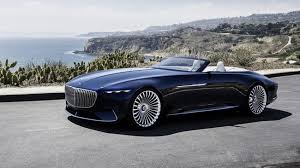
Bugatti has once again redefined the concept of a convertible supercar with the introduction of the Mistral. This breathtaking machine claims the title of the fastest convertible car in the world, boasting an astonishing top speed of 270 mph (435 km/h). Beyond its blistering velocity, the Mistral carries a significant historical weight as it marks the final chapter for Bugatti’s iconic 8.0-liter quad-turbocharged W16 engine. This legendary powerplant, which has defined Bugatti’s performance identity for years, delivers a formidable 1,600 horsepower and 1,600 Newton-meters of torque.
Power is meticulously managed and distributed to all four wheels through a seven-speed automatic transmission, ensuring a seamless and potent delivery of performance. Experiencing 270 mph with the wind in your hair is an experience almost beyond comprehension, a symphony of engineering and raw power. While the ultimate test drive for this particular model might have encountered inclement weather, the Mistral’s inherent capabilities are undeniable. It represents the pinnacle of open-top automotive engineering, blending unparalleled speed with the exclusivity and artistry that only Bugatti can deliver, making it a standout in the fastest convertible cars category.
Rimac Nevera R: Electrifying the Hypercar Frontier
The Rimac Nevera has already established itself as a formidable force in the electric hypercar segment, but the Croatian firm has elevated its creation even further with the unveiling of the Nevera R. This enhanced iteration represents a significant leap in performance, solidifying Rimac’s position at the forefront of electric hypercar innovation. The power output from its quartet of electric motors has been boosted from an already impressive 1,914 horsepower to a staggering 2,107 horsepower. This surge in power translates directly into a higher top speed, climbing from the original 256 mph to an impressive 267 mph (430 km/h).
Complementing these headline figures is an acceleration capability that defies logic: 0 to 60 mph in a blistering 1.7 seconds. When comparing the standard Nevera against the track-focused McMurtry Spierling in a drag race scenario, the Nevera was narrowly edged out by the single-seater race car. However, a rematch against the significantly more potent Nevera R could undoubtedly yield a dramatically different outcome, showcasing the rapid advancements in electric performance technology. The Nevera R stands as a beacon for future of electric vehicles, demonstrating that the quest for extreme speed is well within the grasp of electric powertrains.
Aspark Owl SP600: A Japanese EV Surprise on the Speed Frontier
For many, the name Aspark may not be immediately familiar, but this small-volume Japanese hypercar manufacturer has made a significant entrance into the ultra-high-performance EV market with its Owl. This sleek electric vehicle is equipped with four electric motors, generating a remarkable 1,953 horsepower. Its acceleration is equally astonishing, achieving 0 to 60 mph in just 1.7 seconds, before continuing its relentless surge to a top speed of 256 mph (413 km/h).
While the road-legal Owl is an impressive machine, Aspark has also developed a faster, track-only variant known as the Owl SP600. This specialized version is capable of reaching an even more extreme velocity of 272 mph (447 km/h). Its existence highlights the ongoing development and refinement of EV technology for pure performance applications. The Aspark Owl, in both its forms, demonstrates the growing capability and ambition of smaller manufacturers in challenging the established giants in the performance electric cars arena, proving that innovation can come from unexpected corners.
McLaren Speedtail: Aerodynamic Elegance at Unprecedented Speeds
McLaren, a brand synonymous with motorsport heritage and groundbreaking automotive design, may not have explicitly designed the Speedtail with the sole intention of chasing outright world records. However, with a formidable top speed of 250 mph (402 km/h), it has earned the distinction of being the fastest road car the marque has ever produced. This impressive figure even surpasses the projected top speed of McLaren’s new flagship, the W1, which is anticipated to reach 237 mph.
The Speedtail’s aerodynamic design is a masterclass in automotive sculpture, prioritizing minimal drag for maximum velocity. Its incredibly sleek bodywork, devoid of the drag-inducing wings found on many supercars, gives it a futuristic, almost cyberpunk aesthetic, as if ripped from the pages of science fiction. This focus on aerodynamic efficiency is a critical component in achieving such high speeds, allowing the car to slice through the air with remarkable ease. The unique three-seat configuration, a nod to the legendary McLaren F1, adds another layer of exclusivity and practicality, enabling occupants to experience extreme velocity in a shared, intimate setting. The Speedtail represents McLaren’s dedication to pushing the boundaries of road-legal performance through intelligent design and engineering.
Koenigsegg Regera: A Unique Approach to Hybrid Powertrain Integration
Matching the McLaren Speedtail’s remarkable 250 mph (402 km/h) top speed is another exceptional offering from the Swedish manufacturer, the Koenigsegg Regera. This car represents a departure from conventional powertrain configurations, showcasing Koenigsegg’s penchant for innovation. The Regera combines a twin-turbocharged V8 engine with an electric motor, culminating in a combined output of 1,500 horsepower.
What truly sets the Regera apart, however, is its revolutionary direct-drive transmission. Unlike any other vehicle on this list, the Regera is capable of accelerating from 0 to 250 mph using a single gear. This seemingly unconventional approach eliminates the need for gear changes, allowing for an incredibly smooth and uninterrupted power delivery. Whether cruising at low speeds or aiming for its top velocity on a closed course, the driver remains in the same gear. This “bonkers” yet brilliant engineering solution underscores Koenigsegg’s commitment to exploring unconventional paths to ultimate performance and creating truly unique automotive experiences in the hybrid supercar domain.
Aston Martin Valkyrie: A Le Mans Racer for the Streets
The Aston Martin Valkyrie, at first glance, might appear to be a full-blown Le Mans prototype rather than a road-legal automobile. Its aggressive, F1-inspired silhouette and extreme aerodynamic sculpting suggest a machine built solely for the racetrack. However, this perception is a testament to its remarkable engineering, as the Valkyrie is indeed designed to be driven on public roads.
Nestled behind the driver is a colossal 6.5-liter hybrid V12 engine, producing an awe-inspiring 1,160 horsepower. This powerhouse propels the Valkyrie from 0 to 60 mph in a mere 2.5 seconds. Such breathtaking acceleration is not entirely surprising when one considers the car’s astonishingly low weight of just over one metric ton. This extreme power-to-weight ratio is a critical factor in its supercar performance, blending the thrill of track-day prowess with the legality of road use. The Valkyrie exemplifies a rare breed of vehicle that successfully bridges the gap between elite motorsport and the discerning road-going enthusiast, offering a truly visceral driving experience.
Beyond the Top Speed Charts: Everyday Supercars and Performance Sedans
While the hypercar elite capture the imagination with their stratospheric speeds, the world of high-performance automobiles extends to cars that offer exhilarating performance with a greater degree of practicality and accessibility. These vehicles demonstrate that exhilarating speed and engaging driving dynamics are not solely the domain of multi-million-dollar machines.
The Mercedes-AMG GT stands as a prime example, with its latest iteration building upon the strengths of its predecessors. It offers a delightful driving experience, striking aesthetics, and surprising practicality for a car capable of reaching 196 mph (315 km/h). Its 4.0-liter twin-turbocharged V8 engine, producing 585 horsepower, delivers a potent soundtrack and exhilarating performance, making it a compelling choice for those seeking everyday supercar thrills.
For those who desire ballistic acceleration in a more conventional sedan package, the Alfa Romeo Giulia Quadrifoglio is an outstanding option. This twin-turbo V6 saloon delivers a substantial 510 horsepower exclusively to the rear wheels. Capable of reaching 191 mph (307 km/h), it offers the thrilling performance you might expect from a much more exotic machine, yet it remains perfectly suited for the daily commute, capable of taking the kids to school with a thunderous exhaust note that is sure to impress.
The BMW M8 Competition represents the pinnacle of GT car performance, offering a remarkable blend of track-day capability and continent-crossing comfort. With the optional M Driver’s Package, it can achieve a top speed exceeding 190 mph (306 km/h). Unlike stripped-out race cars, the M8 Competition is appointed with luxurious touches, an impressive infotainment system, and genuine comfort, making it a versatile and highly capable grand tourer.
Should the M8 not fully align with your preferences, the Audi RS7 Performance presents a compelling alternative within the GT segment. Sharing a 4.0-liter V8 with its BMW counterpart, it may not quite match the M8’s top speed, but it proves its mettle in acceleration. In direct comparison tests, the RS7 has demonstrated superior quarter-mile performance, highlighting its impressive straight-line speed and the sophisticated engineering that underpins Audi’s performance offerings.
Finally, for those seeking a more unconventional yet equally desirable GT experience, the Lexus LC500 offers a captivating proposition. This stunning coupe is powered by a potent V8 engine, providing a delightful soundtrack and spirited performance. Its luxurious interior makes it an ideal companion for long journeys, and with a top speed of 168 mph (270 km/h) and 0-60 mph in 4.6 seconds, it’s more than capable of satisfying the need for speed when planted firmly on the accelerator.
The world of performance vehicles is incredibly rich and diverse, offering a spectrum of options for enthusiasts of all kinds. Whether you’re drawn to the theoretical boundaries of hypercars or the exhilarating practicality of performance sedans and GTs, the innovation and passion driving these machines continue to captivate and inspire.
The quest for automotive velocity is an enduring testament to human ingenuity and the thrill of pushing boundaries. As technology continues to evolve, we can anticipate even more breathtaking advancements in the pursuit of the fastest cars in the world. If you’re captivated by the extraordinary capabilities of these automotive marvels and are considering how to experience this level of performance for yourself, exploring your options with a trusted automotive specialist or dealer can provide invaluable insights and guidance toward finding the perfect high-performance vehicle that aligns with your aspirations and driving needs.