
The Pinnacle of Performance: Unveiling America’s Top Supercars of 2025
It’s late 2025, and the world of automotive excellence is buzzing with an electrifying blend of tradition and innovation. For enthusiasts and collectors alike, these are truly extraordinary times. While whispers of a fully electric future continue to grow louder, the luxury car market for low-volume, high-performance vehicles still offers an exhilarating landscape. Legislators have granted a reprieve to the internal combustion engine in the realm of exotic cars, ensuring that the symphony of a finely tuned V8 or the roar of a majestic V12 will continue to thrill for at least another decade. This unique window in automotive history means that the variety and sheer quality of supercars on offer are nothing short of astounding, catering to every imaginable desire for speed, style, and an unforgettable driving experience.
What truly defines a supercar in today’s evolving landscape? The parameters are gloriously fluid, extending far beyond raw horsepower figures or blistering acceleration times. While performance is undeniably a core tenet, a true supercar possesses an undeniable aura, a presence so potent it can quite literally bring traffic to a standstill on a busy city street. Whether you’re drawn to the long-legged majesty of a V12 machine like the Aston Martin Vanquish or the Ferrari 12 Cilindri, the doors-up theatricality of a Lamborghini Revuelto or McLaren Artura, the aggressive precision of a Maserati MC20, or the track-honed intensity of a Porsche 911 GT3 RS, each of these automotive masterpieces unequivocally earns its place within the elite supercar pantheon.
The horizon for exclusive automotive brands is equally captivating. We’re on the cusp of witnessing the Aston Martin Valhalla, poised to be a fierce competitor to the Revuelto, pushing the boundaries into what many consider the ‘pretty-much-a-hypercar’ segment. Lamborghini is also set to unleash the astonishing Temerario, ready to challenge the McLaren 750S and Ferrari 296 GTB with its promise of over 900 horsepower from a 10,000 rpm-capable twin-turbo V8 and sophisticated hybrid system. Not to be outdone, Ferrari’s next track-focused special, the 296 Speciale, is already making waves, promising to bring cutting-edge F80 hypercar technology to an eagerly anticipated model. But before these future legends fully arrive, let’s explore the benchmark machines that currently dominate the supercar club, setting the standard for all others to follow.
The Elite Ten: America’s Most Coveted Supercars of 2025
Here’s our definitive list of the top supercars thrilling drivers across the United States in 2025, each a testament to engineering prowess and automotive design innovations.
Ferrari 296 GTB
Starting around $340,000
Pros: Exquisitely appealing V6 engine, flawlessly balanced dynamics, pioneering hybrid performance car technology.
Cons: Hybrid system adds weight, interior user interface can be less intuitive.
The Ferrari 296 GTB marked a pivotal moment for Maranello, introducing the V6 engine that now powers the Scuderia to endurance racing glory and its F80 hypercar. While some initially viewed the move to a V6, even with its sophisticated hybrid assist, as a nod to fuel efficiency, the engine proved to be anything but restrained. At its release, it was the most powerful factory six-cylinder engine in the world, generating a combined 819 horsepower—a significant leap over previous mid-engined Ferraris at this price point. This car truly embodies the future of automotive technology advancements.
Yet, the magic of the 296 GTB isn’t just in its staggering numbers; it’s in the sublime driving experience it delivers. The integration of power from both the V6 and electric motors is masterfully calibrated, feeling remarkably natural and responsive. It possesses a playful edge, with onboard stability, traction, and slip control systems working in harmony to make the car feel even more agile and engaging than its specifications suggest.
Is there a downside? Ferrari’s rapid progress in hybrid technology has, in some ways, outpaced its user interfaces. The cockpit, while visually striking, can sometimes present a frustrating array of latent screens and convoluted menus. However, these minor ergonomic quibbles quickly fade into insignificance when you consider how magnificent the 296 GTB looks, drives, and sounds. What began with a touch of skepticism has evolved into a resounding affirmation: the era of the hybrid supercar is not merely here, but it’s utterly exhilarating. The 296 GTB stands as a testament to Ferrari’s ability to blend high-tech solutions with pure, unadulterated driving pleasure.
Alternatives: The McLaren 750S is a compelling rival, offering lighter weight and a more singular focus, though its engine might lack some of the Ferrari’s charismatic soundtrack. Keep an eye out for Lamborghini’s upcoming Temerario, which promises a 10,000 rpm redline and over 900 horsepower, pushing the boundaries of sports car performance metrics.
Aston Martin Vantage
Starting around $200,000
Pros: Stunning Super GT aesthetics, powerful dual personality, true Aston Martin character.
Cons: Less overtly “exotic” than some traditional supercars.
Historically, the Aston Martin Vantage has gracefully straddled the line between a potent sports car and a nascent supercar. However, the latest iteration has definitively pivoted toward the latter, reflecting Aston Martin’s strategic repositioning as a manufacturer of sharper, more explosive, and technologically advanced high-performance vehicles. The results are, in a word, intense.
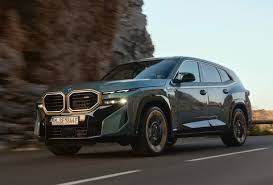
Under the hood, the Vantage’s 4.0-liter twin-turbocharged V8 engine now pumps out a formidable 656 horsepower—a colossal 153 horsepower increase over its predecessor. This dramatic boost in power is complemented by a comprehensively reworked chassis, engineered for lightning-fast reactions and pinpoint precision. This transformation has been met with widespread acclaim, winning over critics with its blend of brutality and finesse.
Despite its immense power, the Vantage offers a wonderfully natural and intuitive driving experience. The suspension, while firm, works harmoniously with highly responsive controls, allowing drivers to confidently push its limits and leverage the extensive suite of electronic aids, including a variable traction control system. It’s a superbly balanced car with thunderous performance, embodying the very essence of a true Aston Martin at its core. This model showcases significant automotive design innovations for the brand.
Alternatives: With its substantial upgrades in both price and performance, a Porsche 911 Carrera S is no longer a direct competitor. A Carrera GTS might come close, but it still falls short by approximately 120 horsepower. For a genuine alternative in the “proper” supercar category, the McLaren Artura presents a phenomenal choice, offering greater precision and a more clinical edge compared to the effervescent Aston.
Maserati MC20
Starting around $260,000
Pros: Breathtaking design, enthralling powertrain, uniquely engaging driving experience.
Cons: Inconsistent brake pedal feel, user interface could be refined.
The MC20 is a superb supercar that captivates not solely for its inherent glamour or advanced technology, but for the remarkably pure and unadulterated driving experience it offers. While it has faced new, highly talented rivals since its debut, the MC20’s appeal remains as strong as ever, a testament to its singular focus.
At its heart lies a lightweight carbon fiber chassis, expertly crafted by Dallara just down the road from Maserati’s Modena factory. Nestled within this advanced structure is Maserati’s own twin-turbocharged V6, incorporating a groundbreaking Formula 1-derived pre-combustion chamber technology—a first for a road car. This innovative engine, along with its two turbochargers, delivers a robust 621 horsepower, ensuring all the power the MC20 could ever need.
But the true genius of the MC20 extends beyond its impressive engine; it lies in Maserati’s masterful chassis tuning. It’s aggressive, sharp, and incredibly agile, yet it possesses a delightful pliancy. The suspension allows it to glide over rough road surfaces with a delicacy and composure that might surprise you, creating a distinct and immensely satisfying driving experience unlike many of its rivals. This blend of performance and comfort highlights significant automotive technology advancements.
Alternatives: The Aston Martin Vantage is a strong contender if you’re considering an MC20, offering dynamic excellence, compelling GT capabilities, and a charismatic V8 powertrain. Meanwhile, the McLaren Artura provides enhanced precision, sublime steering, more integrated technology, and true supercar exoticism with its futuristic aesthetic and signature dihedral doors.
Porsche 911 GT3 RS with Manthey Racing Kit
Starting around $230,000 (plus approx. $120,000 for the kit)
Pros: Unrivaled track prowess, enthralling naturally aspirated engine, race car aesthetics.
Cons: Lacks traditional “supercar” straight-line performance figures, extreme road noise.
Let’s put aside for a moment that Porsche steadfastly refers to its 911 as a sports car, not a supercar. Because, with the Manthey Racing kit, there is absolutely no doubt that the current 911 GT3 RS is one of the most desirable and extreme high-performance vehicles available anywhere. Its appeal doesn’t stem from ostentation, but from its unwavering dedication to being the most potent, road-legal iteration of a 911 ever created. This car redefines sports car performance metrics.
The GT3 RS is an intensely focused machine: a firm-riding, loud, and immersive driving experience. Its steering is so quick and precise that a mere twitch on the highway feels like it could send you across multiple lanes. The interior, too, is a symphony of raw feedback, not just from its all-consuming exhaust note at the 9000 rpm redline, but from the considerable road noise generated by its massive rear tires on anything less than perfectly smooth tarmac.
On the track, however, the RS transforms. It’s one of the rare road cars that genuinely feels capable of competing for a class victory in a 24-hour endurance race. While its “mere” 518 horsepower might seem modest compared to some others on this list, in terms of raw performance and lap times, the GT3 RS is almost unbeatable. It can outpace even dedicated track toys like a Radical SR3 XXR or an Ariel Atom 4R, showcasing its incredible automotive technology advancements in aerodynamics and chassis tuning. The optional Manthey Racing kit further optimizes its aerodynamic package and suspension, pushing its limits even further.
Alternatives: What truly competes with a GT3 RS equipped with the Manthey kit? Perhaps a proper Cup car? A McLaren Senna? An Aston Martin Valkyrie? In terms of utilizing advanced aero to make other supercars look pedestrian and feel like they’re on bald tires, it truly operates in a class of its own. A McLaren 620R would be a worthy consideration, but the Manthey RS is in a league of its own for uncompromising track performance.
McLaren 750S
Starting around $300,000
Pros: Astonishing performance, sublime balance, glorious steering feedback.
Cons: Engine lacks some character, can be spikey at the absolute limit.
In an automotive era increasingly defined by electrification and hybrid performance cars, the McLaren 750S delivers a refreshing jolt of unadulterated turbocharged fury. Its recipe is familiar, built upon the foundation of the acclaimed 720S, but McLaren has refined every element to create an even more exciting and usable supercar. This is McLaren’s interpretation of ultimate sports car performance metrics.
The 4.0-liter twin-turbo V8 now generates an exhilarating 740 horsepower, and the gearbox features shorter ratios for an even more intense power delivery. Critically, it remains a featherweight in modern context, tipping the scales at just 2,990 lbs (1389 kg). McLaren has meticulously fine-tuned the suspension and steering, imbuing it with hints of the ultra-hardcore 765LT, resulting in an even more engaging and precise driving experience.
The results are astonishing. The performance is even more eye-opening than before, with an insatiable appetite for revs at the top end. While the rear tires can eagerly spin up over bumps, there’s an underlying calmness to the steering and ride quality that defines all McLarens. It’s an amazing blend of surgical precision and savage power, making it a true standout in the luxury car market.
Alternatives: Perhaps the most compelling alternative to a new 750S is a pre-owned 720S for significantly less. While the 750S is more focused and potent, it’s not twice the car. In the new car market, its primary rival is the Ferrari 296 GTB, with the highly anticipated Lamborghini Temerario waiting in the wings to join the fray.
Chevrolet Corvette Z06
Starting around $115,000
Pros: Screaming naturally aspirated engine with incredible guts, stunning balance and agility.
Cons: Steering can feel somewhat dull, price point is substantial for a Corvette.
With the latest C8 Corvette’s revolutionary switch to a mid-mounted V8, Chevrolet has forged the perfect platform to challenge the established European supercar elite head-on. The track-focused Z06 variant is not the first hardcore Corvette, but it is unequivocally the most visceral and engaging model to date, marking a bold statement in the American high-performance vehicles segment.
Chevrolet’s engineering team openly acknowledges its inspiration for the harder, sharper Z06. The newcomer’s 5.5-liter flat-plane crank V8 engine represents a dramatic departure in character from the standard Stingray. Its high-revving nature, ferocious noise, and dramatic power delivery are reminiscent of the revered Ferrari 458’s naturally aspirated motor, rather than the rumbling, big-chested character of traditional American performance cars. With an 8,600 rpm redline and 661 horsepower channeled exclusively to the rear wheels, the Z06 also benefits from wider tracks, stiffer springs, and comprehensive aerodynamic modifications to manage its heightened power output and provide exceptional grip.
The result is a thrilling, massively potent supercar that delivers a driving experience unlike any Corvette before it. It’s an intoxicating blend of exoticism and raw power, demonstrating that American engineering can stand shoulder-to-shoulder with the world’s best.
Alternatives: The Z06 is somewhat of an anomaly in today’s market, proudly employing high-displacement natural aspiration. Its spiritual benchmark is the Ferrari 458, now a classic used proposition. The Porsche 911 GT3 is one of the only other remaining free-breathing cars in this segment. However, in terms of sheer revs, engagement, and excitement, the McLaren Artura isn’t far off; its turbocharged V6 redlines at 8,500 rpm, just 100 rpm shy of the Corvette’s V8, highlighting the diversity in modern automotive technology advancements.
Lamborghini Revuelto
Starting around $600,000
Pros: Daring design, electrifying performance, glorious V12 engine, surprising balance and dynamics.
Cons: Can be noisy at cruising speeds.
There are few more impactful ways to make a statement than with a V12 Lamborghini. The Revuelto is the latest manifestation of this enduring philosophy, and while it looks even more dramatic than its Aventador predecessor, Lamborghini has meticulously refined the formula. The result is a scintillating supercar that feels like a monumental leap forward in terms of both automotive design innovations and dynamic prowess.
The spec sheet alone is tantalizing: mounted mid-chassis in its sophisticated carbon fiber chassis is a brand-new, naturally aspirated 6.5-liter V12. This iconic engine, combined with three electric motors, generates an astonishing 1,001 horsepower. Power is delivered through an eight-speed dual-clutch gearbox mounted transversely behind the engine – a dramatic improvement over the Aventador’s often jerky single-clutch unit – ensuring unprecedented smoothness and shift speed. The battery, cleverly packaged where the Aventador’s gearbox once sat, further optimizes weight distribution. This vehicle represents a new era for V12 engine legacy combined with modern hybrid tech.
Despite its dry weight of 3,900 lbs (1772 kg), the Revuelto exhibits sparkling response and enormous capability on the track. Where a Ferrari SF90 might feel hyper-alert, the Lambo is more measured and natural to drive, with electric motors on the front axle providing sophisticated torque vectoring, allowing it to hook cleanly into and out of corners. The Revuelto skillfully blends traditional Lamborghini drama with supreme dynamic class, creating a truly great modern hybrid supercar that remains true to its roots while embracing automotive technology advancements.
Alternatives: The Revuelto has direct conceptual rivals in the (now discontinued) Ferrari SF90 and the (not yet on sale) Aston Martin Valhalla, though neither can quite match the emotional thrill of Lamborghini’s V12 powertrain. Conversely, the Ferrari 12 Cilindri and Aston Martin Vanquish, while boasting V12s, don’t quite match the Revuelto for raw supercar presence, visceral thrills, or dynamic sophistication. It truly carves out a unique niche in the luxury car market by daring to stick to a time-honored Lamborghini formula.
Ferrari 12 Cilindri
Starting around $400,000
Pros: The majestic naturally aspirated V12 remains an intoxicating tonic, superb grand touring capabilities.
Cons: Has lost some of the raw “superness” compared to its 812 predecessor, noise regulations have muted the V12 slightly.
A time will inevitably come when the naturally aspirated V12 Ferrari fades into history, but thankfully, that day has not yet arrived. The 12 Cilindri (Italian for “12 cylinders”) stands as a glorious celebration of that most fabulous confection: a V12 Ferrari supercar. Its magnificent 6.5-liter engine foregoes turbos or hybrid assistance, developing a glorious 819 horsepower at a heady 9,250 rpm. While noise regulations have slightly tempered its soundtrack, it still sounds sensational, albeit a tad more muted at times than its predecessors. This car is a testament to the enduring V12 engine legacy.
The design of the 12 Cilindri incorporates numerous nods to Ferrari’s storied past—the Daytona-esque front end, for example—and in person, it absolutely looks the part of an exclusive automotive brand supercar. The vehicle also possesses a strong grand touring (GT) vibe, offering a supple ride, a refined eight-speed transmission, and a beautifully appointed cockpit.
However, there’s far more to it than just GT comfort. The 12 Cilindri boasts inherent poise and agility, characterized by quick-witted steering and astonishing levels of grip in dry conditions. Even in the wet, it remains remarkably controllable and far less intimidating than one might expect from an 819 horsepower, rear-wheel-drive machine. Available as both a coupe and a Spider, the 12 Cilindri is a remarkable achievement, a blend of timeless elegance and contemporary sports car performance metrics.
Alternatives: The 12 Cilindri has a distinct character compared to its 812 Superfast predecessor, so those seeking the old car’s freneticism might best explore the pre-owned market. In the new car market, the Aston Martin Vanquish is its most direct and fierce rival. If your desire is a V12 supercar with the emphasis firmly on “super” and raw drama, the Lamborghini Revuelto stands almost without peer.
McLaren Artura
Starting around $230,000
Pros: Deliciously tactile steering, beautiful balance and control, lightweight carbon fiber chassis.
Cons: Powertrain can feel slightly less characterful compared to rivals.
The McLaren Artura marks a significant chapter for the Woking-based manufacturer, being its first series-production plug-in hybrid. Fundamentally, the Artura adheres to McLaren Automotive’s core ideological principles: a carbon fiber chassis, double wishbone suspension at all four corners, a mid-mounted twin-turbo engine, and a dual-clutch transmission. However, the Artura introduces several key innovations that provide the distinctiveness McLaren’s range has eagerly awaited. This car represents a leap in automotive technology advancements.
The most prominent addition is its hybrid powertrain module, granting the Artura an all-electric mode for silent cruising, alongside a substantial performance boost. This system is paired with a new Ricardo-built 3.0-liter V6 engine, collectively producing a total output of 690 horsepower and 531 lb-ft of torque. It will sprint from 0-60 mph in a blistering 3.0 seconds and reach a top speed of 205 mph—impressive figures for a supercar that builds upon McLaren’s “junior” Sports Series models.
What does all this change mean in the real world? It feels fresh and invigorated. McLaren’s trademark elements, such as the hydraulically assisted steering and superb driving experience position, have been retained and enhanced. There’s a new level of sophistication and complexity that refines the edges. While it might not possess the inherent sharpness of the 600LT or the outrageous performance of Ferrari’s 296 GTB, as a launchpad for McLaren’s new generation of hybrid performance cars, the Artura is exceptionally promising and a strong contender in the luxury car market.
Alternatives: The Artura is a versatile driver’s car and supercar. That said, the Maserati MC20 offers a compelling alternative with a touch more old-school supercar charm. The Aston Martin Vantage, in its newly invigorated form, is impossibly talented, even if it lacks some of the exotic flair of a dedicated supercar.
Aston Martin Vanquish
Starting around $400,000
Pros: Astonishing performance and dynamics, glorious twin-turbo V12 engine, exquisite styling.
Cons: Human-Machine Interface (HMI) still has room for improvement, limited interior space for its footprint.
In the words of a respected automotive journalist, the new Vanquish is “The best Aston of the last 25 years.” This is high praise indeed, considering the array of excellent machinery to emerge from Gaydon during that period. Conventional wisdom suggests that adding turbos can stifle an engine’s vocal cords, but Aston Martin clearly didn’t get the memo. The Vanquish’s 824 horsepower 5.2-liter twin-turbo V12 engine sounds absolutely sensational while delivering a blistering 0-60 mph time of 3.3 seconds and a top speed of 211 mph—stats remarkably similar to a certain V12 Ferrari. This car beautifully perpetuates the V12 engine legacy with a modern twist.
Like the Ferrari 12 Cilindri, the Aston Martin Vanquish nails the grand touring brief while delivering so much more. It’s supple and refined in GT mode, with its double wishbone front end and multi-link rear suspension ironing out even the worst road imperfections. However, select Sport or Sport+ modes, and the car truly awakens. Throttle response becomes even sharper, its pace monumental, and the steering is beautifully weighted, allowing for precise vehicle placement despite the Vanquish’s substantial weight and girth. This showcases exceptional automotive technology advancements in chassis tuning.
Inside, the cabin is everything you’d expect from Aston Martin: swathes of luxurious leather, supremely comfortable seats, and an excellent sound system. The only minor drawbacks are a less-than-perfect HMI setup and a surprisingly limited amount of interior space given the car’s imposing footprint. Yet, all these minor points are easily forgiven the moment the V12 truly begins to sing, ranging from a bombastic, guttural growl to a glorious, soaring howl that defines the ultimate driving experience in a luxury car market icon.
Alternatives: The Aston Martin Vanquish and the Ferrari 12 Cilindri are arguably the closest and fiercest rivals in the high-performance car world right now, even to the point where their predecessors could be considered their next biggest competitors. A pre-owned DBS 770 Ultimate, offering incredible performance at a potentially half-price point, would be an incredibly tempting proposition for discerning buyers seeking exotic car investments.
The Future of Automotive Excellence in America
As we reflect on the incredible machines gracing our roads in 2025, it’s clear that the supercar landscape is richer and more diverse than ever. From the roaring, naturally aspirated V12s that maintain a vital connection to a storied past, to the cutting-edge hybrid performance cars that hint at a sustainable yet thrilling future, the innovation never stops. These vehicles are more than just modes of transport; they are meticulously crafted pieces of art, engineering marvels, and profound statements of personal passion.
For those with the means and the desire, investing in these exclusive automotive brands offers not just unparalleled driving pleasure, but also a stake in the ever-evolving narrative of automotive excellence. Whether you’re chasing the ultimate lap time, seeking the most dramatic entrance, or simply savoring the unique driving experience each model provides, the supercars of 2025 stand as magnificent tributes to human ingenuity and the enduring thrill of speed. The coming years promise even more groundbreaking automotive technology advancements, ensuring that the passion for these extraordinary machines will only grow.