
Luxury Subcompact SUVs: The Agile Urbanites
In the burgeoning segment of luxury subcompact SUVs, both BMW and Mercedes-Benz offer compelling entries designed for urban agility and premium appeal. BMW’s X1, recently revamped, continues to dominate with its sophisticated yet driver-focused cabin and dynamic handling. It masterfully balances compact dimensions with an impressive feeling of spaciousness and utility, making it an ideal choice for city dwellers and small families. Its range of efficient powertrains, including an increasingly popular plug-in hybrid option and even a fully electric variant (the iX1 in global markets, likely to see broader US adoption), ensures robust performance and refined driving dynamics. The X2, with its coupe-like silhouette, caters to those seeking a sportier aesthetic without sacrificing too much practicality.
Mercedes-Benz counters with the GLA, a stylish offering that leans into its hatchback roots with a youthful, energetic design. The GLA provides a comfortable ride and an upscale interior experience, albeit with a slightly less engaging driving feel compared to its BMW rival. Its MBUX infotainment system is a strong selling point, offering intuitive voice control and crisp displays. While the GLA is a strong contender, the BMW X1’s superior blend of practicality, spirited performance, and well-appointed cabin gives it a slight edge in this highly competitive niche, particularly for those prioritizing the driving experience.
Winner: BMW
Luxury Compact SUVs: The Sweet Spot
The luxury compact SUV segment remains a critical battleground, appealing to a broad demographic seeking versatility, comfort, and performance. BMW’s X3, a perennial favorite, continues to define the segment. Its latest iteration delivers a harmonious blend of athletic handling, a spacious and attractive cabin, and a suite of powerful, efficient powertrains, including robust hybrid options. The X3’s ability to feel composed on winding roads while offering everyday comfort is a testament to BMW’s engineering prowess. Its coupe sibling, the X4, caters to those desiring a more distinctive fastback design, though it sacrifices a degree of cargo space for style.
Mercedes-Benz offers the GLC, a refined and stylish SUV known for its plush cabin, smooth ride quality, and available fuel-efficient powertrains. The GLC excels in providing a serene and luxurious environment, making it a top choice for buyers who prioritize comfort and interior aesthetics. Its advanced driver-assistance systems and seamless MBUX integration further enhance the ownership experience. The GLB, offering optional three-row seating, provides a unique proposition within the segment, albeit with a slightly less premium feel than the GLC or X3. While both are outstanding, the X3’s balance of engaging dynamics and practical luxury often places it just ahead for a broader range of buyers.
Winner: BMW
Luxury Midsize SUVs: Family Haulers, Elevated
Stepping up in size, the luxury midsize SUV segment is where family needs meet executive-level refinement. Here, Mercedes-Benz’s GLE reigns supreme. The GLE offers a magnificently spacious and refined cabin that effortlessly blends modern technology with traditional luxury. For 2025, the GLE continues to impress with its standard all-wheel drive, an updated infotainment system that’s more intuitive than ever, and a robust lineup that includes an excellent plug-in hybrid model, offering significant electric range. Its ride comfort is exceptional, insulating occupants from road imperfections with remarkable composure.
BMW’s X5 is equally revered in this category, known for its upscale interior and more athletic handling than its Mercedes counterpart. The X5 delivers a sharper, more engaging driving experience, a hallmark of the BMW brand. Its latest iterations feature enhanced driver-assist technology, including advanced lane-change assist features that elevate highway driving. The X6, the X5’s fastback variant, caters to those seeking a distinct style. While the X5 is an incredible vehicle, the GLE’s ability to combine sheer luxury, comfort, and advanced features often gives it the edge for families seeking a premium, versatile SUV that doesn’t compromise on pampering.
Winner: Mercedes-Benz
Luxury Large SUVs: The Executive Cruisers
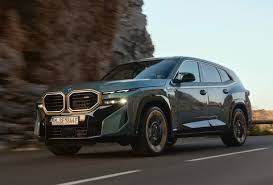
For those demanding maximum space, prestige, and capability, the luxury large SUV segment is where true flagship status is attained. BMW’s X7 emerges as a formidable contender, effectively scaling up the brand’s winning formula. It blends the engaging driving dynamics BMW is known for with seating for up to seven, an opulent interior, and powerful engine options. The X7’s imposing presence, sharp design, and comfortable first- and second-row accommodations make it a top choice for executive families. Its advanced iDrive infotainment system, while offering a slight learning curve, provides immense functionality.
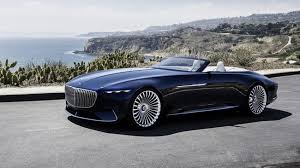
Mercedes-Benz offers the GLS, a direct competitor that focuses on an ultra-luxurious cabin and a supremely refined ride. The GLS, often dubbed the “S-Class of SUVs,” prioritizes passenger comfort and technological sophistication. Its meticulous craftsmanship and serene ambiance are difficult to match. The G-Class, while iconic for its off-road prowess, maintains a more niche appeal and sacrifices some on-road refinement for its rugged capabilities. For sheer everyday luxury, space, and a touch more driving engagement, the X7 often nudges ahead, particularly for those who appreciate BMW’s driver-centric approach in a larger package.
Winner: BMW
Luxury Small Cars: Entry Point to Excellence
The small luxury sedan segment is often the gateway into these esteemed brands, and both BMW and Mercedes-Benz deliver excellence. The BMW 3 Series has long been considered the benchmark, and its current iteration upholds that legacy. It remains incredibly fun to drive, boasting powerful and responsive engines, precise steering, and a chassis that eagerly communicates with the driver. Its spacious interior and practical trunk (for its class) add to its appeal as a daily driver. The 2 Series coupe and 4 Series (available in coupe, convertible, and Gran Coupe forms) further diversify BMW’s offerings, catering to different stylistic and performance preferences.
The Mercedes-Benz C-Class is a compelling rival, offering a more comfort-oriented experience with an exquisitely crafted interior that often feels a class above. While not as overtly sporty as the 3 Series, the C-Class provides a smooth, quiet ride and a wealth of advanced technology, including a scaled-down version of the S-Class’s MBUX system. Mercedes also fields the CLA, an entry-level four-door coupe that combines sharp styling with a tech-rich cabin. However, for the pure, unadulterated joy of driving, the BMW 3 Series consistently holds its ground as the segment leader.
Winner: BMW
Luxury Midsize Cars: The Heart of the Sedan Market
In the traditional heartland of the luxury sedan market, the midsize segment, we find a fascinating equilibrium between BMW and Mercedes-Benz. The Mercedes-Benz E-Class stands as a cornerstone, embodying the brand’s commitment to comfort, technological innovation, and refined elegance. Its wildy high-tech cabin, featuring an expansive digital cockpit and comprehensive driver-assistance suites, can at times feel overwhelming but ultimately elevates the driving experience. The ride is impeccably smooth, making long journeys effortless. Mercedes also offers the handsome CLE, a new two-door coupe and convertible that blends E-Class luxury with sporty aesthetics.
The BMW 5 Series, recently redesigned, continues to be highly regarded. While its traditional athleticism might have been slightly softened in pursuit of broader appeal, it still offers a compelling combination of potent engines, a luxurious and driver-focused cabin, and refined road manners. Its iDrive system is intuitive, and the overall build quality is exceptional. Both the E-Class and 5 Series offer sophisticated hybrid and electric options, signaling their readiness for the future. Given their distinct but equally appealing strengths – the E-Class for its serene comfort and advanced tech, and the 5 Series for its balance of luxury and dynamic capability – this segment is truly a tie, depending entirely on individual priorities.
Winner: Tie
Luxury Large Cars: Flagship Grandeur
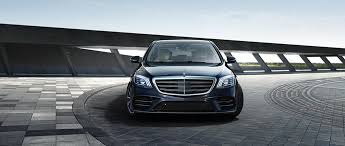
When it comes to the pinnacle of luxury sedans, the full-size flagship segment, Mercedes-Benz decisively claims victory with the legendary S-Class. The S-Class remains the undisputed benchmark for comfort, opulence, and cutting-edge technology. Its cabin is a sanctuary, shielding occupants from the outside world with impeccable insulation and an array of comfort features. The MBUX infotainment system in the S-Class is arguably the most advanced and intuitive in the industry, understanding complex voice commands and offering an immersive user experience. Driving or being driven in an S-Class is an experience in pure automotive indulgence.
BMW’s 7 Series finishes just behind, offering its own modern interpretation of a world-class cabin with bold, futuristic styling and a powerful infotainment system that, while impressive, still has a learning curve for some. While the S-Class prioritizes plush comfort, the 7 Series often provides a slightly more engaging handling experience for the driver, appealing to those who still want to feel connected to the road in a large luxury sedan. Nevertheless, for the ultimate expression of executive luxury and comfort, the S-Class maintains its formidable lead.
Winner: Mercedes-Benz
Luxury Electric Cars: The Silent Revolution
The shift to electric vehicles (EVs) is a seismic one, and both BMW and Mercedes-Benz are pouring significant resources into their growing lineups. BMW has made impressive strides, with its i7 electric flagship leading the charge. An EV version of the 7 Series, the i7 boasts futuristic styling, dominant performance, and a range of innovative features, including a stunning rear-seat theater screen. The i4, an electric take on the engaging 4 Series Gran Coupe, offers a more accessible entry into BMW’s EV performance world, delivering impressive driving dynamics.
Mercedes-Benz offers a slightly more expansive, though sometimes confusingly named, range of EQ-badged EVs. The EQE Sedan and EQS Sedan both boast serene driving dynamics, opulent cabins, and impressive range. The EQS, in particular, showcases the Hyperscreen, a vast digital display that redefines in-car infotainment. While Mercedes-Benz EVs excel in providing a luxurious and quiet ride, often with segment-leading range, BMW’s electric offerings, particularly the i4 and i7, have managed to retain more of the brand’s characteristic driver engagement. This nuanced balance of luxury and performance gives BMW a slight edge in this evolving segment for the discerning driver.
Winner: BMW
Luxury Electric SUVs: Electrifying Utility
The electric SUV market is booming, and both brands are vying for supremacy. BMW’s iX stands out as its chief electric SUV. Despite its distinctive, polarising design, the iX delivers powerful acceleration, a spacious and functional interior, and cutting-edge technology. Its innovative materials and ample room for passengers and cargo make it a compelling choice for those seeking a premium, futuristic electric family vehicle.
Mercedes-Benz offers a trio of electric SUVs: the EQB, EQS SUV, and EQE SUV. The EQB is the electric counterpart to the GLB, providing a practical, if not groundbreaking, EV option. The EQS SUV and EQE SUV, while boasting elegant interiors and refined rides, have faced some criticism for their cargo capacity compared to rivals, and the EQE SUV’s driving range isn’t always class-leading. While Mercedes offers more choice, the BMW iX’s cohesive package of performance, interior innovation, and utility often makes it a more compelling overall proposition in the premium electric SUV space.
Winner: BMW
Luxury Sports Cars: Adrenaline and Precision
In the realm of luxury sports cars, BMW has traditionally held an enviable position, appealing directly to driving enthusiasts. Models like the M3 sedan and M4 coupe are renowned for their ferocious performance and track-honed capabilities. The M2, often considered the most faithful to BMW’s performance heritage, delivers an unadulterated, thrilling driving experience. For those seeking open-air thrills with a touch of flair, the Z4 roadster provides engaging performance combined with top-down exhilaration.
Mercedes-Benz counters with its dedicated AMG sports cars, such as the thrilling AMG GT, which offers exhilarating performance and a distinct, aggressive character. The SL, reinvented as a droptop grand-touring car developed by AMG, blends high performance with luxurious comfort, making it ideal for long-distance, spirited drives. While Mercedes-Benz offers exceptional performance through its AMG division, BMW’s broader range of M-tuned vehicles, from sedans to coupes to roadsters, and its consistent focus on driver engagement across its performance lineup, give it a comprehensive edge in appealing to a wider spectrum of sports car enthusiasts.
Winner: BMW
Overall Attributes: Beyond the Segments
Safety: Proactive Protection
Both BMW and Mercedes-Benz are pioneers in automotive safety, equipping their vehicles with comprehensive suites of advanced driver-assistance systems (ADAS). In 2025, features like enhanced adaptive cruise control, lane-keeping assist, sophisticated automatic emergency braking with pedestrian and cyclist detection, and advanced parking assistance are standard or widely available. BMW models like the 2 Series, 3 Series, 5 Series, and X3 consistently achieve top safety ratings from independent organizations, offering robust occupant protection and proactive accident avoidance technologies. Mercedes-Benz vehicles, including the C-Class, E-Class, GLC, and GLE, perform equally admirably, often introducing groundbreaking pre-collision systems and sophisticated semi-autonomous driving capabilities. While neither brand’s full EV lineup has been exhaustively tested by all safety organizations due to their newer market presence, their conventional counterparts demonstrate an unwavering commitment to occupant protection. The slight edge often goes to BMW due to the sheer breadth of its models consistently receiving top-tier safety accolades across multiple categories, giving buyers greater peace of mind.
Winner: BMW
Performance: The Thrill of the Drive
Performance is often the first word associated with BMW, and in 2025, this remains largely true. Across its lineup, from the agile 3 Series to the imposing 7 Series and luxurious 8 Series, BMW vehicles are engineered to excite behind the wheel. Their precision steering, balanced chassis, and powerful yet refined powertrains—including an increasingly impressive array of electrified options like the i4, i7, and iX—consistently deliver an engaging driving experience. The M division’s vehicles, like the M3 and M4, are legendary for their track-ready capabilities and exhilarating power delivery.
Mercedes-Benz also offers stellar performance, particularly through its AMG division, where models like the AMG GT and high-performance variants of the S-Class, EQS, and GLE deliver breathtaking acceleration and dynamic handling. However, the core Mercedes-Benz lineup often prioritizes a smooth, comfortable ride over outright driver engagement. While excellent, some of its more entry-level models like the GLA and GLB lean more towards value and utility than spirited performance. For a brand-wide commitment to driving enthusiasm, BMW maintains its reputation as the performance leader.
Winner: BMW
Reliability: Engineering for Longevity
Reliability is a critical factor for luxury vehicle owners, and both German marques have made strides in recent years. Historically, complex European luxury cars have sometimes lagged behind Japanese counterparts, but modern engineering and advanced diagnostics have improved scores significantly. BMW generally reports more models with robust reliability and dependability scores from organizations like J.D. Power. Several BMW models, including the X1, X3, 2 Series, and 7 Series, consistently achieve “Great” predicted reliability scores (81-90 out of 100). The brand average for BMW often hovers in the low to mid-80s, indicating a solid commitment to quality.
Mercedes-Benz also shows strong reliability in key models, with the E-Class and GLE often scoring well. However, fewer of its models consistently report scores, making a comprehensive brand-wide comparison challenging. Both brands offer a standard four-year/50,000-mile powertrain warranty, with Mercedes-Benz offering a slightly more generous 10-year/155,000-mile warranty on its EV battery packs compared to BMW’s eight-year/100,000-mile coverage. Despite Mercedes’ battery warranty advantage, BMW’s more consistent and broadly reported reliability scores across its conventional lineup give it the overall edge.
Winner: BMW
Interior: Crafting the Experience
If BMW is synonymous with performance, then Mercedes-Benz defines cabin comfort and luxury. Whether it’s the GLE, GLS, E-Class, or the gold-standard S-Class, Mercedes-Benz consistently sets the industry benchmark for automotive interiors. The meticulous fit and finish, premium material choices (from supple leathers to exquisite woods and advanced metals), sophisticated ambient lighting, and intuitive MBUX infotainment system create an unparalleled sensory experience. Their cabins are not just luxurious; they are sanctuaries of comfort and technological integration, often featuring ergonomically designed seats and superb sound insulation.
BMW has made significant strides in interior design and quality, with models like the X1, X3, and i7 offering outstanding cabins in terms of build quality and driver-centric ergonomics. There’s an undeniable premium feel across many BMW models, with excellent materials and sophisticated design. However, while BMW interiors are highly commendable, they often don’t quite reach the sheer opulence, sensory delight, and groundbreaking technological integration that Mercedes-Benz consistently delivers across its top-tier models. For the ultimate in interior luxury and an all-encompassing premium cabin experience, Mercedes-Benz remains the undisputed leader.
Winner: Mercedes-Benz
The Ultimate Verdict: Which German Icon Reigns Supreme?
In the fiercely competitive and rapidly evolving luxury automotive landscape of 2025, both BMW and Mercedes-Benz continue to produce truly exceptional vehicles. Each brand offers a compelling vision of what premium motoring should be, blending decades of heritage with cutting-edge innovation.
Our comprehensive head-to-head analysis reveals that BMW ultimately emerges as the overall winner, taking top honors in more individual segments and key attributes. BMW has demonstrated an impressive ability to evolve, delivering vehicles that are not only engaging to drive – a core tenet of its brand – but also increasingly refined, technologically advanced, and luxuriously appointed. Their aggressive push into electrification, maintaining a strong performance character in their EVs, underscores their commitment to the driver.
Mercedes-Benz, on the other hand, continues to define automotive luxury with its world-class interiors, unparalleled comfort, and sophisticated technological integration. Many of its vehicles set the benchmark for refinement and serene opulence in their respective categories. For buyers prioritizing a plush, insulating, and technologically immersive cabin experience, Mercedes-Benz remains an irresistible choice.
The choice between a BMW and a Mercedes-Benz ultimately hinges on personal priorities. Do you crave the exhilaration and precision of a true driver’s car, even in an SUV or an EV? Then BMW will likely call to you. Do you seek an automotive sanctuary, a supremely comfortable and technologically advanced haven on wheels? Then Mercedes-Benz will undoubtedly captivate. Both brands embody German engineering excellence, pushing the boundaries of what’s possible in the luxury segment. As the electric revolution accelerates, it will be fascinating to witness how these two titans further adapt and innovate, continuing their storied rivalry for decades to come.