
America’s Ultimate Dream Machines: The Best Supercars of 2025
As we power through the midpoint of 2025, the automotive landscape for high-performance vehicles continues to defy conventional wisdom, particularly within the supercar segment. Far from being a dying breed, the internal combustion engine in low-volume, exotic vehicles has received a welcome legislative reprieve, ensuring its roaring presence for at least another decade. This moment in time feels like an unparalleled golden era for automotive enthusiasts and discerning collectors, with an extraordinary breadth of quality and sheer variety in the market’s most aspirational offerings.
The term “supercar” itself, a label often debated by purists, carries a wonderfully flexible definition in our industry. While raw power figures and blistering acceleration are undoubtedly part of the equation, the true essence of a supercar often boils down to its sheer command of presence. Does it halt traffic? Does it ignite a visceral reaction? From the symphonic V12 powerhouses like the Aston Martin Vanquish and Ferrari 12 Cilindri, designed for continent-crossing grandeur, to the dramatic, doors-up theater of machines like the Lamborghini Revuelto, McLaren Artura, or Maserati MC20, and even the laser-focused track weapons such as the Porsche 911 GT3 RS, all carve out their distinct niche within this exclusive automotive club. These are not merely cars; they are statements, engineering marvels, and often, sound investments in passion.
Looking ahead, the horizon is equally tantalizing. We’re eagerly anticipating the Aston Martin Valhalla, poised to challenge the upper echelons of the supercar spectrum, blurring lines with hypercar performance. Soon to join the fray, taking on established titans like the McLaren 750S and Ferrari 296 GTB, is Lamborghini’s astonishing Temerario. Whispers suggest a monumental 900+ horsepower from its 10,000rpm-capable twin-turbo V8 and sophisticated hybrid system – a truly defining entry in the next generation of hybrid supercars. Ferrari is also preparing its next track-focused masterpiece, the 296 Speciale, rumored to infuse F80 hypercar technology into an already highly revered platform. But for now, let’s explore the benchmark machines that currently define excellence, the current crop of performance flagships these future legends will undoubtedly aspire to surpass.
America’s Elite Supercars: Our Top Picks for 2025
Ferrari 296 GTB
Aston Martin Vantage
Maserati MC20
Porsche 911 GT3 RS Manthey Racing
McLaren 750S
Chevrolet Corvette Z06
Lamborghini Revuelto
Ferrari 12 Cilindri
McLaren Artura
Aston Martin Vanquish
Ferrari 296 GTB
Starting MSRP: Approximately $335,000
Pros: Unbelievably charismatic V6 powertrain, exquisitely balanced chassis, groundbreaking hybrid integration.
Cons: Infotainment system can be less intuitive, hybrid components add weight.
The Ferrari 296 GTB heralded a new chapter for Maranello, introducing the potent V6 engine that has since powered the Scuderia to Le Mans glory and even the formidable F80 hypercar. While some initially perceived its hybrid V6 as a fuel-saving compromise, the reality couldn’t be further from the truth. At its debut, the V6 was the most powerful factory six-cylinder engine globally, delivering a staggering combined output of 819 horsepower. This represented a colossal leap in performance for a mid-engined Ferrari at this price point, setting a new benchmark for luxury performance cars.
Yet, it’s not the raw numbers or the astonishing acceleration that truly captivate; it’s the utterly brilliant driving experience the 296 GTB provides. The calibration of its multi-source power delivery is nothing short of superb, feeling remarkably natural and offering a playful edge. Ferrari’s onboard stability, traction, and slip control systems are seamlessly integrated, making the car feel even more agile and responsive than its specifications suggest. This is precision engineering at its finest, offering unparalleled driver engagement.
Is there a minor trade-off? Ferrari’s pioneering advancements in hybrid powertrain technology have, perhaps, outpaced its user interface development. While the car’s dynamic perfection is undeniable, the interior can present a minor frustration with its somewhat complex, screen-heavy menus. But honestly, when the 296 GTB looks, performs, and sounds this sensational, such minor ergonomic quibbles quickly fade into insignificance. This car definitively proves that the hybrid supercar era is not just here to stay but is capable of delivering an even richer, more thrilling driving experience. It’s truly an investment-grade automobile for those seeking cutting-edge performance.
As an industry veteran, I can attest: “The chassis responsiveness of the 296 GTB is truly extraordinary. Ferrari wasn’t exaggerating when they spoke of ‘fun-to-drive’ as a core design principle. It feels incredibly agile without ever becoming nervous; the steering is light yet offers exceptional feedback. The grip levels are astronomical, of course, but what truly distinguishes it is the throttle-adjustability – it’s a recipe for an ear-to-ear grin on any track or winding road.”
Alternatives: The McLaren 750S presents a compelling alternative, emphasizing lighter weight and a more focused, minimalist approach, though its V8 lacks the 296’s distinct V6 charisma. Lamborghini’s Temerario, once released, will be a direct competitor, bringing a wild 10,000rpm redline and over 900 horsepower to this exclusive segment.
Aston Martin Vantage
Starting MSRP: Approximately $205,000
Pros: A visually stunning super GT with a profoundly engaging dual personality; a true expression of British luxury.
Cons: Inherently less exotic or overtly theatrical than some dedicated supercars.
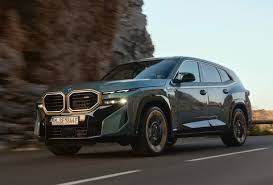
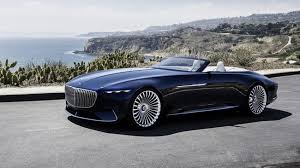
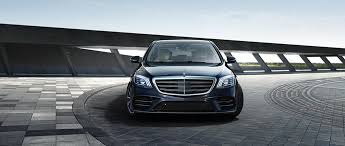
Historically, the Aston Martin Vantage has gracefully straddled the line between a potent sports car and a nascent supercar. However, the latest iteration decisively pushes it deep into supercar territory. This redesign aligns perfectly with Aston Martin’s ambitious repositioning strategy – crafting sharper, more explosive, and technologically advanced performance vehicles. The outcome? An intensely rewarding and remarkably potent machine.
Beneath its sculpted hood, the Vantage’s 4.0-liter twin-turbocharged V8 now unleashes a monumental 656 horsepower – a significant 153 horsepower increase over its predecessor. Crucially, the chassis has been meticulously re-engineered, yielding sharper reactions and unparalleled precision. Our track evaluations confirmed its transformation, with many experts praising its dynamic prowess and raw capability among premium sports cars.
Despite its colossal power output, the Vantage retains a wonderfully natural and intuitive driving feel. The suspension, while firm, is exceptionally well-damped, and the controls are sublimely weighted, encouraging drivers to exploit its prodigious grip. The sophisticated suite of electronics, including variable traction control, empowers the driver without ever feeling intrusive. It’s a superbly balanced vehicle, delivering thunderous performance wrapped in an undeniable Aston Martin character – truly one of the ultimate driving machines.
From my perspective, having driven countless performance vehicles: “The new Vantage feels and sounds incredibly sharp, with a remarkable consistency across its primary controls. It possesses an addictive eagerness for spirited driving. It’s the kind of car that eggs you on from the first moment, then richly rewards your confidence. You need to be willing to explore its dynamic modes to unlock its full potential, and there are times it feels like it’s wrestling the road rather than simply flowing with it, but its agility, rotational energy, and sheer verve are exceptionally special.”
Alternatives: Given the Vantage’s significant leap in both price and performance, a Porsche 911 Carrera S no longer feels like a direct rival. A 911 Carrera GTS comes closer, but still trails by a considerable 120 horsepower. For a true alternative in the supercar segment, the McLaren Artura offers greater precision, surgical steering, more advanced technology, and genuine exoticism with its sci-fi aesthetics and striking dihedral doors.
Maserati MC20
Starting MSRP: Approximately $250,000
Pros: Breathtaking design, an enthralling, unique powertrain; pure, unadulterated driving pleasure.
Cons: Brake pedal feel can sometimes be inconsistent on track; a few interior quirks.
The Maserati MC20 stands out as a superb supercar that captivates not merely through its inherent glamour or advanced technology, but primarily through the raw, unfiltered driving experience it delivers. While more recent, even more talented alternatives might have edged it out in some performance comparisons since its initial acclaim, its appeal remains incredibly potent, a testament to its singular character among luxury performance cars.
At its core, the MC20 utilizes a carbon fiber monocoque chassis, meticulously crafted by Dallara, just down the road from Maserati’s historic Modena factory. This lightweight foundation supports Maserati’s bespoke “Nettuno” twin-turbocharged V6 engine, featuring the first road-car application of Formula 1-derived pre-combustion chamber technology. This, combined with twin turbochargers, endows the MC20 with all the power it needs and more, generating an impressive 621 horsepower. This is a formidable engine, perfectly suited for a high-net-worth individual’s garage.
However, the MC20’s true beauty extends beyond its innovative engine. Maserati has tuned the car for an aggressive, sharp, and agile response, yet it possesses a surprising degree of refinement. There’s a delicate compliance in its suspension setup that allows it to glide over imperfect road surfaces with a composure and delicacy you might not expect from such a focused machine. As a driving experience, it’s immensely satisfying and distinctly different from most of its rivals, offering a unique blend of exoticism and usability.
My years in the industry have taught me to appreciate a truly distinctive engine: “The MC20’s powertrain is an absolute firecracker. It’s smooth and exceptionally punchy, but reveals a truly feral side when you summon the courage to uncork it. Its boosty delivery and characterful soundtrack are precisely what you’d demand from an Italian exotic, making it a standout in the premium automotive market.”
Alternatives: The Aston Martin Vantage should be a serious consideration for those eyeing an MC20. It’s dynamically excellent, performs the GT role with aplomb, and features a characterful V8 powertrain. The McLaren Artura, conversely, offers surgical precision, sublime steering, more integrated technology, and achieves true supercar exoticism with its futuristic aesthetics and iconic skyward-rising doors, appealing to those seeking cutting-edge design supercars.
Porsche 911 GT3 RS Manthey Racing Kit
Starting MSRP: Approximately $225,000 (plus approx. $100,000 for Manthey Kit)
Pros: An utterly enthralling engine and driving experience; aggressive, race-car-for-the-road aesthetics; phenomenal track capability.
Cons: Lacks the sheer “supercar” straight-line performance of some rivals; intensely focused.
Let’s set aside, for a moment, Porsche’s steadfast insistence on calling its 911 a sports car, not a supercar. Because, with the current 911 GT3 RS, especially when equipped with the Manthey Racing kit, there is simply no doubt that this is one of the most desirable and extreme performance vehicles available today. This isn’t because Porsche has transformed it into a mere showpiece, but precisely because it represents the most uncompromising, road-legal iteration of a 911 ever conceived. It’s a truly limited edition supercar experience.
The GT3 RS is an unyielding, loud, and intensely visceral experience. Its steering is so incredibly quick and precise that even a minor twitch on the highway feels like you’ve traversed three lanes. Inside, it’s loud – and not just from the glorious, all-consuming exhaust note at its 9,000rpm redline. The massive rear tires generate significant road noise on anything less than perfectly smooth tarmac, a trade-off for its monstrous grip.
Yet, to drive, the RS is one of a select few road cars that genuinely feels ready to contend for a class win at an endurance race. While its “mere” 518 horsepower might appear modest in this company, in terms of raw circuit performance and lap times, the GT3 RS is almost unbeatable. It even outpaced purpose-built track toys like the Radical SR3 XXR and Ariel Atom 4R in our extensive track tests, solidifying its status as a track-focused driving machine par excellence.
As a professional who values tangible performance: “The faster you push the GT3 RS, the more alive it feels. It’s remarkable how it settles into its damping and how the increasing downforce builds your confidence to lean hard on both ends of the car. Even the DRS (Drag Reduction System) is distinctly pronounced; a quick press of the steering-wheel button noticeably frees the RS, providing an undeniable surge of acceleration.”
Alternatives: In its Manthey-kitted form, the GT3 RS enters a realm where true alternatives are scarce. We’re talking about comparisons to bona fide Cup cars, a McLaren Senna, or even an Aston Martin Valkyrie in terms of aggressive aero and uncompromising focus. It truly is in a class of its own. A McLaren 620R might come close for sheer track dedication, but few cars deliver such an immersive and high-octane experience.
McLaren 750S
Starting MSRP: Approximately $327,000
Pros: Astonishing performance and dynamic balance; exquisitely tactile steering; a pure, unfiltered driving thrill.
Cons: The twin-turbo V8, while potent, can feel less characterful than some rivals; performance can be spikey at the absolute limit.
In a market increasingly dominated by electrification and hybrid supercars, the McLaren 750S arrives as a refreshing, undiluted dose of turbocharged fury. Its fundamental ingredients are familiar from its celebrated predecessor, the 720S (an eCoty winner in 2017), but McLaren has refined this already brilliant recipe to create an even more exhilarating and usable supercar. It’s a high-performance vehicle that perfectly balances raw power with everyday usability.
The heart of the 750S is its 4.0-liter twin-turbo V8, now generating a formidable 740 horsepower. This power is channeled through a gearbox featuring shorter ratios, resulting in an even more intense and immediate delivery. Critically, it remains a featherweight in the contemporary supercar context, tipping the scales at just 3,062 lbs (dry). McLaren has meticulously fine-tuned the suspension and steering, imbuing the 750S with shades of its ultra-hardcore 765LT sibling, further enhancing its driver engagement.
The results are simply astonishing. The performance is even more eye-opening than before, exhibiting an insatiable appetite for revs at the top end of the tachometer. While the rear tires can occasionally squirm over bumps under full throttle, there’s an inherent calmness and precision to the steering and ride quality that defines all modern McLarens. It’s an amazing blend of surgical precision and thrilling savagery, making it a compelling choice for luxury car investment.
Having pushed this machine to its limits, I can confirm: “Despite its immense power, the 750S remains remarkably drivable and intuitive – perhaps more so than a vehicle with power figures approaching a 1990s F1 car has any right to be. It truly embodies the definitive 21st-century supercar: genuinely thrilling, brilliantly exploitable, though perhaps a touch more ragged than anticipated when pushed beyond eight or nine tenths.”
Alternatives: Perhaps the most compelling alternative to a new 750S is a pre-owned 720S, offering incredible value at potentially half the price. While the 750S is more focused and potent, it’s not double the car. In the new market, its obvious rival is the Ferrari 296 GTB, with Lamborghini’s Temerario poised to enter the fray soon.
Chevrolet Corvette Z06
Starting MSRP: Approximately $112,000
Pros: A screaming, naturally aspirated flat-plane crank V8 that offers immense character and power; stunning chassis balance; domestic hero status.
Cons: Steering feedback could be more engaging; premium pricing in export markets (less so in the US).
By transitioning to a mid-mounted V8 for the latest C8 Corvette, Chevrolet fundamentally redefined its flagship, creating the perfect platform to challenge the established supercar elite head-on. The track-focused Z06 variant is not the first hardcore Corvette, but it is unequivocally the most visceral, engaging, and dynamically sophisticated model yet. For American enthusiasts, it represents a remarkable achievement in high-performance vehicles.
Chevrolet’s engineering team openly acknowledges the inspiration behind the Z06’s sharpened focus: European exotics. The newcomer’s 5.5-liter flat-plane crank V8 marks a profound shift in character from the standard car. It deliberately evokes the razor-sharp response, wailing noise, and intense drama of naturally-aspirated motors like the legendary Ferrari 458’s, rather than the traditional big-chested rumble of classic American performance cars.
With an 8,600rpm redline and a staggering 661 horsepower channeled exclusively to the rear wheels, the Z06 adopts wider tracks, stiffer springs, and comprehensive aerodynamic modifications to harness its heightened power and deliver astonishing grip. The result is a thrilling, immensely potent supercar – one that feels entirely unlike any Corvette we’ve driven before. It’s a testament to American automotive innovation, blending domestic engineering with exotic aspirations.
My experience driving this marvel confirms: “The tires could probably use a few more degrees of temperature, but they’re delivering, and the Z06 chassis feels direct and incredibly positive. Its steering is accurate and well-weighted. When you truly open it up, the revs stay mostly above 5,000rpm for miles on end. It’s thrilling and utterly absorbing, a constant challenge to keep the engine in its manic zone and exploit the enormous grip. The Z06 scythes through long sweeps and hangs on through tighter corners like a conker on a string – pure exhilaration.”
Alternatives: The Z06 is somewhat of an anomaly in today’s market, defiantly clinging to high-literage, natural aspiration. Its obvious historical benchmark is the Ferrari 458, now a used proposition. The Porsche 911 GT3 is the only other remaining free-breather close to this segment. However, in terms of raw revs, sheer engagement, and excitement, the McLaren Artura isn’t far off; its turbocharged V6 redlines just 100rpm lower than the Corvette’s V8, at 8,500rpm, offering a different flavor of high-performance car.
Lamborghini Revuelto
Starting MSRP: Approximately $600,000
Pros: Unmistakable design; electrifying performance; the iconic V12 symphony; surprisingly sophisticated balance and dynamics.
Cons: Can be noisy at a sustained cruise; hefty price tag for luxury car investment.
Few automobiles make a statement as emphatically as a V12 Lamborghini. The Revuelto, the latest iteration of Sant’Agata Bolognese’s flagship, transcends its dramatic predecessor, the Aventador. Lamborghini has meticulously refined every aspect of the recipe, conjuring a scintillating hybrid supercar that feels like a monumental leap forward, a true embodiment of cutting-edge automotive technology. This is an exclusive car model for the most discerning collectors.
The Revuelto’s specification sheet reads like a fantasy. Mounted midship within its carbon fiber monocoque is a brand-new, naturally aspirated 6.5-liter V12, which, in conjunction with three electric motors, generates an earth-shattering combined output of 1,001 horsepower. This engine is mated to a lightning-quick eight-speed dual-clutch gearbox, mounted transversely behind it – with the battery strategically placed where the gearbox once resided in the Aventador. This setup is a world away from the Aventador’s sometimes-jerky single-clutch ISR unit, offering unparalleled smoothness and shift speed.
Despite its dry weight of 3,907 lbs, the Revuelto exhibits sparkling response and immense capability on the track. Where a Ferrari SF90 feels hyper-alert and almost digital, the Lambo is more measured and natural to drive. The electric motors on the front axle provide precise torque vectoring, allowing the car to hook cleanly into and out of corners with astonishing grip. The Revuelto masterfully blends traditional Lamborghini traits – the visual drama, the auditory spectacle – with supreme dynamic class, creating a truly great modern supercar and a future concours d’Elegance worthy vehicle.
From my vantage point, few cars offer this blend: “There’s genuinely inventive packaging at work in the Revuelto. Its blend of an electric front axle with a hybrid electric/V12-driven rear, combined with powerful torque-vectoring technology, makes this the most drivable flagship Lamborghini to date. Upliftingly, it doesn’t feel sanitized or watered down as a result; it remains a totally absorbing challenge to drive towards its limits, and it’s still brimming with all the visual and experiential drama of its Countach ancestors.”
Alternatives: The Revuelto has direct rivals in the (now discontinued) Ferrari SF90 and the (not yet on sale) Aston Martin Valhalla. However, neither can quite match the sheer emotional excitement of the Lamborghini’s V12 powertrain. Conversely, the Ferrari 12 Cilindri and Aston Martin Vanquish don’t possess the same raw supercar presence, visceral thrills, or dynamic sophistication. The Revuelto truly carves out a class of its own by adhering to and dramatically advancing a time-honored Lamborghini formula.
Ferrari 12 Cilindri
Starting MSRP: Approximately $400,000
Pros: The naturally aspirated V12 remains an intoxicating marvel; superb grand touring capabilities; undeniable Ferrari pedigree.
Cons: Has lost some of the raw “superness” compared to the 812 Superfast; noise regulations have slightly muted its full voice.
The day when the naturally aspirated V12 Ferrari bids its final farewell is approaching, but thankfully, that day has not yet arrived. The 12 Cilindri stands as a magnificent celebration of that most fabulous confection: a V12 Ferrari supercar. Its 6.5-liter engine foregoes turbos or hybrid assistance, developing a glorious 819 horsepower at a heady 9,250rpm. While undoubtedly constrained by contemporary noise regulations, it still delivers a sensational soundtrack, albeit a tad more muted at times than its predecessors – a beautiful symphony of precision engineering.
Its design incorporates numerous nods to Ferrari’s illustrious past – the Daytona-esque front end, for example – and in the flesh, the 12 Cilindri unequivocally looks every inch the supercar. There’s a strong grand touring (GT) vibe to the car, with a supple ride, a refined eight-speed transmission, and a beautifully appointed cockpit. It’s a bespoke luxury experience from Maranello.
However, the 12 Cilindri is far more than just a luxurious GT. It possesses remarkable poise and agility, with quick-witted steering and levels of dry grip that are genuinely astonishing. In wet conditions, it remains remarkably controllable and far less intimidating than one might expect from an 819-horsepower, rear-wheel-drive machine. Available as both a coupe and a Spider, the 12 Cilindri represents a remarkable achievement in blending raw power with refined elegance, a true performance vehicle acquisition.
As someone who has witnessed decades of Ferrari evolution, I find: “There’s less immediate drama and intensity here than in some past models, but I am utterly captivated by the 12 Cilindri. It’s an intriguing car with a unique personality, quite unlike any other current Ferrari, or indeed any other GT car or front-engined supercar. It wears its name – ’12 Cylinders’ – with profound significance.”
Alternatives: The 12 Cilindri adopts a different character from its predecessor, the 812 Superfast. Those seeking the freneticism of the old car in a new package might best look to the classifieds. In the new car market, the Aston Martin Vanquish is its most direct and formidable foil. If your definition of a V12 supercar places a heavier emphasis on “super,” the Lamborghini Revuelto, with its hybrid power and overt theatrics, remains almost without peer.
McLaren Artura
Starting MSRP: Approximately $238,000
Pros: Exquisite steering feel; beautiful dynamic balance and control; a thoughtful approach to hybrid integration.
Cons: The powertrain, while effective, can sometimes lack a distinct, exciting character compared to some rivals.
The first of McLaren’s series-production plug-in hybrids has firmly arrived, charting a new course for the Woking-based manufacturer. Fundamentally, the Artura retains the ideological cornerstones of McLaren Automotive: a carbon fiber monocoque chassis, double-wishbone suspension at all four corners, a mid-mounted twin-turbo engine, and a dual-clutch transmission. But the Artura introduces several innovative elements to the playground that are crucial for distinguishing McLaren’s increasingly diverse range in the premium automotive market.
Foremost among these is a sophisticated hybrid powertrain module, granting the Artura a useful all-electric driving mode alongside a significant performance boost. This is paired with an all-new engine – a Ricardo-built 3.0-liter V6 – that delivers a combined total power figure of 690 horsepower and 531 lb-ft of torque. It will rocket from 0-60 mph in a blistering 3.0 seconds and achieve a top speed of 205 mph; these are significant numbers for a supercar that builds on McLaren’s “Sports Series” legacy.
What does all this innovation mean in the real world? It feels refreshingly new. The signature elements that define modern McLarens, such as the hydraulically-assisted steering and a superb driving position, have been meticulously retained. However, there’s a new layer of sophistication and refinement that buffs off any rough edges. No, it doesn’t quite possess the inherent, raw sharpness of the 600LT, nor the sheer outrageous performance of Ferrari’s 296 GTB, but as a launchpad for McLaren’s new generation, it is incredibly promising, a sign of advanced driver-assist systems (ADAS) working in concert with driver engagement.
From my perspective as a connoisseur of handling: “The Artura is so polished and surgically precise, and the steering offers such sublime feel, that it’s simply impossible not to be utterly blown away by the McLaren approach to engineering. The overall impression is of a brilliantly honed and blisteringly fast car. It applies complex technology to vividly define what a contemporary supercar should be, without compromising tactility or relying solely on raw speed to feel truly special.”
Alternatives: The Artura is a versatile driver’s car and supercar. That said, the Maserati MC20 presents a worthy alternative, offering a bit more old-school supercar charm and a distinct Italian flair. The Aston Martin Vantage, in its newly pumped-up form, is impossibly talented, even if it might lack the sci-fi exoticism and striking doors of a proper McLaren supercar, appealing to a different subset of high-net-worth individuals.
Aston Martin Vanquish
Starting MSRP: Approximately $395,000
Pros: Astonishing performance and dynamic capabilities; a gloriously evocative V12 engine; true bespoke luxury.
Cons: HMI (Human-Machine Interface) still has room for improvement; interior space is somewhat limited given its footprint.
In the words of a respected colleague, the Vanquish is “The best Aston of the last 25 years.” This is high praise indeed, considering the array of magnificent machinery that has emerged from Gaydon during that period. Conventional wisdom often dictates that adding turbochargers strangles an engine’s vocal cords, but clearly, nobody conveyed this to Aston Martin. The Vanquish’s 824-horsepower, 5.2-liter V12 sounds absolutely sensational, roaring from a guttural growl to a glorious howl, while delivering a 0-60 mph time of 3.3 seconds and a top speed of 211 mph – remarkably similar statistics to a certain V12 Ferrari. This is a formidable performance investment.
Like the Ferrari 12 Cilindri, the Aston Martin Vanquish absolutely nails the grand touring brief while also delivering so much more. It feels supple and refined in GT mode, with its double-wishbone front end and multi-link rear setup effortlessly ironing out the worst road imperfections. However, select Sport or Sport+ mode, and it truly comes alive. Throttle response becomes even sharper, its pace monumental, and the steering is beautifully weighted, allowing you to precisely position the car despite the Vanquish’s considerable weight and girth. It’s a testament to superior driver engagement.
Inside, the experience is precisely what you’d anticipate from an Aston Martin: swathes of exquisite leather, supremely comfortable seats, and an outstanding sound system. The only minor drawback is a less-than-perfect HMI setup and surprisingly not a huge amount of interior space given the car’s overall footprint. Yet, all these minor points are easily forgiven when that magnificent V12 is strutting its stuff, ranging from bombastic and guttural low notes to an utterly glorious, rising crescendo.
Drawing on years of automotive evaluation, I concluded: “The Vanquish ticks an awful lot of critical boxes. It looks magnificent, sounds absolutely incredible, and offers spectacular performance. It’s sharp, tactile, and engaging when you crave it, perfectly satisfying the super-GT part of its brief. But it also nails the pure GT aspect, providing a continent-crossing combination of supple low-speed ride, firm yet comfortable seats, superb wind noise refinement, and an outstanding sound system. And the brakes are truly exceptional, with a fantastic sense of power and incredible feel.”
Alternatives: The Aston Martin Vanquish and the Ferrari 12 Cilindri are arguably the closest and fiercest rivals in the high-performance car world right now, almost mirroring each other in their blend of V12 power and GT sophistication. Even to the point that both can count their immediate predecessors as their next biggest competitors. A DBS 770 Ultimate, for potentially half the price on the used market, would present an incredibly tempting proposition for those seeking a similar blend of performance and exclusivity.
The Road Ahead: Your Supercar Journey
As we navigate the exhilarating currents of the 2025 supercar market, it’s clear that this is a truly extraordinary time to be an automotive enthusiast. The blend of traditional, naturally aspirated brilliance, groundbreaking hybrid innovation, and uncompromising track-focused engineering offers a diverse tapestry of automotive excellence. Whether you’re drawn to the operatic drama of a V12, the surgical precision of a featherweight track weapon, or the sophisticated comfort of a high-performance grand tourer, the class of 2025 offers an unparalleled selection of dream machines.
This is more than just about speed; it’s about art, engineering, and the profound emotional connection between driver and machine. Each of these vehicles represents the pinnacle of automotive design and performance, offering not just a mode of transport, but an experience, an investment, and a statement.
We invite you to embark on your own journey into the world of ultimate luxury and performance. Explore our comprehensive reviews, delve deeper into the specifications that captivate you most, or reach out to our team of experts to discuss your aspirations for acquiring one of these magnificent, investment-grade automobiles. The future of exotic performance is here – how will you experience it?