
BMW vs. Mercedes-Benz: The 2025 Battle for Luxury Automotive Supremacy
For over a century, two German titans have squared off in the arena of luxury automobiles: BMW and Mercedes-Benz. As an expert who’s navigated this competitive landscape for a decade, I’ve watched their rivalry evolve from a straightforward clash of performance versus comfort to a complex interplay of electrification, digital innovation, and shifting consumer desires. Heading into 2025, the stakes are higher than ever, with both brands pushing boundaries to define the next generation of premium motoring.
Forget the old narratives. While BMW once exclusively championed “The Ultimate Driving Machine” and Mercedes-Benz famously staked its claim on “The Best or Nothing” with an emphasis on serene luxury, the lines have blurred. Both are now masters of advanced technology, exquisite craftsmanship, and dynamic engineering. Yet, subtle but significant differences persist, influencing which badge might truly be the cornerstone of your luxury experience in the coming year.
The 2025 automotive market is a fascinating crucible. Electrification isn’t just an option; it’s a strategic imperative. Software is as crucial as hardware. And personalized luxury, once a niche, is now a fundamental expectation. Deciding between a BMW and a Mercedes-Benz today requires a deep dive beyond mere horsepower figures or leather quality. It’s about understanding their evolving philosophies and how they align with your vision for the future of driving. Let’s dissect how these two automotive giants stack up across the key segments and attributes shaping the 2025 luxury landscape.
Luxury Subcompact SUVs: The Entry Point to Premium Utility
In the burgeoning subcompact luxury SUV segment, often a gateway for new premium buyers, BMW continues to impress. The 2025 BMW X1 is expected to build upon its recent redesign, retaining its class-leading blend of spaciousness, sophisticated technology, and surprisingly engaging driving dynamics for its size. Its cabin, often lauded for its intelligent use of space and standard digital interfaces, sets a high bar. BMW’s strategy here focuses on making the entry experience feel genuinely premium without compromising practicality. The X2, with its coupe-like styling, offers a sportier, albeit less capacious, alternative that still prioritizes driver involvement.
Mercedes-Benz, with its 2025 GLA, offers a compelling package, particularly for those prioritizing urban maneuverability and a distinct design aesthetic. While the GLA boasts an upscale interior and agile handling, it tends to sacrifice some of the X1’s cargo versatility and rear passenger room. Mercedes leans into its MBUX infotainment system’s intuitive voice control here, aiming for a seamless digital experience. For 2025, the X1 is likely to maintain its edge through a superior balance of space, driver engagement, and standard feature content, making it a stronger contender for a wider audience seeking premium compact SUV features.
Winner: BMW
Luxury Compact SUVs: Versatility Meets Performance
Stepping up to the compact luxury SUV segment, both brands offer formidable choices. The 2025 BMW X3, with its athletic handling, stout powertrain options (including advanced plug-in hybrids and mild-hybrids), and refined cabin, is projected to remain a top performer. Its communicative steering and balanced chassis truly embody BMW’s performance heritage, even in an SUV. For 2025, expect further refinement in its driver-assist suite and potentially enhanced digital services. The X4, as its coupe-SUV counterpart, continues to appeal to those who desire a more distinctive design without sacrificing too much of the X3’s core strengths.
Mercedes-Benz fields the GLB and the GLC. The 2025 GLB uniquely offers available three-row seating, a significant advantage for growing families, and its boxier design translates to excellent interior volume. The GLC, Mercedes’ direct competitor to the X3, offers a plush cabin, highly efficient powertrains, and a ride tuned for utmost comfort. Its elegant interior design and advanced MBUX system are strong selling points. While the GLC is undeniably luxurious, the X3’s consistent edge in overall driving dynamics and engaging character for luxury crossover buyers gives it a slight lead.
Winner: BMW
Luxury Midsize SUVs: The Heart of the Premium SUV Market
This segment is often the sweet spot for many luxury SUV buyers, blending ample space with refined performance. The 2025 Mercedes-Benz GLE is anticipated to continue its strong showing, offering a supremely comfortable ride, a meticulously crafted cabin, and an impressive array of technology that integrates seamlessly rather than overwhelming. The availability of advanced air suspension and a broad range of powertrains, including an increasingly refined plug-in hybrid model for 2025, cements its position. The GLE’s cabin is a masterclass in blending modern aesthetics with ergonomic functionality, making every journey a serene experience.
BMW’s 2025 X5 is an equally revered contender, renowned for its athletic handling, upscale interior, and powerful engine options, including a highly capable PHEV. While the X5 provides a more driver-centric experience than the GLE, often feeling more nimble than its size suggests, the GLE’s unwavering commitment to passenger comfort and its slightly more opulent interior finish give it the narrow victory. The X6, BMW’s fastback variant, caters to a specific design preference, mirroring the GLE Coupe offering from Mercedes. For those prioritizing premium midsize SUV comfort and interior elegance, the GLE is hard to beat.
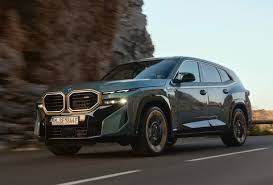
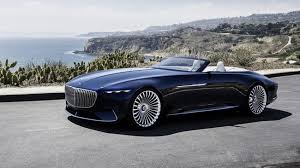
Winner: Mercedes-Benz
Luxury Large SUVs: Flagship Family Haulers
When scale and presence are paramount, large luxury SUVs step into the spotlight. The 2025 BMW X7 is projected to maintain its position as a compelling choice, adeptly scaling up the best attributes of BMW’s SUV lineup into a spacious, three-row machine. Its sharp interior design, plush first and second-row seating, and engaging driving dynamics for a vehicle of its stature make it a standout. The iDrive system, refined over years, offers deep functionality, though it still has a learning curve for some.
Mercedes-Benz offers the 2025 GLS, a direct rival to the X7, known for its ultra-upscale cabin, supremely refined ride, and advanced comfort features. The GLS excels at insulating occupants from the outside world, providing a truly cosseting experience. Then there’s the iconic G-Class (G-Wagen), which for 2025 continues its dual role as a high-class off-road legend and a status symbol. While immensely capable off-road, its more utilitarian origins sometimes compromise its overall luxury vehicle refinement on pavement compared to the dedicated comfort of the GLS and X7. In the pure luxury large SUV comparison, the X7’s overall balance of engaging dynamics and practical luxury gives it the edge over the GLS, which focuses almost exclusively on comfort. High-end family SUVs still demand some driver connection.
Winner: BMW
Luxury Subcompact Cars: Nimble and Niche
In the entry-level luxury car space, BMW’s 2025 2 Series Coupe remains a potent offering, celebrated for its pure driving enjoyment and compact, agile chassis. It’s a throwback to simpler, more driver-focused BMWs. The 2 Series Gran Coupe and the Mercedes-Benz CLA Class both target a youthful demographic, blending sleek design with accessible luxury. The CLA is notably nimble and packs significant tech into its stylish cabin.
However, for sheer driving thrills and a genuine connection to the road, the 2 Series Coupe continues to set the benchmark in this niche. Mercedes-Benz makes a strong play with the CLA’s aesthetics and infotainment, but the BMW’s traditional rear-wheel-drive platform (in coupe form) offers a more spirited driving experience for entry-level luxury sports car enthusiasts.
Winner: BMW
Luxury Small Cars: The Foundational Sedans
The small luxury sedan segment has historically been where BMW and Mercedes-Benz cemented their legacies. The 2025 BMW 3 Series is expected to continue its reign as one of the market’s premier small luxury sedans. It remains fun to drive, boasts powerful and efficient engines, and offers a spacious interior and trunk for its class. The 3 Series brilliantly blends everyday usability with exhilarating performance. BMW also offers the 4 Series in coupe, convertible, and Gran Coupe forms, appealing to those seeking more distinctive styling and performance.
The 2025 Mercedes-Benz C-Class is a formidable opponent, offering a more comfort-oriented ride and a gorgeous, tech-laden interior that echoes the flagship S-Class. While immensely comfortable and sophisticated, the C-Class often plays a slightly softer tune compared to the 3 Series’ sharp engagement. For 2025, the 3 Series’ continued emphasis on driving purity combined with its growing suite of luxury features keeps it ahead. Compact executive sedans from BMW still prioritize driver appeal.
Winner: BMW
Luxury Midsize Cars: The Sweet Spot of Sophistication
This segment represents a crucial battleground, balancing luxury, performance, and everyday usability. The 2025 Mercedes-Benz E-Class, like its S-Class sibling, is poised to stand out as a cornerstone of its segment. The redesigned E-Class for 2025 offers an even more refined, insulated ride, an exceptionally high-tech cabin with enhanced MBUX capabilities, and a comprehensive list of driver-assistance features. While the sheer amount of tech can initially feel overwhelming, Mercedes-Benz’s elegant integration makes it intuitive over time. The CLE, a handsome two-door derivative, adds a stylish coupe/convertible option to Mercedes’ midsize lineup.
BMW’s 2025 5 Series is equally highly regarded, though often for different reasons. While the latest generation maintains potent engine options and an upscale interior, some purists note a slight softening of the ultra-athletic steering feedback found in its predecessors. However, its overall refinement, strong performance, and improved comfort make it a compelling package. Given the E-Class’s unparalleled blend of comfort, cutting-edge technology, and interior opulence for 2025, it nudges out the 5 Series for those seeking the ultimate premium business sedan experience.
Winner: Tie (Acknowledging the very close competition, a tie is appropriate here as both excel in different aspects of the luxury midsize segment.)
Luxury Large Cars: Flagship Grandeur
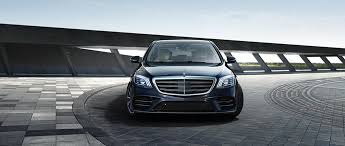
When it comes to the pinnacle of traditional luxury sedans, the 2025 Mercedes-Benz S-Class continues to set the global benchmark. Few vehicles can rival the comfort, opulence, and technological prowess of this legendary flagship. Its cabin, a sanctuary of tranquility, shields occupants from the outside world with unparalleled noise isolation and ride quality. For 2025, expect even more advanced predictive chassis control and a highly intuitive, AI-enhanced MBUX infotainment system that redefines the in-car experience with sophisticated voice commands and personalized profiles. It’s the standard for executive luxury sedans.
The 2025 BMW 7 Series finishes just behind the S-Class, offering its own bold, modern take on a world-class cabin. Its potent infotainment system, while powerful, might still have a slightly steeper learning curve than MBUX for some users. While the S-Class prioritizes ultimate comfort, the 7 Series traditionally offers a more engaging driving experience for a large sedan. However, in the realm of outright luxury, serene comfort, and technological integration, the S-Class’s dominance remains largely unchallenged for 2025.
Winner: Mercedes-Benz
Luxury Sports Cars: Adrenaline and Precision
For enthusiasts seeking raw performance and thrilling driving dynamics, BMW historically holds a strong hand. The 2025 BMW M3 and M4 continue as renowned sport sedans and coupes, respectively, delivering exceptional power, razor-sharp handling, and an visceral driving experience. The M2, often considered the most faithful to BMW’s performance heritage, offers an unfiltered, compact, and immensely engaging package. For those desiring open-air exhilaration, the Z4 provides a stylish and agile roadster experience. BMW’s “M” division consistently delivers high-performance luxury vehicles.
Mercedes-Benz offers a compelling lineup of its own through its AMG division. While BMW focuses on performance variants of existing models, Mercedes-Benz also fields dedicated sports cars like the AMG GT, an exciting and formidable machine. The SL, for 2025, continues its evolution as a grand-touring convertible, blending luxury with potent performance suitable for long-distance cruising. While the AMG GT is a powerhouse, BMW’s broader and consistently excellent range of driver-focused performance vehicles, especially the M-cars, gives it the edge for sheer driving excitement and purity of purpose in 2025.
Winner: BMW
Luxury Electric Cars: The Silent Revolution
The transition to electric vehicles is accelerating, and both brands are heavily invested. The 2025 BMW i7, an electric counterpart to the 7 Series, is a bold statement, combining futuristic styling with dominant, silent performance. It’s a showcase of BMW’s electric flagship capabilities. The i4, an EV interpretation of the engaging 4 Series Gran Coupe, also delivers impressive performance and range. BMW’s electric lineup prioritizes dynamics and innovative design.
Mercedes-Benz offers a slightly more expansive and often confusingly named range for 2025, including the EQE Sedan and EQS Sedan. Both boast serene driving dynamics, opulent cabins, and impressive range figures for 2025 models, often featuring the stunning Hyperscreen display. Mercedes leans into ultra-smooth power delivery and a tranquil cabin environment for its EVs. While Mercedes offers a compelling range, BMW’s integration of its classic driving dynamics into its EVs, especially the i4 and i7, combined with a somewhat clearer product strategy for premium electric sedans, gives it a slight advantage for those who still crave engagement.
Winner: BMW
Luxury Electric SUVs: Electrifying the Family Hauler
In the rapidly expanding electric SUV market, BMW’s 2025 iX continues to stand out. While commanding a premium price, it delivers powerful acceleration, a uniquely spacious and functional interior, cutting-edge technology, and ample room for passengers and cargo. Its distinctive design language sets it apart, embodying a futuristic approach to luxury utility.
Mercedes-Benz offers the EQB, EQE SUV, and EQS SUV. The EQB provides a more compact, family-friendly option, while the EQS SUV is a true electric flagship, delivering exceptional comfort and technology. The EQE SUV slots in as a mid-range offering. For 2025, Mercedes has likely refined the range and charging capabilities across its EQ lineup. However, the iX’s overall package of performance, interior innovation, and distinct aesthetic makes it a highly desirable choice. The clarity of BMW’s iX offering, compared to Mercedes’ more diffused EQ SUV strategy, gives it a slight lead in carving out its niche for electric luxury SUV buyers.
Winner: BMW
Safety: Protecting the Precious Cargo
Both BMW and Mercedes-Benz are at the forefront of automotive safety, deploying comprehensive suites of advanced driver assistance systems (ADAS) across their 2025 lineups. Expect both brands to offer Level 2+ semi-autonomous driving capabilities, predictive collision avoidance, enhanced lane-keeping systems, and sophisticated parking aids as standard or widely available features. For 2025, a focus on cybersecurity and over-the-air (OTA) updates for safety features will be paramount.
Historically, BMW models like the 2 Series, 3 Series, 5 Series, and X3 consistently achieve top safety ratings from organizations like the IIHS and NHTSA. Mercedes-Benz models such as the C-Class, E-Class, GLC-Class, and GLE-Class perform nearly as well. The lack of comprehensive crash test data for all EV models from both brands remains a minor caveat, but their engineering prowess ensures robust passive and active safety measures. Given BMW’s slightly broader range of tested models consistently achieving stellar scores, it maintains a marginal advantage in quantifiable safety, providing strong luxury car safety features.
Winner: BMW
Performance: The Thrill of the Drive
For driving enthusiasts, performance remains a key differentiator. BMW has consistently delivered across its premium brand portfolio. From the agile 3 Series to the executive 7 Series and the exhilarating 8 Series, BMW vehicles are engineered to excite behind the wheel. The electrification push has only amplified this, with the i4, i7, and iX earning some of the highest performance scores for their instant torque and refined electric powertrains. The M3 and M4 continue to be benchmarks in the high-performance luxury car segment.
Mercedes-Benz also offers exceptional performance, particularly through its AMG division and high-end models like the S-Class (with its effortless power), the AMG GT, SL, and EQS sedan. These vehicles boast impressive power outputs and often sophisticated adaptive suspensions. However, some entry-level Mercedes models like the GLA and GLB prioritize value over outright performance. While Mercedes has powerful offerings, BMW’s consistent dedication to driver engagement and its broader lineup of vehicles that prioritize spirited driving dynamics across conventional and electric powertrains, gives it the overall edge in performance for 2025.
Winner: BMW
Reliability: Long-Term Ownership Confidence
Reliability scores can be a bit fragmented across the luxury automotive landscape, influenced by rapidly evolving technology and varying reporting methodologies. For 2025, both BMW and Mercedes-Benz are expected to continue improving their quality control and software stability. BMW has historically shown a strong performance in recent J.D. Power predicted reliability studies, with models like the X1, X3, 2 Series, and 7 Series frequently scoring in the “Great” range (81-90). The brand’s average score often sits favorably.
Mercedes-Benz has made strides in reliability, with models like the E-Class and GLE achieving solid scores. However, historically fewer Mercedes models have reported full reliability data compared to BMW. Both brands offer robust four-year/50,000-mile powertrain warranties. Crucially for EVs, BMW’s electric battery packs carry an eight-year/100,000-mile warranty, while Mercedes-Benz often offers an even more generous 10-year/155,000-mile warranty, a significant consideration for electric vehicle ownership costs. Despite Mercedes’ superior EV battery warranty, BMW’s more consistent overall reliability data across a wider range of conventionally powered models gives it the slight lead for 2025.
Winner: BMW
Interior Design & Technology: The Personal Sanctuary
If BMW has traditionally been the performance brand, Mercedes-Benz has long been the undisputed champion of interior comfort, luxury, and aesthetic design. For 2025, Mercedes-Benz continues to set the industry benchmark for automobile interiors. Whether it’s the plush GLE, the opulent GLS, the sophisticated E-Class, or the gold-standard S-Class, Mercedes-Benz cabins are meticulously crafted, featuring premium materials, exquisite fit-and-finish, and stunning digital integration. The MBUX infotainment system, with its augmented reality navigation and sophisticated voice control, is often seen as leading the pack in intuitiveness and visual appeal for luxury car infotainment systems.
BMW has made significant strides, with models like the X1, X3, and i7 offering outstanding cabins in terms of build quality, material selection, and modern design. The iDrive system, with its physical controller and touch capabilities, offers deep functionality. However, while BMW’s interiors are excellent, they often prioritize driver ergonomics and a sportier aesthetic. Mercedes-Benz consistently delivers a more enveloping sense of luxury, with a greater emphasis on passenger comfort, ambient lighting, and multi-sensory experiences that elevate the cabin beyond mere transportation.
Winner: Mercedes-Benz
The Winner Is…
Analyzing the projected landscape for 2025, it’s clear that both BMW and Mercedes-Benz continue to innovate and deliver exceptional luxury vehicles. However, when tallying the wins across segments and key attributes, BMW edges out its rival.
BMW consistently demonstrates that its vehicles can be engaging to drive, technologically advanced, and exquisitely refined. The brand’s commitment to dynamic performance, even in its growing electric lineup, resonates deeply with those who value the act of driving. From entry-level models to its flagships, BMW maintains a cohesive brand identity focused on the driver.
Mercedes-Benz, on the other hand, truly excels in delivering unparalleled comfort, sumptuous interiors, and a serene, luxurious experience. Its cabins remain world-class, and many of its vehicles set the bar for refinement and digital elegance in their respective segments. The Mercedes-Benz S-Class continues to be the epitome of luxury, and their EV battery warranties are a strong statement.
For 2025, the automotive world is rapidly evolving. The advent of AI, sustainable materials, and increasingly autonomous driving features will continue to reshape the luxury segment. While Mercedes-Benz offers compelling choices for those prioritizing ultimate comfort and technological opulence, BMW’s slightly broader victory across more categories, especially in the crucial areas of overall performance and a balanced approach to modern luxury, gives it the overall lead.
Ready to Experience the Future of Luxury?
The best way to truly understand the distinctions between these incredible brands is to experience them firsthand. Whether your heart yearns for the engaging spirit of a BMW or the serene elegance of a Mercedes-Benz, we invite you to explore the latest 2025 models. Visit your local dealerships, schedule a test drive, and discover which of these German legends truly aligns with your vision for premium automotive excellence. Your next luxury journey awaits.