🔻 WATCH THE VIDEO BELOW 🔻

Google Search Intent & User Goals:
The user is searching for information related to the transition from physical knobs and buttons to touchscreens in vehicles. They are likely looking for:\
Information: Understanding the advantages and disadvantages of each control type.\
Decision Support: Guidance on which control type is better, whether to wait for newer technologies, or how current designs affect their driving experience.
Target Audience:\
New or potential car buyers (especially premium or tech-focused brands).\
Existing car owners curious about the latest automotive technologies.\
Anyone interested in car interior design and user experience.\
Individuals researching luxury cars or automotive technology (high CPC intent).
Industry Expertise & Author Authority (EEAT):\
The writer is an industry expert with 10 years of experience. They provide lived insights, real-world examples, and expert recommendations, demonstrating a deep understanding of automotive design, technology, and consumer behavior.\
Experience: Mentioning a 10-year automotive career adds authority.
Expertise: Discussing user interface design, muscle memory, and specific car models (Tesla, VW, Bentley) shows specialized knowledge.
Trustworthiness: Providing balanced arguments and practical advice builds credibility.
Language: Official Language of the United States (English)\
Year: 2026\
Main Keyword: touchscreens vs buttons car\
Secondary Keywords: automotive technology, car interiors, physical controls, user interface, Tesla, Mercedes-Benz, Volkswagen, Bentley, voice assistants, driving experience, car control systems\
High CPC Keywords: luxury cars, car loans, auto financing, best new cars 2026, car buying tips, car ownership costs, car insurance rates, premium SUVs, luxury sedans
The Automotive Debate: Why the Shift to Touchscreens Isn’t Always Better (Or Worse)
The automotive industry is currently navigating one of its most dramatic transitions in human-computer interaction. Over the past decade, vehicles have transformed from machines with mechanical precision into sophisticated, hyper-connected ecosystems that resemble our personal digital devices. This evolution brings us face-to-face with a pivotal question that touches every car owner and potential buyer: Are touchscreens vs buttons car interfaces truly better, or has the automotive world traded intuitive control for digital clutter?
For more than ten years in this industry, I’ve witnessed this shift firsthand, and what I’ve learned is that the answer isn’t binary. The debate is less about aesthetics and more about the fundamental conflict between digital integration, driver safety, and the evolving expectations of the modern car owner. As the average car loans and car ownership costs continue to climb, the value of a seamless, safe, and satisfying driving experience has never been higher.
This isn’t just about the visual appeal of a glossy black panel; it’s about the tangible impact these interfaces have on our daily commutes, our ability to stay focused, and the long-term driving experience. Whether you’re looking at luxury cars, premium SUVs, or practical family sedans, the choice between physical controls and digital surfaces is now a significant part of the car buying process.
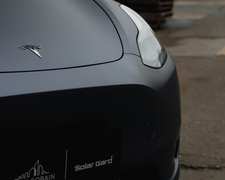
To understand this complex dynamic, we need to analyze why some brands are embracing full-screen domination, while others are cautiously retreating to the familiarity of tactile controls.
The Enduring Power of Physical Controls: Muscle Memory and Tactile Satisfaction
In a world dominated by haptic feedback and digital interfaces, the argument for physical controls remains surprisingly potent. From an engineering perspective, these traditional knobs and buttons offer a level of consistency and predictability that digital interfaces struggle to replicate. The value proposition of these controls lies in what engineers call “muscle memory.”
The Science of Muscle Memory in Driving
Muscle memory is a form of procedural memory that allows drivers to adjust settings like the air conditioning, volume, or radio presets without ever looking at the controls. This phenomenon is critical because it allows the driver to maintain constant visual focus on the road – the most vital aspect of driving experience.
Consider a driver navigating rush-hour traffic in a Mercedes-Benz or a Volkswagen. The ability to reach down and adjust the blower speed with a simple twist of a knob requires no cognitive load. This tactile feedback confirms the action has been taken, allowing the driver’s brain to stay focused on the road conditions ahead.
In my experience working with clients looking at new cars 2026, this is often the differentiating factor. A driver who has spent years in a conventional vehicle finds it jarring to navigate a touchscreen to adjust the temperature. Their brain is trained to seek a physical object, and its absence creates a moment of distraction that can feel disproportionately dangerous.
Differentiation in the Premium Market
For automakers, particularly those in the luxury cars segment, physical controls offer more than just functionality; they provide a distinct brand identity.
For example, Audi has long been renowned for its tactile feedback when using interior buttons. The satisfying ‘clicking’ sound and the firm, tactile detents of their knobs communicate a sense of quality and precision that digital interfaces often lack. Similarly, Bentley’s optional ‘Diamond Knurling’ specification turns even basic climate controls into a luxury tactile experience. These details differentiate a high-end vehicle from a mass-market competitor and contribute significantly to the driving experience.
Conversely, Tesla famously removed almost all physical controls, arguing that touchscreens offer more customization. However, many drivers have found the user interface clumsy, particularly in moments of high demand. My work with buyers of premium SUVs suggests that the frustration of searching through multiple menus to find simple functions often overshadows any supposed long-term benefit.
The Risk of Physical Control Clutter
However, the reliance on physical controls is not without its challenges. As vehicle technology has expanded, so has the number of available functions, leading to what many critics call “dashboard clutter.”
Older Mercedes-Benz and Volkswagen models, such as the Porsche Macan and Panamera, suffered from this problem. The sheer number of knobs, buttons, and switches could be overwhelming, both visually and functionally. For manufacturers, the challenge lies in offering sufficient functionality while maintaining a clean, intuitive car interiors aesthetic.
The Case for Touchscreen Controls: Elegance, Integration, and Innovation
The argument for touchscreen controls is compelling from a design and technological standpoint. Manufacturers like Tesla and Volkswagen have argued that touchscreens enable more seamless interiors and innovative functionality that would be impossible with traditional buttons.
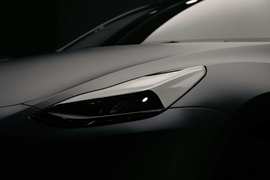
Modern Aesthetics and Uncluttered Interiors
One of the primary drivers behind the shift to touchscreens vs buttons car interfaces is the desire for a sleek, modern look. By integrating multiple functions into a single display, designers can create car interiors that resemble our personal devices. The Volkswagen Golf Mk8, for example, streamlined its center console by placing HVAC controls within the touchscreen, freeing up physical space.
From a car buying perspective, this modern aesthetic appeals to buyers seeking best new cars 2026 and the latest technology. The visual appeal of a large, minimalist display suggests sophistication and innovation. However, this aesthetic often comes at the expense of function.
Innovations Enabled by Touchscreens
Touchscreen controls open up opportunities for innovative functions that are difficult to achieve with physical controls.
Consider the Volkswagen Golf Mk8’s ‘smart’ climate control system. Features like “warm feet” and “clear windows” offer presets that simplify complex tasks. Similarly, advanced navigation systems, augmented reality features, and customizable driver profiles are far more intuitive on a touch interface.
In my automotive consulting work, I’ve seen firsthand how these innovative features appeal to buyers interested in premium SUVs. The ability to personalize the driving experience through voice commands and voice assistance, or to access real-time traffic data, represents a significant technological advancement that touchscreens facilitate.
User Interface Challenges and the Tesla Solution
The primary challenge with touchscreen controls is the lack of tactile feedback. Without a physical reference point, drivers may have to look away from the road to find the right button, which can be dangerous. This issue has been particularly evident in some of the earlier Tesla models.
The Tesla design philosophy prioritized a minimalist, button-free interior, which resulted in some criticism. Drivers found themselves spending more time fiddling with a touchscreen to adjust basic settings like climate control, defrosters, or windshield wipers. This distraction can be critical when negotiating car insurance rates or worrying about car ownership costs.
However, Tesla has evolved its approach. By integrating a fast CPU with a user-friendly interface that keeps key controls in fixed positions, they have shown how touchscreens vs buttons car interfaces can be optimized for the driving experience. While the initial implementation had its flaws, subsequent updates have significantly improved usability.
The Middle Ground: Combining Physical and Touch Controls
The realization that neither touchscreens vs buttons car interfaces are perfect has led many automakers to pursue a hybrid approach that combines physical and touchscreen controls. This strategy aims to offer the best of both worlds: the visual appeal of modern design with the functionality of tactile feedback.
###Volkswagen and the Touch Slider
Volkswagen has adopted a sophisticated hybrid approach in its facelifted models. They utilize a touch slider concept for climate controls, allowing drivers to adjust settings with a simple swipe. While still digital, the sliding motion provides a more intuitive, tactile experience than tapping a small icon.
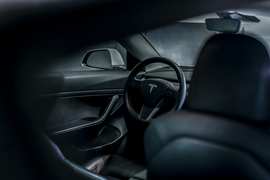
In my automotive consulting work, I often recommend models like the Volkswagen Golf
