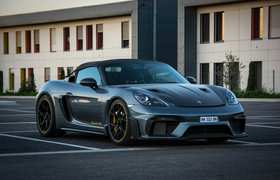
Here is the completely rewritten article in English, about 2000 words, focusing on the top Porsche 911s that are most memorable after decades of driving them. The tone is that of an experienced automotive expert.
The Definitive Portfolio: 5 Porsche 911 Icons That Defined My Driving Life
For over four decades, I’ve been immersed in the world of Porsche, spending countless hours behind the wheel of their most iconic creation: the 911. Each iteration, each sub-model, has pushed the envelope of what a rear-engine sports car can achieve. Some have been evolutionary steps, others revolutionary leaps, but all have left an indelible mark on my automotive journey.
The Porsche 911 isn’t just a car; it’s an enduring legend, a chassis that Porsche has refined, adapted, and perfected while preserving the essence that made it special in the first place. It’s a design philosophy that has stood the test of time, proving its relevance decade after decade. From the visceral, raw experiences of the early models to the technological marvels of today, the 911 continues to deliver a driving experience that few others can match.
After years of testing, commuting, and benchmarking, it’s impossible to maintain neutrality. Certain 911s rise above the rest, not necessarily because they are the fastest or most expensive, but because they capture a specific moment in time, or embody a driving philosophy that resonates on a deeper level. These are the cars that linger in the memory long after the keys have been returned.
In this definitive portfolio, I’ll revisit five Porsche 911 models that have truly defined my career. These aren’t just vehicles to me; they are experiences, lessons in engineering, and benchmarks that have shaped my understanding of what a true sports car should be.
The Genesis: The Original Porsche 930 Turbo
When I first experienced the original 911 Turbo, known internally as the 930, it was the stuff of legend. Road test journalists spoke of it in hushed, reverent tones. They painted a picture of a machine that demanded absolute respect, a beast whose acceleration was often described as a binary switch rather than a smooth surge. This was a car that punished mistakes, a true driver’s tool that didn’t coddle its occupants. It was nicknamed “The Widowmaker,” a moniker that added to its mystique.
I recall thinking to myself, “Is this truly the automotive god they say it is?” I’d spent years driving the pure, naturally aspirated 911 Carreras, and the Turbo was a different species altogether. It wasn’t just faster; it was a challenge. To master the 930 Turbo was to wrestle with physics, to dance between corner-entry understeer and corner-exit oversteer with reflexes honed by experience and nerves of steel.
I finally got my hands on one of these automotive legends after 35 years in the industry. It was one of the first 30 production Turbos ever built, a pristine example now residing in Porsche’s heritage fleet. Stepping behind the wheel, the sheer weight of its reputation was palpable. I took it slow at first, easing into the experience. I played with the throttle, listening to the turbocharger spool up and watching the tachometer, trying to build a mental map of its power delivery.
To my surprise, the engine was remarkably tractable. At 2,000 rpm in top gear, it could cruise comfortably at 45 mph, a far cry from the aggressive beast I had envisioned. But when the revs climbed to 3,500 rpm, the 930 Turbo truly woke up. There was a noticeable surge in acceleration as the 0.8 bar of boost hit the engine. Yet, the sledgehammer blow I expected wasn’t there. It was smooth, powerful, and controlled.
The key to taming the original 930 Turbo, I learned, was to keep the engine spinning above 4,000 rpm. This ensured the turbo was constantly energized, ready to deliver power when needed. Yes, there was turbo lag – very noticeable by modern standards – but it was manageable. Even today, half a century after its debut, the 930 Turbo remains an incredibly potent machine.
The first gear hits 50 mph, second reaches 90 mph, and third takes you close to 130 mph. This means the 930 can devour twisty two-lane roads using only second and third gears. And while its 256 horsepower might seem modest today, at just 2,513 pounds, it handles corners with agility that belies its age. Back in its era, this car was otherworldly. It was the ultimate driving experience, a true expression of automotive engineering that has stood the test of time.
The Pinnacle of Air-Cooled Excellence: The 993 Generation
For Porsche purists, the 993-generation 911 is the last of the line. It’s the car that still offers the tactile intimacy of the air-cooled flat-six engine, with the metallic clatter that defined Porsche for decades. But back in the mid-1990s, when I first drove it, the 993 was anything but a relic of the past. It was the future of the 911, a car that redefined the limits of physics and performance for the brand.
The 993 was a revelation in the 911 lineup. It was the first model to feature a revolutionary rear suspension design, replacing the notoriously difficult semi-trailing arms of old with a modern multilink setup. This new geometry allowed for subtle initial toe-out on corner entry, followed by progressive toe-in as lateral forces increased, all while significantly reducing the camber change that had been the Achilles’ heel of 911s since their inception in 1963.
This engineering masterpiece was complemented by a completely new steering system. With a lock-to-lock ratio of just 2.5 turns, it was 16 percent quicker than previous models, giving the front end a decisive, surgical feel. The 993 also introduced a new six-speed manual transmission, a welcome upgrade that made the most of the 3.6-liter flat-six engine. Thanks to lighter internals, Bosch Motronic 2.0 engine management, and a redesigned dual exhaust system, the 993’s engine felt responsive and eager, delivering 268 horsepower at 6,100 rpm.
Compared to the previous 964 generation, the 993 was a quantum leap forward. But the engineering brilliance, led by Ulrich Bez (who would later become the head of Aston Martin), wasn’t the only thing that made the 993 special. It also featured a stunning redesign under the direction of design chief Harm Lagaay. He corrected what he perceived as visual flaws in the 964, creating a more streamlined, aerodynamic silhouette. The interior was cleaner, too, with fewer buttons scattered haphazardly throughout the cabin.
The 993 was faster, more forgiving, and more desirable than any 911 before it. It proved that Porsche could push the boundaries of performance without losing its soul. The tactile feedback, the sound of that air-cooled flat-six, the way the chassis interacted with the road—it was all there, but refined to a level that was simply breathtaking. For many, myself included, the 993 stands as the perfect marriage of heritage and modernity. It is a timeless design that continues to inspire awe and admiration.
The Engine that Saved the Brand: The 996-Series 911
In the mid-1990s, Porsche made a decision that sent shockwaves through the automotive world. They decided to install a water-cooled flat-six engine in the tail of the 911. To aficionados, this was akin to Bob Dylan hanging up his acoustic guitar and picking up a Fender Stratocaster at the 1965 Newport Folk Festival. It was radical, controversial, and, to many, sacrilegious.
But the 996-series 911 was more than just a bold design choice; it was a hero car in every sense of the word. It was the 911 that saved Porsche. When the 996 was unveiled in 1998, it marked the first clean-sheet redesign of Porsche’s indefatigable sports car in 34 years.
Engineered and developed under the direction of Porsche R&D chief Horst Marchart, the 996 was a stroke of genius. It shared 38 percent of its components with an all-new, less expensive mid-engine roadster that the world would come to know as the Boxster. Porsche boss Wendelin Weideking knew that to survive, the company needed two different products to sell when the aging 928 and 968 models were discontinued. “We did two cars for the price of one-and-a-half,” design boss Harm Lagaay said with a smile after the 996 was unveiled.
While the media focused on the car’s relationship with the Boxster and the water-cooled engine, the true story of the 996 ran much deeper. In 1994, it had taken Porsche 130 hours to build a 993-series 911; the 996 took just 60 hours to build. The modern 911 had arrived. It was roomier,

 Here is the completely rewritten article in English, about 2000 words, focusing on the top Porsche 911s that are most memorable after decades of driving them. The tone is that of an experienced automotive expert.
The Definitive Portfolio: 5 Porsche 911 Icons That Defined My Driving Life
For over four decades, I’ve been immersed in the world of Porsche, spending countless hours behind the wheel of their most iconic creation: the 911. Each iteration, each sub-model, has pushed the envelope of what a rear-engine sports car can achieve. Some have been evolutionary steps, others revolutionary leaps, but all have left an indelible mark on my automotive journey.
The Porsche 911 isn’t just a car; it’s an enduring legend, a chassis that Porsche has refined, adapted, and perfected while preserving the essence that made it special in the first place. It’s a design philosophy that has stood the test of time, proving its relevance decade after decade. From the visceral, raw experiences of the early models to the technological marvels of today, the 911 continues to deliver a driving experience that few others can match.
Here is the completely rewritten article in English, about 2000 words, focusing on the top Porsche 911s that are most memorable after decades of driving them. The tone is that of an experienced automotive expert.
The Definitive Portfolio: 5 Porsche 911 Icons That Defined My Driving Life
For over four decades, I’ve been immersed in the world of Porsche, spending countless hours behind the wheel of their most iconic creation: the 911. Each iteration, each sub-model, has pushed the envelope of what a rear-engine sports car can achieve. Some have been evolutionary steps, others revolutionary leaps, but all have left an indelible mark on my automotive journey.
The Porsche 911 isn’t just a car; it’s an enduring legend, a chassis that Porsche has refined, adapted, and perfected while preserving the essence that made it special in the first place. It’s a design philosophy that has stood the test of time, proving its relevance decade after decade. From the visceral, raw experiences of the early models to the technological marvels of today, the 911 continues to deliver a driving experience that few others can match.