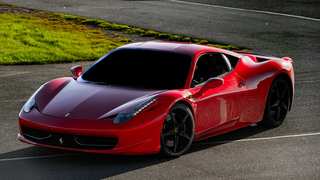
The Next Horizon: Inside Czinger 21C VMax — A Deep Dive into Additive Manufacturing and Hypercar Innovation
Czinger. The very name has become synonymous with a seismic shift in automotive engineering. This Southern California-based company isn’t just another boutique hypercar builder; it is a harbinger of the future, a company that has successfully integrated advanced AI, additive manufacturing (3D printing), and radical aerodynamic design to create machines that blur the line between technology and raw performance. The Czinger 21C VMax, in particular, represents the apex of this philosophy—a vehicle that challenges our very definition of what a hypercar can be.
For years, we at MotorTrend have watched the evolution of this audacious startup. We sat down with the founders, father and son duo Kevin and Lukas Czinger, for the InEVitable podcast back in October 2022. That conversation only deepened our fascination. When the opportunity arose to drive the Czinger 21C VMax on a three-day road rally, we didn’t just see a chance to test another 1,250-horsepower hybrid; we saw a mission. We wanted to understand this engineering marvel beyond the sterile confines of a track. Can a vehicle that looks like it belongs in a science fiction epic, built with the kind of alien technology used by the Department of Defense, function in the real world? Can it navigate crowded streets, navigate congested traffic, and remain comfortable for a 500-mile journey?
The answer, we discovered, is a resounding and, frankly, unsettling yes. The Czinger 21C VMax is a paradox—a brutal, uncompromising performance machine that is, surprisingly, manageable and utterly thrilling even on public roads.
Factory Fresh: Entering the Belly of the Beast
Our journey began not at a traditional automotive factory, but at the headquarters of Divergent Technologies, the parent company of Czinger. Entering this facility was a surreal experience. I had to present a U.S. passport, something unheard of when visiting a car manufacturer. This isn’t because Divergent is an international corporation in the traditional sense, but because the technology it pioneers is so revolutionary that it has attracted attention from the Department of Defense. While we were strictly prohibited from photographing or discussing any military hardware—though one piece vaguely resembled a rocket—it was a stark reminder that we were at the cutting edge of innovation.
We were given a tour by Lukas Czinger, the young and visionary CEO. The centerpiece of the tour was the additive manufacturing department. Seeing half a dozen massive, state-of-the-art 3D printers working in tandem was awe-inspiring. They were systematically zapping powdered aluminum into components that looked more like biological bone structures than mechanical parts. The difference between this and traditional manufacturing is night and day. It’s not just about speed; it’s about precision and design.
Lukas explained the core philosophy behind their manufacturing: achieving “Pareto optimality,” the point where any change to the design—adding or removing a single gram of material—negatively impacts the overall performance. Consider the engineering challenge of designing a component like a remote reservoir for a car’s rear suspension damper. Engineers must accommodate a specific space constraint while ensuring the part can withstand extreme forces. Using their advanced AI software, the system iterates through hundreds of thousands of potential designs. It sorts through these massive digital libraries, ultimately identifying the most structurally sound and lightest configuration possible. This process, effectively evolution at warp speed, is what sets Divergent and Czinger apart.
Beyond the Department of Defense, nine major automotive OEMs currently utilize Divergent’s 3D-printed technology. While Aston Martin, Bugatti, and McLaren have publicly acknowledged using their parts, speculation remains high that other manufacturers like Ferrari (specifically their F80) might also be leveraging this groundbreaking system, particularly for specialized components like control arms.
Under the Carbon Fiber: The Anatomy of the 21C VMax
Czinger offers two variants of what is essentially the same car: the high-downforce, track-focused 21C, named in homage to the 21st century, and the wingless, aerodynamically sleek VMax model. The official designation for the VMax is still the 21C VMax, although the 21C designation is conspicuously absent from the exterior of the vehicle. For the inaugural Velocity Tour, a 500-mile road rally through California’s renowned wine country, I had the privilege of piloting the silver VMax.
I purposefully use the word “piloting” rather than “driving” because the cabin environment is far more akin to a fighter jet’s canopy than a traditional automotive cockpit. Czinger themselves have likened it to being inside a jet fighter. Although I have never piloted a jet, I have experienced the visceral feeling of riding shotgun in an Extra 330LT stunt plane, and the similarity is striking. Both vehicles feature glass positioned less than a foot away from either side of your head, offering unparalleled visibility. However, the process of entering and exiting the car is nothing short of ridiculous. The sills, which are massive, are primarily designed to house the car’s battery packs.
The Hybrid Power Plant: Raw Horsepower, Unmatched Efficiency
The 21C VMax is a hybrid hypercar, and the sills contain a total of 4.4 kilowatt-hours (kWh) of battery power, divided equally into two 2.2-kWh units. This isn’t a plug-in hybrid; instead, a motor powered by the mid-mounted V-8 engine keeps the battery pack continuously charged. This dual-motor system delivers a combined 500 horsepower to the front axle, with each wheel having its own independent motor. The internal combustion engine is a Czinger-designed 2.9-liter twin-turbo V-8. On California’s lower-octane 91-octane premium unleaded gasoline, the V-8 generates 750 horsepower. However, if you opt for 100-octane race fuel, the power output increases to 850 horsepower. Czinger has also indicated that the engine can run on ethanol, potentially producing even more power, although they have not yet released the official figures. We anticipate a possible 10 percent increase in horsepower with ethanol.
The gasoline engine sends its power to the rear wheels through an Xtrac seven-speed automated sequential gearbox. This transmission is similar to the Xtrac seven-speed unit found in the Pagani Utopia. However, Czinger has gone a step further by not only 3D printing the transmission case but also integrating small 48-volt electric motors to execute shifts at low speeds. This ingenious engineering solution eliminates the jarring, jerky surges that plague most other automated single-clutch gearboxes. The twin-barrel actuators function exactly as advertised, even in low-speed driving scenarios. Navigating through gas stations, restaurants, and hotel parking lots felt almost effortless—a genuine triumph of engineering. It’s a testament to the team that they managed to achieve such a smooth, refined experience in a car this powerful and lightweight.
Track Time: Taming the Beast
During the initial leg of the rally, I had a pro driver, Evan Jacobs, sitting behind me in the rear seat. This is standard procedure for many high-end hypercars (like Bugatti and Pagani) to ensure driver safety. Thankfully, Jacobs later assured the Czinger team that I was a capable driver and permitted me to drive solo for the remainder of the rally. We made a stop at Laguna Seca for some parade laps, but unfortunately, non-Czinger personnel are not permitted to drive the VMax on racetracks, even at the deliberately slow pace mandated for the rally participants.
Although I couldn’t drive, I seized the opportunity to ride shotgun, even if it meant climbing into the unconventional rear seat. The first thing to note is that the experience isn’t ideal for those with large calves or feet. My XXL calves were uncomfortably wedged between the carbon fiber tub and the seat, and my feet didn’t fit quite right either. However, the visibility through the side windows is phenomenal. Again, it reminded me of a stunt plane, and it was a genuinely novel way to experience a track day, something I have done more than 1,000 times in my career.
This became especially apparent when Jacobs and I convinced the Skip Barber Racing School staff to allow him to take the VMax for a couple of “6/10ths” hot laps. The most exhilarating hot lap I’ve ever experienced was riding shotgun in an Aston Martin Valkyrie LMH race car, where I could physically feel the blood pooling in my extremities during hard braking. The Czinger 21C VMax is now a close second, and remember, Jacobs was only pushing the car to about 60% of its capabilities. Even at this relatively tame pace and without the advantage of the aggressive rear wing, it was easy to understand how the Czinger 21C achieved the “California Gold Rush”—a remarkable feat of setting five production car track records—at Thunder Hill, Sonoma Raceway, Laguna Seca, Willow Springs, and the Thermal Club—all within five days, driving between each track along the way. Czinger later returned to Laguna Seca to not only break its own record but to reclaim the throne from a track-specific Koenigsegg Jesko Sadair’s Spear. The lap time achieved, a mind-boggling 1 minute 22.30 seconds, is faster than the fastest MotoAmerica Superbike lap ever recorded at Laguna Seca, which stands at 1:22.56.
Czinger claims the vehicle weighs approximately 3,60

 The Next Horizon: Inside Czinger 21C VMax — A Deep Dive into Additive Manufacturing and Hypercar Innovation
Czinger. The very name has become synonymous with a seismic shift in automotive engineering. This Southern California-based company isn’t just another boutique hypercar builder; it is a harbinger of the future, a company that has successfully integrated advanced AI, additive manufacturing (3D printing), and radical aerodynamic design to create machines that blur the line between technology and raw performance. The Czinger 21C VMax, in particular, represents the apex of this philosophy—a vehicle that challenges our very definition of what a hypercar can be.
For years, we at MotorTrend have watched the evolution of this audacious startup. We sat down with the founders, father and son duo Kevin and Lukas Czinger, for the InEVitable podcast back in October 2022. That conversation only deepened our fascination. When the opportunity arose to drive the Czinger 21C VMax on a three-day road rally, we didn’t just see a chance to test another 1,250-horsepower hybrid; we saw a mission. We wanted to understand this engineering marvel beyond the sterile confines of a track. Can a vehicle that looks like it belongs in a science fiction epic, built with the kind of alien technology used by the Department of Defense, function in the real world? Can it navigate crowded streets, navigate congested traffic, and remain comfortable for a 500-mile journey?
The Next Horizon: Inside Czinger 21C VMax — A Deep Dive into Additive Manufacturing and Hypercar Innovation
Czinger. The very name has become synonymous with a seismic shift in automotive engineering. This Southern California-based company isn’t just another boutique hypercar builder; it is a harbinger of the future, a company that has successfully integrated advanced AI, additive manufacturing (3D printing), and radical aerodynamic design to create machines that blur the line between technology and raw performance. The Czinger 21C VMax, in particular, represents the apex of this philosophy—a vehicle that challenges our very definition of what a hypercar can be.
For years, we at MotorTrend have watched the evolution of this audacious startup. We sat down with the founders, father and son duo Kevin and Lukas Czinger, for the InEVitable podcast back in October 2022. That conversation only deepened our fascination. When the opportunity arose to drive the Czinger 21C VMax on a three-day road rally, we didn’t just see a chance to test another 1,250-horsepower hybrid; we saw a mission. We wanted to understand this engineering marvel beyond the sterile confines of a track. Can a vehicle that looks like it belongs in a science fiction epic, built with the kind of alien technology used by the Department of Defense, function in the real world? Can it navigate crowded streets, navigate congested traffic, and remain comfortable for a 500-mile journey?