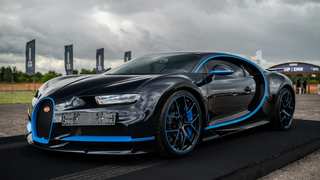
Aston Martin Valhalla: The Hypercar Redefining Performance and Luxury
Aston Martin Valhalla: A New Era of High-Performance Exotics
Since its initial appearance at the 2019 Geneva Motor Show as the AM-RB 003, the Aston Martin Valhalla has been one of the most anticipated vehicles to ever hit the road. Transitioning from a concept to a production marvel, the Valhalla represents Aston Martin’s aggressive push into the hybrid hypercar segment, blending British craftsmanship with Formula 1-grade engineering. Its name, derived from Norse mythology, evokes the ultimate afterlife realm for heroic warriors, perfectly matching the car’s extraordinary performance and exclusive nature.
The journey to production has been long, marked by significant technological evolution and strategic shifts within Aston Martin. Originally slated to feature an in-house-designed V-6 engine, the Valhalla’s powertrain has been upgraded to a production-ready hybrid system that produces a jaw-dropping combined output of 1,064 horsepower. This technological tour de force not only pushes the boundaries of automotive engineering but also sets a new benchmark for what a road-legal supercar can achieve.
Technical Evolution: From Concept to Production Reality
When the Aston Martin Valhalla was first previewed at the Pebble Beach Concours’ lawn in 2022, it offered a glimpse into the future of performance. The projected specifications, already impressive, have been surpassed by the finalized production model. The powertrain is built around a flat-plane-crank, dry-sump, twin-turbo 4.0-liter V-8 engine developed in partnership with Mercedes-AMG. This engine, already a force to be reckoned with in the AMG GT Black Series, has been significantly enhanced with larger turbos, a new inlet manifold, stronger pistons, and different camshafts to extract a staggering 817 horsepower.
But the true magic lies in the hybrid system. The Valhalla incorporates two Aston-designed radial-flux permanent-magnet motors at the front axle and a third integrated into the new eight-speed dual-clutch gearbox. These motors provide a combined 248 horsepower, resulting in a total system output of 1,064 horsepower and 811 lb-ft of torque. This isn’t just about raw power; it’s about smart integration. The hybrid system is powered by a 560-cell battery pack, efficiently cooled using a dielectric oil immersion system. As chief engineer Andrew Kay explained, this technology allows for extremely fast energy charging and deployment, a crucial feature for track performance.
Furthermore, the Valhalla is a plug-in hybrid (PHEV), offering up to 8.7 miles of electric-only range and a top speed of 80 mph in EV mode. This flexibility allows drivers to cruise silently in urban environments while maintaining the ability to unleash the full fury of the V-8 engine when desired.
Redefining the Supercar Narrative
The terminology surrounding the Valhalla has sparked debate, with the automaker referring to it as its first-ever mid-engine supercar, while many critics naturally categorize it as a hypercar. This semantic distinction is largely a product of the Valkyrie’s existence; the Valkyrie, with its $3+ million price tag and ultra-limited production of 285 units, remains in a class of its own. The Valhalla, with its $1+ million price point and production run of 999 units, might appear relatively accessible by comparison, but in the broader context of high-performance automotive engineering, it represents the pinnacle of modern technology and design.
In the current automotive landscape of the 2020s, the sheer pace of innovation is staggering. What was once considered the pinnacle of performance is now commonplace. When the McLaren F1 debuted in 1993, its 627 horsepower made it the benchmark for hypercars. Fast forward just twenty years, and the Bugatti Veyron redefined the segment with its 1,000 horsepower and million-dollar price tag.
Today, manufacturers are pushing performance to limits that were previously unimaginable. The Porsche 911 GT3 RS, with half the horsepower of the Valhalla, offers racing-derived aerodynamics and handling that demand pro-level driving skills. Meanwhile, marques like Ferrari, Porsche, and Czinger are releasing vehicles with hybrid powertrains, radical aerodynamics, and extreme power outputs. Even American automakers have entered the fray, with the Corvette ZR1X offering a 1,250 horsepower hybrid system that many never expected.
In this environment, the Aston Martin Valhalla emerges not as a simple performer, but as a comprehensive statement about the future of engineering. It’s a vehicle that challenges our perceptions of what is possible, blurring the lines between road cars and racing machines.
Driving the Valhalla: A Masterclass in Modern Performance
The driving experience of the Aston Martin Valhalla is as extreme as its name suggests. Despite its pseudo Le Mans Hypercar appearance, the Valhalla is surprisingly practical for daily use, though its extreme design necessitates certain compromises, notably the lack of luggage storage. The interior is driver-focused, featuring a unique, elevated-leg seating position inspired by Formula 1. There is no backrest angle adjustment, requiring drivers to adapt to the car’s fixed position. Similarly, the seats are fixed, meaning adjustments are made by pulling a leather strap that moves the entire seat base forward or backward.
While this might sound restrictive, drivers quickly adapt to the position, and the Valhalla’s Bilstein DTX active damping system makes for an incredibly comfortable ride on the road. The steering is precise and intuitive, offering a natural weighting across all drive modes. When testing the car on a long, open stretch of country road, the acceleration was relentless. Aston claims a 0-62 mph time of 2.5 seconds, and in real-world conditions, the car accelerates with the authority expected of a 1,064-horsepower machine. The torque delivery is particularly impressive, with 90% of the peak 811 lb-ft available from 2,500 rpm to 6,700 rpm, ensuring constant thrust throughout the rev range.
One notable aspect of the Valhalla’s powertrain is its redline, set at 7,000 rpm. While the V-8 offers immense power, it lacks the screaming high-revving character of naturally aspirated engines. The soundtrack is a complex mixture of the V-8’s combustion, the electric motors, and the turbochargers, producing a loud but restrained symphony that might not appeal to purists seeking an iconic engine note.
On the Track: Precision, Power, and Stability
When tested on the track, the Valhalla truly showcases its racing pedigree. The Circuito de Navarra circuit provided the perfect stage to demonstrate the car’s advanced torque vectoring, aerodynamics, and braking system. The Valhalla features a Race mode that optimizes the hybrid system for track use. In Sport+ mode on the road, the car dumps a large amount of electric boost to the wheels, rapidly depleting the battery, which is then recovered by the brake-by-wire system. On the track, this can lead to noticeable performance reductions after a few laps.
Race mode, however, operates differently. It meters electric assist with a recharge strategy that ensures the battery never reaches zero charge, preventing any reduction in performance due to battery depletion. Chief engineer Andrew Kay explained that this strategy results in a loss of only 15-20 horsepower, keeping the car consistent and usable throughout the entire lapping session.
As Angus MacKenzie noted in his earlier review, the Valhalla feels exceptionally benign, even when pushed hard. The car’s handling is neutral and stable, responding predictably to driver inputs without feeling like it’s about to step out. For drivers seeking a chaotic, high-drama experience with dramatic drifts, the Valhalla might feel too composed. It’s a car that encourages continuous pushing with confidence, thanks to its ability to maintain consistent performance through torque vectoring and aerodynamics.
The Science of Speed: Aerodynamics and Braking
The Valhalla’s active aerodynamic system plays a critical role in its dynamic performance. The front underbody wing and the deployable rear wing adjust their positions based on speed and driving conditions. The front wing resembles an F1 design, developed with Aston Martin Performance Technologies, a division of the F1 team. The rear wing provides an air-brake function when hard braking is applied.
While the Valhalla offers extreme aerodynamic capability, a few bureaucratic hurdles restrict its full potential. Due to safety regulations intended to prevent its use on the street, the rear wing cannot be raised with the car turned off, making it difficult for drivers to show it off at cars and coffee events. Similarly, the engine cover requires manual removal with tools, limiting the display of the V-8 engine.
Engineers prioritized stable, consistent downforce over headline-grabbing peak figures. The Valhalla, weighing approximately 3,850 pounds, generates an impressive 935 pounds of combined downforce at 124 mph and 1,345 pounds at 149 mph. This maximum downforce is maintained up to the car’s top speed of 217 mph, ensuring predictable and stable behavior for the driver.
The braking system also relies on regenerative energy, providing a firm brake pedal that remains consistent at all speeds. While brake-by-wire systems lack the traditional feel of hydraulic brakes, the Valhalla’s system is well-tuned, and the overall braking performance is exceptional.
The Future of Performance: A Masterpiece of Engineering
The Aston Martin Valhalla is more than just a new supercar; it represents the convergence of modern automotive technology, racing engineering,

 Aston Martin Valhalla: The Hypercar Redefining Performance and Luxury
Aston Martin Valhalla: A New Era of High-Performance Exotics
Since its initial appearance at the 2019 Geneva Motor Show as the AM-RB 003, the Aston Martin Valhalla has been one of the most anticipated vehicles to ever hit the road. Transitioning from a concept to a production marvel, the Valhalla represents Aston Martin’s aggressive push into the hybrid hypercar segment, blending British craftsmanship with Formula 1-grade engineering. Its name, derived from Norse mythology, evokes the ultimate afterlife realm for heroic warriors, perfectly matching the car’s extraordinary performance and exclusive nature.
The journey to production has been long, marked by significant technological evolution and strategic shifts within Aston Martin. Originally slated to feature an in-house-designed V-6 engine, the Valhalla’s powertrain has been upgraded to a production-ready hybrid system that produces a jaw-dropping combined output of 1,064 horsepower. This technological tour de force not only pushes the boundaries of automotive engineering but also sets a new benchmark for what a road-legal supercar can achieve.
Technical Evolution: From Concept to Production Reality
When the Aston Martin Valhalla was first previewed at the Pebble Beach Concours’ lawn in 2022, it offered a glimpse into the future of performance. The projected specifications, already impressive, have been surpassed by the finalized production model. The powertrain is built around a flat-plane-crank, dry-sump, twin-turbo 4.0-liter V-8 engine developed in partnership with Mercedes-AMG. This engine, already a force to be reckoned with in the AMG GT Black Series, has been significantly enhanced with larger turbos, a new inlet manifold, stronger pistons, and different camshafts to extract a staggering 817 horsepower.
Aston Martin Valhalla: The Hypercar Redefining Performance and Luxury
Aston Martin Valhalla: A New Era of High-Performance Exotics
Since its initial appearance at the 2019 Geneva Motor Show as the AM-RB 003, the Aston Martin Valhalla has been one of the most anticipated vehicles to ever hit the road. Transitioning from a concept to a production marvel, the Valhalla represents Aston Martin’s aggressive push into the hybrid hypercar segment, blending British craftsmanship with Formula 1-grade engineering. Its name, derived from Norse mythology, evokes the ultimate afterlife realm for heroic warriors, perfectly matching the car’s extraordinary performance and exclusive nature.
The journey to production has been long, marked by significant technological evolution and strategic shifts within Aston Martin. Originally slated to feature an in-house-designed V-6 engine, the Valhalla’s powertrain has been upgraded to a production-ready hybrid system that produces a jaw-dropping combined output of 1,064 horsepower. This technological tour de force not only pushes the boundaries of automotive engineering but also sets a new benchmark for what a road-legal supercar can achieve.
Technical Evolution: From Concept to Production Reality
When the Aston Martin Valhalla was first previewed at the Pebble Beach Concours’ lawn in 2022, it offered a glimpse into the future of performance. The projected specifications, already impressive, have been surpassed by the finalized production model. The powertrain is built around a flat-plane-crank, dry-sump, twin-turbo 4.0-liter V-8 engine developed in partnership with Mercedes-AMG. This engine, already a force to be reckoned with in the AMG GT Black Series, has been significantly enhanced with larger turbos, a new inlet manifold, stronger pistons, and different camshafts to extract a staggering 817 horsepower.