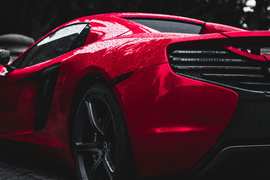
Aston Martin Valhalla: The Billion-Dollar Hypercar That Just Makes Sense
The question always comes back the same, doesn’t it? \”So, what’s it like?\”
It’s the oldest question in the book when you talk about cars like the 2026 Aston Martin Valhalla—a machine that costs a cool million dollars and packs a staggering 1,064 horsepower. And you know what? For years, the only right answer was a shrug and a weak grin. How could you describe a car that feels like it was lifted from a sci-fi movie to someone who hasn’t touched the wheel?
It’s a familiar feeling. You’re in a world where cars hit 600 horsepower like it’s casual Tuesday, and luxury SUVs boast more horsepower than Le Mans prototypes from a decade ago. This isn’t your dad’s 1980s V8 muscle car anymore. It’s a digital age, a hybrid era, and frankly, it’s starting to feel… normal.
But then you step inside the Valhalla. And suddenly, you remember why these cars even exist. They’re the poster children for what’s possible when physics is just a suggestion.
The Wait is Over (For Real This Time)
We’ve been waiting for this for a while. Seven years, to be precise. It all started back in 2019 at the Geneva Motor Show with the AM-RB 003 concept. It was a nod to Aston’s partnership with the Red Bull Racing Formula 1 team, a name derived from Norse mythology (Valhalla—the afterlife for Viking warriors, and conveniently, it starts with a ‘V’).
A lot has changed since then. The Red Bull connection faded, but the automotive world kept moving. And Aston Martin? Well, they moved too. There were leadership changes, technical pivots, and the realization that the automotive landscape of 2025 is a very different beast than what they imagined seven years ago.
The original plan? An in-house-designed turbocharged 3.0-liter V-6. That sounds nice in theory, but the reality of the hybrid hypercar wars—think LaFerrari, Porsche 918—demanded something more. So, they turned to Mercedes-AMG. Instead of their own V-6, the Valhalla borrows a hybridized twin-turbo V-8 from the AMG GT Black Series. They tweaked it, gave it bigger turbos, a custom intake manifold, stronger pistons, and different cams to push the output to nearly 100 more horsepower and 50 pound-feet of torque. It’s a big deal: the Valhalla is now the exclusive home of this engine.
Fast forward to August 2022. I was at Pebble Beach, crawling into a prototype. The seating position is pure Formula 1: reclined, legs up, feeling like you’re about to drive the Monaco Grand Prix. At the time, Aston quoted 1,012 horsepower, but they were still messing with the transmission calibration and a few other bits. The promise was there, though. A million-dollar hybrid hypercar that felt ready for the road and the track.
And let me tell you, it was worth the wait.
The Tech: V-8 Muscle Meets Electric Fury
Under the skin, the Valhalla is a technological masterpiece. The centerpiece is the 4.0-liter, flat-plane-crank V-8. It’s got a dry sump, twin turbos, and it pumps out 817 horsepower all on its own.
But that’s just the starting point.
On the front axle, there are two Aston-designed radial-flux permanent-magnet electric motors, with a third motor integrated into the brand-new eight-speed dual-clutch transmission. Together, they add a combined 248 horsepower, pushing the total output to 1,064 horsepower and 811 pound-feet of torque.
The entire system is cooled by immersing the 560-cell battery pack in dielectric oil. If you’re asking why, here’s the simple answer from chief engineer Andrew Kay: \”We’re able to push energy into the battery and cycle it out very quickly. This is very good for track use, in particular.\” Basically, it recharges and deploys energy faster than you can hit the brakes.
And here’s the kicker: it’s a plug-in hybrid. You can drive the Valhalla in pure EV mode for up to 8.7 miles, with a top speed of 80 mph. If you want to dive into the deep-end of the engineering here, you can check out our previous deep dive.
Supercar or Hypercar? When Marketing Gets Confusing
The Uber-nerds will hate this, but it’s important. People use the term \”supercar\” and \”hypercar\” interchangeably these days. Aston Martin calls the Valhalla their first-ever mid-engine supercar. But that sounds wrong. It’s a hypercar, right?
Well, sort of. You see, the Valkyrie exists. It’s the Valkyrie that apparently defines the term \”hypercar.\” So, Aston Martin is painting itself into a corner with \”first-ever.\” Whatever. The Valkyrie is barely a street car, and at over $3 million, it makes the Valhalla’s million-and-change price tag seem relatively pedestrian.
Which, of course, is absurd in the real world.
But it speaks to something bigger about modern high-performance cars. Back in the day, a 627-horsepower McLaren F1 was shocking. The Bugatti Veyron, 20 years ago, was the first 1,000-hp hypercar.
Today? Aston Martin sat in a mockup of the Valhalla back in 2022. Since then, we’ve driven the Porsche 911 GT3 RS with half the power and arguably just as much racing hardware. We’ve sampled the Ferrari F80, the 849 Testarossa, the insane Czinger 21C VMax. Heck, you can even buy a hybrid Corvette ZR1X with 1,250 horsepower that nobody saw coming when Aston and Adrian Newey (now an Aston F1 technical partner) were cooking up the Valhalla.
Just Drive It
With all this in mind, the old saying, \”Comparison is the thief of joy,\” has never been more true. It’s fitting for the Valhalla because we all know we’ll never have a proper head-to-head comparison of all these cars. Ferrari, in particular, is famously allergic to giving us press cars for head-to-head tests. (Sorry, Ferrari, but it’s true.)
No matter. With the dynamic limits this high, the best approach is to experience the Valhalla on its own merits. This isn’t a car that needs comparisons to prove itself.
A Road Car That’s Actually Comfortable?
Aston Martin gave us a 50-minute road loop to start, and let me tell you, this thing is not just some concept on display. You might look at the Le Mans-style aerodynamics and the low, wide stance and assume it’s a pain in the neck to live with.
You’d be wrong. Well, mostly.
The only real drawback is luggage space. There are some small door cubbies, but no frunk. That potential storage space is taken up by three high-temp radiators and the electric motors. Oh, and the suspension layout: it’s F1-style, with pushrod-actuated inboard dampers. You sit so low that a traditional setup would have blocked your view over the front wing.
And the seating? There’s no backrest angle adjustment. You adapt to it. The seats are bolted directly into the carbon-fiber monocoque, so you can’t just slide them forward or back with a motor. Instead, you pull a leather strap between your legs and push/pull to make adjustments. It sounds finicky, but you get used to it fast. It’s really not that extreme.
Within two miles, you realize the Valhalla-specific Bilstein DTX active damping system and the overall suspension setup—the rear has a five-link layout—make for a surprisingly comfortable ride. We drove on Spanish roads that weren’t perfectly smooth, and the suspension never felt harsh. There’s hardly a difference between the Sport and Sport+ settings, which we’ve praised on other new Astons like the Vantage.
Race mode introduces a stiffer ride you’d probably hate on a daily basis, but honestly? On a fast, smooth road, it’s pretty incredible. It might just be the perfect combination of track handling and road comfort.
The Steering Wheel and the Kick in the Pants
The square steering wheel feels good in the hands, but there’s a molded crease running vertically up the back grip that you might not like. It’s meant to give you a better grip than a rounded wheel, but for some, it might just feel awkward.
The steering feel itself is intuitive. It has a nice weight—not too light, not too heavy—across all the drive modes.
Then I found it: a long, open stretch of country road. I stopped, stood on the brake and throttle, and launched the Valhalla. Other than a tiny wiggle from the rear as the tires found grip, it was just… goooooo. Aston claims 2.5 seconds to 60 mph, so expect something around 2

 Aston Martin Valhalla: The Billion-Dollar Hypercar That Just Makes Sense
The question always comes back the same, doesn’t it? \”So, what’s it like?\”
It’s the oldest question in the book when you talk about cars like the 2026 Aston Martin Valhalla—a machine that costs a cool million dollars and packs a staggering 1,064 horsepower. And you know what? For years, the only right answer was a shrug and a weak grin. How could you describe a car that feels like it was lifted from a sci-fi movie to someone who hasn’t touched the wheel?
It’s a familiar feeling. You’re in a world where cars hit 600 horsepower like it’s casual Tuesday, and luxury SUVs boast more horsepower than Le Mans prototypes from a decade ago. This isn’t your dad’s 1980s V8 muscle car anymore. It’s a digital age, a hybrid era, and frankly, it’s starting to feel… normal.
But then you step inside the Valhalla. And suddenly, you remember why these cars even exist. They’re the poster children for what’s possible when physics is just a suggestion.
The Wait is Over (For Real This Time)
We’ve been waiting for this for a while. Seven years, to be precise. It all started back in 2019 at the Geneva Motor Show with the AM-RB 003 concept. It was a nod to Aston’s partnership with the Red Bull Racing Formula 1 team, a name derived from Norse mythology (Valhalla—the afterlife for Viking warriors, and conveniently, it starts with a ‘V’).
A lot has changed since then. The Red Bull connection faded, but the automotive world kept moving. And Aston Martin? Well, they moved too. There were leadership changes, technical pivots, and the realization that the automotive landscape of 2025 is a very different beast than what they imagined seven years ago.
The original plan? An in-house-designed turbocharged 3.0-liter V-6. That sounds nice in theory, but the reality of the hybrid hypercar wars—think LaFerrari, Porsche 918—demanded something more. So, they turned to Mercedes-AMG. Instead of their own V-6, the Valhalla borrows a hybridized twin-turbo V-8 from the AMG GT Black Series. They tweaked it, gave it bigger turbos, a custom intake manifold, stronger pistons, and different cams to push the output to nearly 100 more horsepower and 50 pound-feet of torque. It’s a big deal: the Valhalla is now the exclusive home of this engine.
Aston Martin Valhalla: The Billion-Dollar Hypercar That Just Makes Sense
The question always comes back the same, doesn’t it? \”So, what’s it like?\”
It’s the oldest question in the book when you talk about cars like the 2026 Aston Martin Valhalla—a machine that costs a cool million dollars and packs a staggering 1,064 horsepower. And you know what? For years, the only right answer was a shrug and a weak grin. How could you describe a car that feels like it was lifted from a sci-fi movie to someone who hasn’t touched the wheel?
It’s a familiar feeling. You’re in a world where cars hit 600 horsepower like it’s casual Tuesday, and luxury SUVs boast more horsepower than Le Mans prototypes from a decade ago. This isn’t your dad’s 1980s V8 muscle car anymore. It’s a digital age, a hybrid era, and frankly, it’s starting to feel… normal.
But then you step inside the Valhalla. And suddenly, you remember why these cars even exist. They’re the poster children for what’s possible when physics is just a suggestion.
The Wait is Over (For Real This Time)
We’ve been waiting for this for a while. Seven years, to be precise. It all started back in 2019 at the Geneva Motor Show with the AM-RB 003 concept. It was a nod to Aston’s partnership with the Red Bull Racing Formula 1 team, a name derived from Norse mythology (Valhalla—the afterlife for Viking warriors, and conveniently, it starts with a ‘V’).
A lot has changed since then. The Red Bull connection faded, but the automotive world kept moving. And Aston Martin? Well, they moved too. There were leadership changes, technical pivots, and the realization that the automotive landscape of 2025 is a very different beast than what they imagined seven years ago.
The original plan? An in-house-designed turbocharged 3.0-liter V-6. That sounds nice in theory, but the reality of the hybrid hypercar wars—think LaFerrari, Porsche 918—demanded something more. So, they turned to Mercedes-AMG. Instead of their own V-6, the Valhalla borrows a hybridized twin-turbo V-8 from the AMG GT Black Series. They tweaked it, gave it bigger turbos, a custom intake manifold, stronger pistons, and different cams to push the output to nearly 100 more horsepower and 50 pound-feet of torque. It’s a big deal: the Valhalla is now the exclusive home of this engine.