The Pantheon of Pure Driving: My Top 5 Porsche 911s of All Time
After more than 40 years behind the wheel, testing everything from the humble to the hyper-exclusive, the Porsche 911 remains a benchmark for automotive excellence. I first experienced this iconic sports car back in the late 1970s, in the form of a raw, analog, air-cooled masterpiece. I remember its stark, minimalist aesthetic, the precise mechanical clicks of the shifter, and the unadorned, hair-trigger response that demanded absolute respect. It was a machine that separated the men from the boys—a thrilling, visceral dance that few cars could ever hope to replicate.
It’s easy to forget that the 911 has been around for over 60 years, and in that time, Porsche has managed to evolve the concept while never betraying the core DNA that made it a legend. Every generation has brought refinement, power, and technological leaps, yet the fundamental essence remains: a rear-engine, rear-wheel-drive car that demands driver engagement like no other. It’s a testament to Porsche’s engineering genius that the 911 not only survived the transition from the analog era to the digital age but thrived—becoming even faster, safer, and more sophisticated without losing its soul.
Out of the countless 911 variants I’ve driven, from early prototypes to ultra-rare homologation specials, only a handful have left an indelible mark on my memory. These are the cars that redefined the breed, the ones that pushed boundaries, and the ones that made me truly appreciate the art of sports car design. While the modern Porsche 911 price can be intimidating, these timeless classics represent the peak of automotive engineering and offer an experience that remains relevant even in 2025.
Join me as I revisit the five Porsche 911 models that stand out above all others in my long and illustrious career as a car reviewer.
The Original Widowmaker: The 1975 Porsche 930 Turbo
In the pantheon of performance Porsches, the original 911 Turbo—the 930—is legendary, and for good reason. When I finally got behind the wheel of one, the ghost of that infamous reputation loomed large. They called it the “widowmaker,” and while that might sound hyperbolic today, back in the 1970s, it was an apt description. The 3.0-liter engine, enhanced with a massive single turbocharger, delivered a torque surge that felt less like acceleration and more like being hit with a sledgehammer.
The 930 was not a forgiving car. Its handling was predictable in its viciousness: heavy understeer at the limit, followed by violent oversteer the instant you lifted off the throttle. It demanded a level of commitment and driver skill that few possessed. Today, even after driving hypercars costing tens of millions of dollars, that first drive in the 930 stands out for its raw, untamed ferocity. It lacked the electronic aids that modern sports cars rely on, forcing the driver to rely purely on instinct, throttle control, and a healthy dose of courage.
Despite its intimidating nature, the 930 felt surprisingly civilized at lower speeds. You could trundle along in top gear at 45 mph, and the engine would happily tick over without complaint. But once the boost kicked in, the car transformed into a beast. The acceleration was brutal, making modern sports cars feel sluggish in comparison.
For anyone considering owning a piece of automotive history, a vintage Porsche 911 like the 930 is a worthwhile investment, though you’d better be prepared to pay a premium. The Porsche 911 Turbo price is among the highest in the 911 lineup, but for collectors and driving purists, the experience of taming this icon is simply unmatched.
The Evolutionary Masterpiece: The 1996 Porsche 993 Carrera
For purists, the 993-generation 911 is the last of the true icons. It represents the final chapter of the air-cooled era, and in my opinion, it’s where Porsche truly perfected the 911 formula. While the 964 had been a solid attempt to modernize the classic design, it still felt a bit clumsy and outdated. The 993, on the other hand, was a revelation—a car that balanced the timeless aesthetics of the original with cutting-edge engineering.
What made the 993 so revolutionary was its all-new rear suspension, a sophisticated multilink system that finally tamed the 911’s notorious twitchiness. This was combined with a quicker steering rack and a new six-speed manual transmission that made the most of the lightened, more powerful 3.6-liter flat-six engine. The result was a car that felt significantly more stable and confidence-inspiring at the limit, but without sacrificing the tactile feedback that makes 911s so special.
The exterior redesign by Harm Lagaay was also a significant achievement. He ironed out the visual proportions of the 964, resulting in a cleaner, more elegant silhouette that remains one of the most beautiful designs Porsche has ever produced. The interior was tidied up, with better ergonomics and a more modern layout that made the car easier to drive than ever before.
Even now, the 993 Carrera is considered one of the most desirable Porsche models on the market. It represents the perfect blend of analog feel and modern performance, and it is a truly rewarding car to drive. If you’re looking for the best Porsche 911 to own for pure driving pleasure, the 993 is arguably the winner.
The Icon Reborn: The 1996 Porsche 996 Carrera
When Porsche decided to switch from air-cooled to water-cooled engines in the 996-generation 911, the automotive world went into a frenzy. For some, it was heresy—a betrayal of the 911’s heritage. But for me, it was the moment the 911 was saved. This car was the hero that pulled Porsche back from the brink of financial ruin.
The 996 was a complete clean-sheet redesign, engineered under the leadership of Porsche R&D chief Horst Marchart. It was a clever and pragmatic move to share parts with the new mid-engine roadster, the Boxster, which gave Porsche something to sell when the aging 928 and 968 models were discontinued. It might not have been the most exotic-looking 911, but it was the most important.
Beyond the technical advancements, the 996 proved that Porsche could deliver a 911 that was both technologically superior and emotionally engaging. It was roomier, more comfortable, and more user-friendly than any 911 before it, but it still drove like a 911 should. The delicious tactility and urgent response were still there, and it delivered performance that made the 911 relevant for the 21st century.
It may have been controversial at the time, but the Porsche 996 price is now surprisingly affordable for a car that redefined the breed. It remains one of the best modern Porsches for those seeking everyday usability without compromising on performance.
The Benchmark of Driver Enjoyment: The 2017 Porsche 991.2 Carrera
Of all the 911s I’ve driven, the base 991.2 Carrera is the one that stole my heart. It’s the car that proved that you don’t need a top-spec model with all the bells and whistles to experience the magic of a Porsche 911. The Porsche 991.2 Carrera price is remarkably accessible, making it one of the most value-packed 911s on the used market today.
The 991.2 introduced a new 3.4-liter turbocharged engine, and even in its base trim with 370 hp, it delivered a broad band of torque and impressive efficiency. But what truly set this car apart was its chassis. Even on the base wheel/tire combination, the 991.2 was staggeringly communicative and adjustable. It was the car that made us all fall in love with driving again.
The manual transmission in the base Carrera was a revelation—an oily, rifle-bolt action that made shifting gears a joy. MotorTrend’s testing director at the time, Kim Reynolds, summed it up perfectly: “When all cars but one are autonomous, please let this be it, the last human-driven car. For posterity’s sake.” That sentiment says it all.
The Porsche 911 reliability of the 991 generation is also a significant factor. These cars are built to last and are known for their durability, making them an excellent choice for a daily driver or a weekend track toy.
The Pinnacle of Track Performance: The 2023 Porsche 992.1 GT3 RS
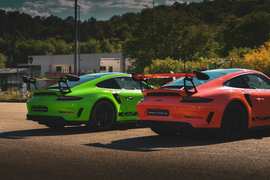
When you see the letters RS on a Porsche 911, you know you’re in for something special. It stands for RennSport—racing sport—and it denotes the most driver-focused models in the lineup. The 992.1 GT3 RS is perhaps the most significant RS model of all time, and it’s a car that redefines what’s possible with a road-going 911.

 The Pantheon of Pure Driving: My Top 5 Porsche 911s of All Time
After more than 40 years behind the wheel, testing everything from the humble to the hyper-exclusive, the Porsche 911 remains a benchmark for automotive excellence. I first experienced this iconic sports car back in the late 1970s, in the form of a raw, analog, air-cooled masterpiece. I remember its stark, minimalist aesthetic, the precise mechanical clicks of the shifter, and the unadorned, hair-trigger response that demanded absolute respect. It was a machine that separated the men from the boys—a thrilling, visceral dance that few cars could ever hope to replicate.
It’s easy to forget that the 911 has been around for over 60 years, and in that time, Porsche has managed to evolve the concept while never betraying the core DNA that made it a legend. Every generation has brought refinement, power, and technological leaps, yet the fundamental essence remains: a rear-engine, rear-wheel-drive car that demands driver engagement like no other. It’s a testament to Porsche’s engineering genius that the 911 not only survived the transition from the analog era to the digital age but thrived—becoming even faster, safer, and more sophisticated without losing its soul.
Out of the countless 911 variants I’ve driven, from early prototypes to ultra-rare homologation specials, only a handful have left an indelible mark on my memory. These are the cars that redefined the breed, the ones that pushed boundaries, and the ones that made me truly appreciate the art of sports car design. While the modern Porsche 911 price can be intimidating, these timeless classics represent the peak of automotive engineering and offer an experience that remains relevant even in 2025.
Join me as I revisit the five Porsche 911 models that stand out above all others in my long and illustrious career as a car reviewer.
The Original Widowmaker: The 1975 Porsche 930 Turbo
The Pantheon of Pure Driving: My Top 5 Porsche 911s of All Time
After more than 40 years behind the wheel, testing everything from the humble to the hyper-exclusive, the Porsche 911 remains a benchmark for automotive excellence. I first experienced this iconic sports car back in the late 1970s, in the form of a raw, analog, air-cooled masterpiece. I remember its stark, minimalist aesthetic, the precise mechanical clicks of the shifter, and the unadorned, hair-trigger response that demanded absolute respect. It was a machine that separated the men from the boys—a thrilling, visceral dance that few cars could ever hope to replicate.
It’s easy to forget that the 911 has been around for over 60 years, and in that time, Porsche has managed to evolve the concept while never betraying the core DNA that made it a legend. Every generation has brought refinement, power, and technological leaps, yet the fundamental essence remains: a rear-engine, rear-wheel-drive car that demands driver engagement like no other. It’s a testament to Porsche’s engineering genius that the 911 not only survived the transition from the analog era to the digital age but thrived—becoming even faster, safer, and more sophisticated without losing its soul.
Out of the countless 911 variants I’ve driven, from early prototypes to ultra-rare homologation specials, only a handful have left an indelible mark on my memory. These are the cars that redefined the breed, the ones that pushed boundaries, and the ones that made me truly appreciate the art of sports car design. While the modern Porsche 911 price can be intimidating, these timeless classics represent the peak of automotive engineering and offer an experience that remains relevant even in 2025.
Join me as I revisit the five Porsche 911 models that stand out above all others in my long and illustrious career as a car reviewer.
The Original Widowmaker: The 1975 Porsche 930 Turbo