40 Years of Porsche 911: A Lifetime Behind the Wheel
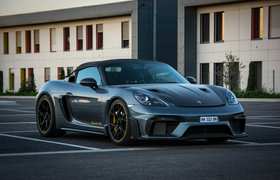
For four decades, I’ve been behind the wheel of Porsches, and after 40 years, a few models have truly etched themselves into my memory. Thinking back, I remember the first one vividly—a pristine white 3.0-liter Carrera with black Fuchs alloys. It was raw, pure 911: no power steering, no rear wing, just a tight five-speed manual. It was fast, but it had its quirks. Honestly, at the time, I remember thinking, “Is this really the iconic car everyone raves about?”
That first drive was alongside a 944 Turbo. In my home country of Australia back then, these cars cost about the same. The 944 Turbo had more power, more torque, and was easier to drive fast. But when the day was done, it came down to a choice. I chose the 911. Why? The 944 was objectively better—competent enough to make a bad driver look good. Its performance was incredible, and the chassis was amazing. But the 911… it pulled at the heart. It was a different breed, a car that didn’t pander to the masses. It demanded respect, understanding, and a willingness to engage. That’s the magic of the 911.
Since then, I’ve driven countless 911 variants. With the exception of the 964 in the early 90s, which felt like Porsche was losing its way, every generation has impressed me. The brand has somehow managed to keep the 911 relevant, exciting, and engaging for over half a century. Even now, four decades after that first drive, the 911 is one of the few new cars I would actually spend my own money on.
Here are the five Porsche 911s that stand out in my mind, the ones that defined the legend.
The Original 911 Turbo: The Widowmaker’s Bite
When I was testing that original 3.0-liter Carrera, the veteran journalists always spoke of the first Porsche 911 Turbo (the 930) with a mix of awe and fear. They called it a “widowmaker,” a car that demanded the utmost respect. The way it delivered boost was infamous—sudden and brutal. It required precise handling to manage the tricky balance of understeer and oversteer. Making a mistake was unforgivable; sloppiness was punished.
It took me 35 years to finally get behind the wheel of an original 911 Turbo. It was one of the first 30 production Turbos ever built, now a prized piece in Porsche’s classic collection. Aware of its fearsome reputation, I took it easy at first. I gently coaxed the throttle, feeling the boost, watching the tachometer, trying to mentally map the power curves.
To my surprise, the engine was remarkably tractable at low RPMs. Cruising at 45 mph in top gear, it was content to murmur along at 2,000 rpm. But once the engine hit 3,500 rpm, the acceleration surge was unmistakable. The turbocharger injected 0.8 bar of pressure into the intake, and there it was—that sledgehammer hit I’d been warned about, right between the shoulder blades.
I discovered the trick to driving the original 911 Turbo smoothly and quickly: keep the 3.0-liter flat-six spinning above 4,000 rpm. This keeps the turbocharger energized and minimizes lag. Yes, there’s noticeable turbo lag by modern standards, but it’s manageable.
Even today, this 911 is incredibly fast on the road. First gear pushes you to 50 mph, second to 90 mph, and third up to almost 130 mph. This means you can tackle challenging twisty roads using only second and third gear. While it only produces 256 hp, it weighs just 2,513 pounds, allowing it to corner with precision and agility. Half a century ago, this level of performance felt like it belonged in a spaceship.
The 993-Generation: The Last of the Air-Cooled Legends
For Porsche purists, this is the Holy Grail—the last of the truly traditional 911s. The 993-generation is a car that engages you physically: your knuckles graze the dash, and the raw, mechanical roar of an air-cooled flat-six echoes behind you.
But when I first drove the 993 in 1994, it wasn’t a relic of the past; it was the future. It was the first 911 that truly challenged Isaac Newton’s laws of physics. Sure, it still had that slightly twitchy front end that demanded precise loading on corner entry, and the rear end could still dance a bit on rough pavement. But for the first time, there was real harmony between the front and rear. The 993 still felt like a 911, but with a much wider safety net.
The revolution started with the rear suspension. The old semi-trailing arms were replaced with a cutting-edge multi-link setup. This allowed for subtle initial toe-out on corner entry, followed by progressive toe-in as lateral forces increased. More importantly, it drastically reduced the camber changes that had plagued 911s since 1963.
Combined with a new steering system—16% quicker at 2.5 turns lock-to-lock—the front end felt sharper and more responsive. A new six-speed manual transmission harnessed the 3.6-liter flat-six, which delivered 268 hp at 6,100 rpm. This power was thanks to lighter internals, Bosch Motronic 2.0 engine management, and a dual exhaust system.
Compared to the 964 model it replaced, the 993 was a revelation. It wasn’t just the engineering upgrades, which were led by Ulrich Bez (who later headed Aston Martin). The exterior redesign, under chief designer Harm Lagaay, corrected the visual issues of the 964. Lagaay felt the 964 was too tall at the front and too low at the rear. The interior was also cleaner, with fewer buttons scattered randomly. The 993 was faster, more forgiving, and significantly more desirable. It was the perfect bridge between raw emotion and modern engineering.
The 996-Generation: The Hero Car That Saved Porsche
At the time, it felt like sacrilege. Porsche’s decision to install a water-cooled flat-six in the rear of the 996-series 911 was, to aficionados, like Bob Dylan trading his acoustic guitar for an electric Strat at the 1965 Newport Folk Festival. But the 996, the first clean-sheet redesign of Porsche’s legendary sports car in 34 years, was a hero to me. It was the 911 that saved the company from extinction.
Engineered under the direction of Porsche R&D chief Horst Marchart, the 996 was an incredibly smart piece of engineering. It shared 38% of its parts with an entirely new, lower-cost mid-engine roadster that the world would soon know as the Boxster.
Iconic Porsche CEO Wendelin Wiedeking recognized the need for the Boxster. It gave dealers something else to sell when the aging 928 and 968 models were discontinued. “We built two cars for the price of one-and-a-half,” design boss Lagaay said with a smile after the unveiling.
While media attention focused on its kinship with the Boxster and the switch to water cooling, the 996’s real story ran much deeper. In 1994, it took Porsche 130 hours to build a 993; the 996 took only 60 hours. The modern 911 had arrived. It was roomier, equipped with all the features expected of a late-20th-century sports car, and still recognizably a Porsche. But most importantly, it still drove like a 911—only better.
The 996 had a new layer of sophistication in how it performed, but it retained the delicious tactility and urgent response that had made the 911 unique. Along with the original Boxster, it saved Porsche from bankruptcy. It was a brilliant marriage of heritage and progress.
The 991.2-Generation Carrera: The Unexpected Heart Stealer
Of all the 911s I’ve driven, it was a base model 991.2 Carrera that truly stole my heart. It stole everyone else’s too, judging by the feedback I received from colleagues at the time. Press fleets are usually packed with high-spec cars loaded with options— automotive PRs clearly think we’re easily impressed by such things. So, Porsche Cars North America’s decision to include a base 911 Carrera in the roster for our 2017 MotorTrend Car of the Year testing seemed risky. In truth, it was an inspired move.
The 991.2 introduced a new 3.4-liter turbocharged engine. It produced 370 hp in the base Carrera or 420 hp in the Carrera S. Even in the 370-hp trim, it delivered a wide

 40 Years of Porsche 911: A Lifetime Behind the Wheel
For four decades, I’ve been behind the wheel of Porsches, and after 40 years, a few models have truly etched themselves into my memory. Thinking back, I remember the first one vividly—a pristine white 3.0-liter Carrera with black Fuchs alloys. It was raw, pure 911: no power steering, no rear wing, just a tight five-speed manual. It was fast, but it had its quirks. Honestly, at the time, I remember thinking, “Is this really the iconic car everyone raves about?”
That first drive was alongside a 944 Turbo. In my home country of Australia back then, these cars cost about the same. The 944 Turbo had more power, more torque, and was easier to drive fast. But when the day was done, it came down to a choice. I chose the 911. Why? The 944 was objectively better—competent enough to make a bad driver look good. Its performance was incredible, and the chassis was amazing. But the 911… it pulled at the heart. It was a different breed, a car that didn’t pander to the masses. It demanded respect, understanding, and a willingness to engage. That’s the magic of the 911.
Since then, I’ve driven countless 911 variants. With the exception of the 964 in the early 90s, which felt like Porsche was losing its way, every generation has impressed me. The brand has somehow managed to keep the 911 relevant, exciting, and engaging for over half a century. Even now, four decades after that first drive, the 911 is one of the few new cars I would actually spend my own money on.
Here are the five Porsche 911s that stand out in my mind, the ones that defined the legend.
40 Years of Porsche 911: A Lifetime Behind the Wheel
For four decades, I’ve been behind the wheel of Porsches, and after 40 years, a few models have truly etched themselves into my memory. Thinking back, I remember the first one vividly—a pristine white 3.0-liter Carrera with black Fuchs alloys. It was raw, pure 911: no power steering, no rear wing, just a tight five-speed manual. It was fast, but it had its quirks. Honestly, at the time, I remember thinking, “Is this really the iconic car everyone raves about?”
That first drive was alongside a 944 Turbo. In my home country of Australia back then, these cars cost about the same. The 944 Turbo had more power, more torque, and was easier to drive fast. But when the day was done, it came down to a choice. I chose the 911. Why? The 944 was objectively better—competent enough to make a bad driver look good. Its performance was incredible, and the chassis was amazing. But the 911… it pulled at the heart. It was a different breed, a car that didn’t pander to the masses. It demanded respect, understanding, and a willingness to engage. That’s the magic of the 911.
Since then, I’ve driven countless 911 variants. With the exception of the 964 in the early 90s, which felt like Porsche was losing its way, every generation has impressed me. The brand has somehow managed to keep the 911 relevant, exciting, and engaging for over half a century. Even now, four decades after that first drive, the 911 is one of the few new cars I would actually spend my own money on.
Here are the five Porsche 911s that stand out in my mind, the ones that defined the legend.