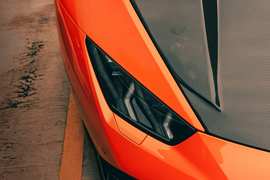
Czinger 21C VMax: A Glimpse into the Future of Automotive Engineering
The hypercar landscape is undergoing a radical transformation, and no vehicle embodies this shift more profoundly than the Czinger 21C VMax. This Southern California-built marvel represents the pinnacle of automotive madness, where cutting-edge additive manufacturing, artificial intelligence, and hybrid-electric performance converge to create a machine that feels less like a car and more like a piece of aerospace engineering. Having recently completed a three-day road rally behind the yoke-shaped steering wheel of the VMax, I can attest that it is a vehicle that challenges every preconception about what a modern hypercar should be.
Factory Fresh: The Birth of a 3D-Printed Icon
My journey into the world of Czinger began with a visit to the company’s headquarters in Southern California, a facility operated under the umbrella of its parent company, Divergent Technologies. This is not your typical automotive factory. Divergent Technologies is a pioneer in the use of additive manufacturing (3D printing) to create lighter and stronger mechanical components. The precision and innovation on display are nothing short of spectacular.
I had the privilege of being guided through the facility by Lukas Czinger, the young CEO who co-founded both Divergent and Czinger with his father, Kevin Czinger. The experience of witnessing a car factory where 3D printers build core chassis components is humbling. Inside one of the massive printing bays, I watched lasers meticulously fusing powdered aluminum into shapes resembling bird bones—each structure engineered to withstand immense structural loads while remaining incredibly light. This advanced manufacturing process is more than just a novelty; it is the very foundation of the 21C’s existence.
Czinger’s technology has reached what is known as “Pareto optimal”—the point where any additional weight would be detrimental to performance. This isn’t just clever engineering; it’s an obsession with perfection. Consider a simple part, like the bracket for a rear suspension damper. Using traditional methods, engineers must compromise between strength and weight, often over-engineering a component to ensure safety. Czinger uses software that iterates through hundreds of thousands of design options, utilizing AI to find the most efficient and optimized shape for that specific part. It’s like the process of natural evolution, accelerated at light speed.
Beyond the Czinger brand, Divergent Technologies supplies these revolutionary 3D-printed components to nine automotive OEMs. While many are tight-lipped, automotive giants like Aston Martin (DBR22 Roadster), Bugatti (Tourbillon), and McLaren (W1) have publicly acknowledged their use of Divergent’s technology. Even the new Ferrari F80’s control arms look suspiciously similar to designs produced by this additive manufacturing process, though the manufacturer has not confirmed the supplier.
It is this intersection of aviation-grade engineering and automotive performance that sets Czinger apart. From the aerospace-inspired seating arrangement to the carbon-fiber monocoque construction, every element of the 21C is designed with a single-minded purpose: performance.
Under the Carbon Fiber: The Heart of the Machine
Czinger offers two distinct versions of the 21C platform: the track-focused 21C, featuring aggressive aerodynamics and downforce-generating wings, and the more road-biased VMax, which swaps the rear wing for a sleek, long tail. For the inaugural Velocity Tour—a 500-mile road rally through the wine country of Central and Northern California—I had the pleasure of piloting a silver VMax.
The term “piloting” is not used lightly here. The cabin of the 21C VMax is less like a car interior and more like a jet fighter cockpit. Czinger explicitly states that the driving experience is designed to mimic that of a fighter jet, and the resemblance is striking. While I may not have flown a military aircraft, I have experienced the sensation of being inside an Extra 330LT stunt plane, and the two are remarkably similar. The canopy is positioned so close to the driver’s head that the glass feels like an extension of the body. Visibility is exceptional, but the process of entering and exiting the car is anything but conventional.
To get in, you must sit with your legs facing outwards, placing the massive carbon-fiber sill on the edge of the tub. Then, you bring your knees up and pivot on your butt while tucking your feet into the narrow footwell before sliding your head under the roof. It’s a dance that requires some practice, but once you’re settled, the view is spectacular.
One of the reasons for the massive sills is the inclusion of the hybrid system. The 21C VMax is a hybrid hypercar, with each sill containing a 2.2-kWh battery pack, totaling 4.4 kWh. The car is not a plug-in hybrid; instead, an electric motor powered by the mid-mounted V-8 engine charges the batteries. These batteries deliver 500 horsepower to the front axle, which features a motor at each wheel.
The combustion engine is a Czinger-designed 2.9-liter twin-turbo V-8 rated at 750 horsepower on 91-octane premium unleaded fuel. However, when fueled with 100-octane race fuel, the horsepower jumps to 850. The engine is also capable of running on ethanol, which Czinger claims yields even more power, though specific figures are yet to be released.
The gasoline engine sends its power to the rear wheels through an Xtrac single-clutch automated semi-sequential gearbox. This is the same reliable Xtrac unit used in the Pagani Utopia, but Czinger adds a revolutionary twist. Not only is the transmission casing 3D-printed, but Czinger also incorporates small 48-volt electric motors to execute shifts more rapidly at low speeds. This ingenious solution eliminates the notorious lag and jolting characteristic of other automated single-clutch gearboxes at low RPMs. The dual-barrel actuators perform exactly as advertised, providing smooth and precise gear changes at low speeds.
Navigating gas stations, restaurants, and hotel parking lots with the VMax was surprisingly seamless. The smooth low-speed shifts eliminated the jarring “lurch” that often accompanies such transmissions. This innovation deserves applause, as it makes the hypercar more accessible and enjoyable for everyday driving.
Track Time: Testing the Limits of a Record-Breaking Machine
While the 21C VMax excels on the road, it is also a machine born from the track. Czinger claims a vehicle weight of approximately 3,600 pounds, which is remarkably light for a 1,250-horsepower hybrid. For comparison, the Ferrari SF90 Stradale Assetto Fiorano—the highest-performance version of a three-motor, twin-turbo V-8 PHEV that only produces 986 horsepower—weighs 3,839 pounds. The new Lamborghini Temerario, another three-motor, twin-turbo V-8 (with even lower horsepower figures than the SF90), weighs a staggering 4,185 pounds.
If Czinger’s weight claim proves true, the unorthodox Southern California startup has managed to outperform two Italian legends. This feat is even more impressive considering the unique challenges of supercar manufacturing in the United States. Los Angeles is not exactly Modena, yet Czinger has built a hypercar that rivals the best in the world.
Our road rally included a stop at Laguna Seca, where we were treated to some parade laps. As is common practice with high-dollar hypercars like those from Bugatti and Pagani, Czinger insisted on having a professional driver—Evan Jacobs—in the passenger seat to ensure the $2.5 million car didn’t end up in the gravel trap. Thankfully, Jacobs later assured the Czinger team that I was no threat to the car and was permitted to drive solo for the remainder of the rally.
While I was restricted to parade laps at Laguna Seca—non-Czinger employees are not permitted to drive the VMax on racetracks, even at the slow pace of the rally participants—I had the opportunity to ride shotgun in the bizarre rear seat. The first thing to note is that if you have large calves or feet, the rear seat is not comfortable. My XXL calves were squeezed between the carbon-fiber tub and the seat, and my feet were cramped in the footwell. However, the visibility through the side glass is extraordinary. It’s a truly unique way to experience a racetrack, something I’ve done over 1,000 times in various vehicles.
The most impressive ride of my career was in an Aston Martin Valkyrie LMH race car, where I felt the blood pooling in my extremities under the intense braking forces. The Czinger VMax now holds the second spot on that list, and Jacobs hadn’t even pushed the car to its limit. Even at less than 10/10ths and without the aggressive rear wing, it’s easy to understand how the Czinger 21C has achieved such remarkable feats on track.
The brand refers to this accomplishment as the “California Gold Rush,” during which the 21C set five production car track records in five days at Thunder Hill, Sonoma Raceway, Laguna Seca, Willow Springs, and the Thermal Club. Czinger even returned to Laguna Seca to not only beat its own record but to reclaim the throne from the track-special Koenigsegg Jesko Sadair’s Spear. That lap time—a ridiculous 1 minute, 22.30 seconds—is faster than the fastest MotoAmerica Superbike lap ever recorded at Laguna, a 1:22.56.

 Czinger 21C VMax: A Glimpse into the Future of Automotive Engineering
The hypercar landscape is undergoing a radical transformation, and no vehicle embodies this shift more profoundly than the Czinger 21C VMax. This Southern California-built marvel represents the pinnacle of automotive madness, where cutting-edge additive manufacturing, artificial intelligence, and hybrid-electric performance converge to create a machine that feels less like a car and more like a piece of aerospace engineering. Having recently completed a three-day road rally behind the yoke-shaped steering wheel of the VMax, I can attest that it is a vehicle that challenges every preconception about what a modern hypercar should be.
Factory Fresh: The Birth of a 3D-Printed Icon
My journey into the world of Czinger began with a visit to the company’s headquarters in Southern California, a facility operated under the umbrella of its parent company, Divergent Technologies. This is not your typical automotive factory. Divergent Technologies is a pioneer in the use of additive manufacturing (3D printing) to create lighter and stronger mechanical components. The precision and innovation on display are nothing short of spectacular.
Czinger 21C VMax: A Glimpse into the Future of Automotive Engineering
The hypercar landscape is undergoing a radical transformation, and no vehicle embodies this shift more profoundly than the Czinger 21C VMax. This Southern California-built marvel represents the pinnacle of automotive madness, where cutting-edge additive manufacturing, artificial intelligence, and hybrid-electric performance converge to create a machine that feels less like a car and more like a piece of aerospace engineering. Having recently completed a three-day road rally behind the yoke-shaped steering wheel of the VMax, I can attest that it is a vehicle that challenges every preconception about what a modern hypercar should be.
Factory Fresh: The Birth of a 3D-Printed Icon
My journey into the world of Czinger began with a visit to the company’s headquarters in Southern California, a facility operated under the umbrella of its parent company, Divergent Technologies. This is not your typical automotive factory. Divergent Technologies is a pioneer in the use of additive manufacturing (3D printing) to create lighter and stronger mechanical components. The precision and innovation on display are nothing short of spectacular.