The Edge of Tomorrow: Exploring Czinger’s Hybrid Hypercar Revolution
For years, the automotive world has watched Czinger with a mix of awe and skepticism. This Southern California startup, founded by father-and-son duo Kevin and Lukas Czinger, is rewriting the supercar playbook, blending advanced additive manufacturing with pioneering hybrid technology. My opportunity to drive the Czinger 21C VMax on a three-day road rally offered a chance to move beyond the spec sheets and delve into what this revolutionary machine is like in the real world. While there’s certainly a track story to be told, the focus of this journey was to explore the experience of traversing 500 miles in this extraordinary vehicle.
From Concept to Reality: A Look Inside Czinger
Stepping into the Czinger factory felt less like entering a traditional automaker’s production facility and more like accessing a highly classified, futuristic research lab. My visit required a U.S. passport, as the parent company, Divergent Technologies, serves as a supplier to the Department of Defense. Though all military equipment was covered during the tour, catching a glimpse inside one of their massive 3D printers was a highlight. Here, lasers fused powdered aluminum into intricate, bone-like structures, offering a window into the future of manufacturing.
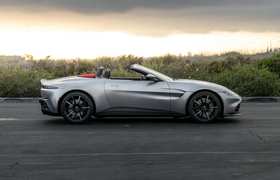
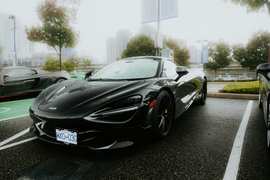
Lukas Czinger explained that their approach targets the “Pareto optimal,” the point where any additional material becomes detrimental to performance. For example, designing a suspension reservoir involves defining the required strength and space, then allowing software to iterate through hundreds of thousands of iterations until the lightest, strongest shape emerges—essentially evolution accelerated. Beyond military applications, nine automotive OEMs utilize Divergent’s 3D printing technology. While Aston Martin, Bugatti, and McLaren publicly acknowledge this partnership, the carbon fiber control arms on the Ferrari F80 also suggest its involvement.
Czinger 21C VMax: A Hybrid Masterpiece
Czinger produces two versions of the same platform. The track-focused 21C features high downforce and a fixed wing, while the long-tailed, wingless VMax prioritizes open-road performance. As a participant in the inaugural Velocity Tour, a 500-mile rally through California’s wine country, I had the privilege of piloting a silver VMax.
Driving the 21C VMax feels less like sitting in a car and more like piloting a fighter jet. The cabin, a tandem two-seater with the driver centrally located, offers an unparalleled sense of immersion. Glass surrounds the driver with virtually no blind spots, creating a uniquely exhilarating experience. Getting in and out is a deliberate ritual: position yourself with legs out on the wide sill, pull your knees up, tuck your feet into the footwell, and slide your head under the roof canopy.
The Heart of the Beast: Performance and Power
One of the reasons for the wide sills is the storage of batteries. The 21C VMax is a hybrid hypercar, with each sill housing 2.2 kWh of battery power for a 4.4 kWh total. The car is not a plug-in hybrid; the mid-mounted V-8 engine keeps the pack charged. This battery array provides up to 500 horsepower to the front axle, each driven by a dedicated electric motor. The combustion engine is a proprietary 2.9-liter twin-turbo V-8 that produces 750 hp on California’s 91-octane premium gasoline. When fed 100-octane race fuel, the output increases to 850 hp. Czinger also plans to offer ethanol-fueled versions, predicting a 10 percent power boost over gasoline.
The gasoline engine sends power to the rear wheels via an Xtrac single-clutch automated semi-sequential gearbox. Similar to the unit found in the Pagani Utopia, Czinger utilizes its 3D printing technology to manufacture the transmission casing. However, the 21C VMax incorporates small 48-volt electric motors to facilitate faster shifts at lower speeds, effectively eliminating the “drunken” surging common in other automated single-clutch transmissions. The dual-barrel actuators worked flawlessly, providing smooth, linear power delivery even in low-speed situations like pulling into parking lots or making turns.
Track-Ready Performance and Acceleration
As is common practice with many high-dollar hypercars, Czinger provided a professional driver, Evan Jacobs, to accompany me for the first leg of the rally and ensure my safety. Thankfully, Jacobs eventually deemed me safe to drive solo. Although we stopped at Laguna Seca for some parade laps, non-Czinger employees are restricted from driving the VMax on the track, even at the rally’s restricted pace.
For those unable to drive, riding along provides its own unique thrills. Riding shotgun with Jacobs revealed an experience unlike any other. The visibility through the side windows was extraordinary, reminiscent of a stunt plane. While I have experienced the brutal forces of an Aston Martin Valkyrie LMH, the Czinger VMax now holds the second spot on my list of most impressive rides. Even without engaging the car’s full potential or utilizing the massive rear wing, the VMax offers a glimpse into how the track-focused 21C achieved the “California Gold Rush.” That feat saw the car set five production car track records—at Thunder Hill, Sonoma Raceway, Laguna Seca, Willow Springs, and the Thermal Club—in just five days, driving between each venue. Czinger later returned to Laguna Seca to not only break its own record but reclaim the title from the track-special Koenigsegg Jesko Sadair’s Spear with a blistering time of 1:22.30 seconds. This lap is faster than the fastest MotoAmerica Superbike ever recorded at Laguna Seca.
Czinger claims a curb weight of approximately 3,600 pounds, a remarkable figure for a 1,250 hp hybrid. For comparison, the Ferrari SF90 Stradale Asseto Fiorano—the most potent version of a three-motor, twin-turbo V-8 PHEV with 986 hp—weighs 3,839 pounds. The new Lamborghini Temerario, another three-motor, twin-turbo V-8 with lower output, clocks in at 4,185 pounds. The SF90 and Temerario are among the fastest accelerating gasoline-powered cars MotorTrend has ever tested. If Czinger’s weight claims hold true, this innovative startup has managed to eclipse two Italian legends. This feat is all the more remarkable given that Southern California isn’t exactly a hotbed of supercar manufacturing expertise. In other words, L.A. is not Modena.
On the Road: The Everyday Experience
The rally route featured primarily remote, winding back roads—far from the pristine asphalt typically associated with hypercar tours. Navigating traffic, following other cars, and stopping at lunch and coffee venues were part of the experience. While I might have preferred some faster stretches at the time, this journey replicated what most owners will likely experience in daily use.
Surprisingly, the VMax handled most scenarios like any other hyper-exotic. I quickly learned to empty my pockets before getting in, as the seats are snug, and to drink water before entering, as there are no cup holders. Be prepared for constant attention from onlookers, particularly younger males, who will likely wave, follow, and rev their engines in a friendly display. Despite the performance focus, the 21C VMax rides smoother than expected. The team deserves praise for avoiding excessive stiffness, and the air conditioning works effectively.
My only notable complaint about the everyday driving experience is the cabin noise. It’s not the V-8’s unique sound that is the issue but rather the apparent lack of sound deadening. While acceptable for a track car, it’s a jarring oversight in a road car. This becomes increasingly apparent during extended drives. While weight is the enemy of performance, the question remains: how much does sound-deadening material weigh? Google estimates between 10 and 50 pounds. A modest 10 pounds of sound deadening would dramatically improve the cabin experience.
Pushing the Limits: True Performance Unveiled
We eventually reached some proper California canyon roads, allowing me to unleash the full potential of the Czinger 21C VMax. The moment I pushed the throttle past the kickdown point, I found myself immediately engaging the brakes. While I’ve experienced similar acceleration in EVs, the weight difference makes the sensation incomparable. I have driven the Ferrari F80, which offers similar power but relies more on its gasoline engine and less on electric assist. The Czinger is simply a different species of acceleration.
For the first time in my career, I must say this car might be too much for public roads. Typing that sentence feels counterintuitive, but every time I accelerated, the braking zone arrived instantly. It feels like warp drive, with the car seeming to bend the road rather than rolling over it. While I despise admitting it, in this instance, the Czinger VMax on 91-octane gas is overwhelming. I should also mention that it corners beautifully and possesses incredible grip. That said, Southern California has faster canyon roads than the ones we navigated in Northern California. I would love to experience the VMax on something like Angeles Crest or Highway 33; perhaps “too much” is exactly what’s needed in those environments. But for now, it feels like more than enough power for the everyday experience.
Who Is This Car For?
If you are considering a $2.5 million tandem-seat hypercar, it is likely not your first high-performance vehicle. You probably own a garage or two (or a warehouse) filled with luxury, carbon-fibered, and

 The Edge of Tomorrow: Exploring Czinger’s Hybrid Hypercar Revolution
For years, the automotive world has watched Czinger with a mix of awe and skepticism. This Southern California startup, founded by father-and-son duo Kevin and Lukas Czinger, is rewriting the supercar playbook, blending advanced additive manufacturing with pioneering hybrid technology. My opportunity to drive the Czinger 21C VMax on a three-day road rally offered a chance to move beyond the spec sheets and delve into what this revolutionary machine is like in the real world. While there’s certainly a track story to be told, the focus of this journey was to explore the experience of traversing 500 miles in this extraordinary vehicle.
From Concept to Reality: A Look Inside Czinger
Stepping into the Czinger factory felt less like entering a traditional automaker’s production facility and more like accessing a highly classified, futuristic research lab. My visit required a U.S. passport, as the parent company, Divergent Technologies, serves as a supplier to the Department of Defense. Though all military equipment was covered during the tour, catching a glimpse inside one of their massive 3D printers was a highlight. Here, lasers fused powdered aluminum into intricate, bone-like structures, offering a window into the future of manufacturing.
The Edge of Tomorrow: Exploring Czinger’s Hybrid Hypercar Revolution
For years, the automotive world has watched Czinger with a mix of awe and skepticism. This Southern California startup, founded by father-and-son duo Kevin and Lukas Czinger, is rewriting the supercar playbook, blending advanced additive manufacturing with pioneering hybrid technology. My opportunity to drive the Czinger 21C VMax on a three-day road rally offered a chance to move beyond the spec sheets and delve into what this revolutionary machine is like in the real world. While there’s certainly a track story to be told, the focus of this journey was to explore the experience of traversing 500 miles in this extraordinary vehicle.
From Concept to Reality: A Look Inside Czinger
Stepping into the Czinger factory felt less like entering a traditional automaker’s production facility and more like accessing a highly classified, futuristic research lab. My visit required a U.S. passport, as the parent company, Divergent Technologies, serves as a supplier to the Department of Defense. Though all military equipment was covered during the tour, catching a glimpse inside one of their massive 3D printers was a highlight. Here, lasers fused powdered aluminum into intricate, bone-like structures, offering a window into the future of manufacturing.