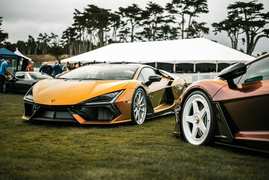
Aston Martin Valhalla: The Pinnacle of Modern Hybrid Supercar Engineering
Seven years ago, at the Geneva Motor Show, Aston Martin unveiled a vision that married the precision of Formula 1 engineering with the thunderous heart of a hybrid V8. That vision has finally materialized into the 2026 Aston Martin Valhalla, a machine that challenges the very definition of a supercar in the hyper-velocity era of the 2020s.
When the first whispers of the AM-RB 003—as it was initially known—emerged from the R&D labs, the automotive world held its breath. The name itself, borrowed from Norse mythology, evokes images of a glorious afterlife for warriors, hinting at the near-supernatural performance the production model promised. Yet, the journey from concept to reality was a winding road, marked by strategic shifts, technological evolution, and a recalibration of Aston Martin’s place in the hypercar pecking order.
A Vision Reborn: From Formula 1 Concepts to Production Reality
The origins of the Valhalla trace back to Aston Martin’s strategic partnership with the Red Bull Racing Formula 1 team. Initially conceived as a bridge between the track and the road, this mid-engined marvel was designed to channel the cutting-edge aerodynamics and lightweight materials of modern F1 into a production-ready package. However, automotive ecosystems are rarely static. The partnership between Aston Martin and Red Bull ultimately evolved, and as the automotive landscape itself underwent seismic shifts, so too did the Valhalla’s technical architecture.
Early speculation pointed to an in-house-developed 3.0-liter V6 hybrid powertrain, intended to compete directly with the likes of the Ferrari LaFerrari and Porsche 918 Spyder. Yet, as development progressed, Aston Martin made a decisive pivot. The Valhalla was ultimately fitted with a powertrain derived from the formidable Mercedes-AMG GT Black Series.
This collaboration gifted the Valhalla a 4.0-liter flat-plane-crank, dry-sump, twin-turbo V8 engine. Aston engineers didn’t simply use the existing AMG unit; they meticulously recalibrated it to exceed the base output of its donor engine. By implementing larger turbos, a redesigned intake manifold, and uprated internals, Aston managed to extract 817 horsepower from the V8 alone.
The Hybrid Revolution: A Symphony of Power
But the Valhalla is not defined solely by its internal combustion engine. At the heart of this machine lies a sophisticated hybrid system that transforms it into a true multi-faceted performance machine. Aston Martin’s in-house engineers developed three radial-flux permanent-magnet motors to work in synergy with the V8. One motor is mounted to the rear axle, integrated directly into the new eight-speed dual-clutch transmission, while two motors power the front axle.
The combined output of this powertrain is staggering: 1,064 horsepower and 811 lb-ft of torque. This electric wizardry is fed by a 560-cell battery pack, cooled by immersion in dielectric oil. According to Chief Engineer Andrew Kay, this advanced thermal management allows for incredibly rapid energy cycling, a critical factor for track performance.
“We’re able to push energy into the battery and cycle it out very quickly. This is very good for track use, in particular,” Kay explained during the development cycle.
Unlike its elder sibling, the Valkyrie, which remains firmly focused on raw track performance, the Valhalla is a plug-in hybrid. This allows the driver to traverse the first 8.7 miles on pure electric power at speeds up to 80 mph, offering a tantalizing glimpse into the future of hybrid performance.
Redefining Supercar Standards
The automotive landscape of the 2020s is a whirlwind of hypercars, each attempting to outdo the last in horsepower and speed. When the production version of the Valhalla was revealed, it arrived with the moniker “the world’s first mid-engine supercar.” Whether this is a technicality born of marketing constraints—or a genuine distinction from the Valkyrie—is a conversation that belongs in the world of brand strategy rather than engineering.
The term “supercar” has, in recent years, become almost interchangeable with “hypercar.” For those of us accustomed to the legendary status of the McLaren F1 or the Veyron, the steady stream of million-dollar hypercars on social media feeds can make the Valhalla seem almost commonplace. Yet, its $1.1 million starting price and 999-unit production limit remain exclusive in the extreme.
The proliferation of high-performance vehicles in the modern era has diluted the awe that once accompanied raw speed. Cars like the Porsche 911 GT3 RS, with half the horsepower but world-class aerodynamic hardware derived from professional racing, now demand pro-level skill to maximize. Topping that, we have seen the emergence of hypercars like the Ferrari F80, the Porsche 849 Testarossa, the Czinger 21C VMax, and even the wildly powerful Chevrolet Corvette ZR1X with its 1,250 horsepower.
In this hyper-competitive environment, the Aston Martin Valhalla could easily get lost in the noise. But it is precisely the relentless pace of development that makes a drive of the Valhalla so extraordinary. It is a reminder that the pinnacle of automotive engineering continues to push the boundaries of what we thought possible.
A Road Test of the Ultimate Hybrid Machine
When given the opportunity to drive the production version of the 2026 Aston Martin Valhalla, the question everyone inevitably asks is: “So, how was it?” The honest answer is exactly what you’d expect: it is an experience that defies easy description, a testament to the state of the art in modern supercar performance.
My first drive began with a 50-minute loop on Spanish roads, a route that provided a perfect showcase for the Valhalla’s dual nature. Despite its Le Mans-inspired aesthetics and low-slung stance, the Valhalla is surprisingly comfortable as a daily driver. The suspension, a custom Bilstein DTX active damper system mated to a five-link rear layout, effectively soaks up the imperfections of the road. Even in the firmest Race mode, the ride remains composed, though the Sport and Sport+ settings offer a more compliant balance for daily use.
The steering wheel, a square-ish design optimized for driver comfort and control, provides intuitive weighting that remains consistent across all drive modes. It is neither too light nor too heavy, offering a confident connection to the road.
When faced with an open stretch of country road, the Valhalla’s hybrid powertrain truly sings. With 1,064 horsepower and a torque curve that peaks from 2,500 rpm to 6,700 rpm, the acceleration is relentless. Aston quotes 0–62 mph in 2.5 seconds, but the 0–60 mph time feels closer to 2.4 or 2.3 seconds. It is that linear surge of power that truly defines the experience—the car simply does not let up.
Track Dominance: A Masterclass in Aerodynamics
While the Valhalla excels on the road, it is on the track where its true prowess is revealed. The Circuito de Navarra, a 2.7-mile circuit with a blend of medium-speed corners and elevation changes, provided the perfect backdrop to explore the capabilities of the Valhalla’s trick torque vectoring, aerodynamics, and monster braking system.
One of the most striking aspects of the Valhalla’s track performance is its unique hybrid strategy. In Race mode, the system meters the electric assist with a sophisticated recharge strategy that holds back up to 15 percent state of charge. This prevents the battery from ever hitting zero, ensuring consistent performance throughout the lapping session. According to Andrew Kay, this results in a loss of perhaps 15 to 30 horsepower, a small price to pay for ensuring the car’s performance remains unwavering.
The Aston Martin Valhalla is, for all intents and purposes, a race car that happens to be legal for the road. As the lap times increase, the aerodynamic systems come into play, providing relentless downforce that enhances stability and cornering grip. The underbody front wing and deployable rear wing adjust positions based on speed and dynamic conditions, with the rear wing also acting as an air brake under heavy deceleration.
While the aerodynamics are world-class, they come with a few quirks. Deploying the rear wing in Race mode blocks the rearview camera, leaving the driver blind to what’s behind them. Furthermore, due to complex regulatory hurdles intended to prevent use on the street, the rear wing cannot be raised with the car turned off.
The engineers at Aston Martin sought to avoid the drama of dynamic instability. They optimized the aerodynamics to create consistent downforce without shifting the aerodynamic center of pressure, a crucial factor for balance and stability. The 3,850-pound Valhalla generates approximately 935 pounds of downforce at 124 mph, and an impressive 1,345 pounds at 149 mph. This performance remains consistent, even at the car’s 217 mph top speed.
The Intangibles: Control, Confidence, and Consummate Craftsmanship
What truly sets the Valhalla apart is how effortlessly it handles the immense power it generates. Despite the astronomical 1,064 horsepower, the Valhalla feels benign, predictable, and confidence-inspiring in the hands of an experienced driver. The front-axle torque vectoring and rear e-differential work in harmony to keep the chassis rotating into and out of corners with minimal fuss. The result is a car that

 Aston Martin Valhalla: The Pinnacle of Modern Hybrid Supercar Engineering
Seven years ago, at the Geneva Motor Show, Aston Martin unveiled a vision that married the precision of Formula 1 engineering with the thunderous heart of a hybrid V8. That vision has finally materialized into the 2026 Aston Martin Valhalla, a machine that challenges the very definition of a supercar in the hyper-velocity era of the 2020s.
When the first whispers of the AM-RB 003—as it was initially known—emerged from the R&D labs, the automotive world held its breath. The name itself, borrowed from Norse mythology, evokes images of a glorious afterlife for warriors, hinting at the near-supernatural performance the production model promised. Yet, the journey from concept to reality was a winding road, marked by strategic shifts, technological evolution, and a recalibration of Aston Martin’s place in the hypercar pecking order.
A Vision Reborn: From Formula 1 Concepts to Production Reality
The origins of the Valhalla trace back to Aston Martin’s strategic partnership with the Red Bull Racing Formula 1 team. Initially conceived as a bridge between the track and the road, this mid-engined marvel was designed to channel the cutting-edge aerodynamics and lightweight materials of modern F1 into a production-ready package. However, automotive ecosystems are rarely static. The partnership between Aston Martin and Red Bull ultimately evolved, and as the automotive landscape itself underwent seismic shifts, so too did the Valhalla’s technical architecture.
Early speculation pointed to an in-house-developed 3.0-liter V6 hybrid powertrain, intended to compete directly with the likes of the Ferrari LaFerrari and Porsche 918 Spyder. Yet, as development progressed, Aston Martin made a decisive pivot. The Valhalla was ultimately fitted with a powertrain derived from the formidable Mercedes-AMG GT Black Series.
Aston Martin Valhalla: The Pinnacle of Modern Hybrid Supercar Engineering
Seven years ago, at the Geneva Motor Show, Aston Martin unveiled a vision that married the precision of Formula 1 engineering with the thunderous heart of a hybrid V8. That vision has finally materialized into the 2026 Aston Martin Valhalla, a machine that challenges the very definition of a supercar in the hyper-velocity era of the 2020s.
When the first whispers of the AM-RB 003—as it was initially known—emerged from the R&D labs, the automotive world held its breath. The name itself, borrowed from Norse mythology, evokes images of a glorious afterlife for warriors, hinting at the near-supernatural performance the production model promised. Yet, the journey from concept to reality was a winding road, marked by strategic shifts, technological evolution, and a recalibration of Aston Martin’s place in the hypercar pecking order.
A Vision Reborn: From Formula 1 Concepts to Production Reality
The origins of the Valhalla trace back to Aston Martin’s strategic partnership with the Red Bull Racing Formula 1 team. Initially conceived as a bridge between the track and the road, this mid-engined marvel was designed to channel the cutting-edge aerodynamics and lightweight materials of modern F1 into a production-ready package. However, automotive ecosystems are rarely static. The partnership between Aston Martin and Red Bull ultimately evolved, and as the automotive landscape itself underwent seismic shifts, so too did the Valhalla’s technical architecture.
Early speculation pointed to an in-house-developed 3.0-liter V6 hybrid powertrain, intended to compete directly with the likes of the Ferrari LaFerrari and Porsche 918 Spyder. Yet, as development progressed, Aston Martin made a decisive pivot. The Valhalla was ultimately fitted with a powertrain derived from the formidable Mercedes-AMG GT Black Series.