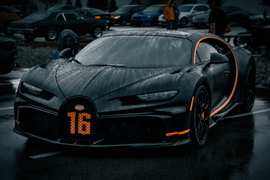
Aston Martin Valhalla: A Hypercar Built for the Future of Performance
Aston Martin’s decision to name their latest mid-engine masterpiece the Valhalla, drawing from the Norse mythology of the glorious afterlife where heroic warriors go to prepare for an epic final battle, is fitting. It reflects the dramatic leap forward this car represents—not just in speed and engineering, but in the very definition of what a modern supercar can be. Launching in the mid-2020s, the Valhalla isn’t just another million-dollar toy; it’s a poster child for the insane power and cutting-edge technology defining today’s automotive landscape.
Driving the Valhalla is an experience that forces you to question reality. In the world of high-performance cars, we’ve grown accustomed to astronomical horsepower figures and neck-breaking acceleration. Cars that cost more than a private jet regularly appear on social media feeds, spitting out specs that would have seemed like pure science fiction just a decade ago. The Aston Martin Valhalla joins this exclusive club, but it manages to do so with a level of polish, sophistication, and technological prowess that sets it apart.
The Long Wait: From Concept to Reality
The journey of the Valhalla began seven years ago, at the 2019 Geneva Motor Show, where Aston Martin first unveiled the prototype codenamed AM-RB 003. At the time, the car bore the marks of its partnership with the Red Bull Racing Formula 1 team, which later dissolved following the 2020 F1 season. The automotive world has undergone a seismic shift since then, and Aston Martin has evolved rapidly to meet the challenge.
The original plans for the powertrain involved an in-house-designed turbocharged 3.0-liter V-6, meant to compete with the hybrid hypercars of that era, like the Ferrari LaFerrari and the Porsche 918 Spyder. However, the automotive landscape evolved quickly, and Aston Martin pivoted, integrating a hybridized Mercedes-AMG GT Black Series-derived twin-turbo V-8. While building on proven AMG technology, Aston significantly upgraded the engine to produce 817 horsepower, complemented by three electric motors providing a total of 248 horsepower. The hybrid system, featuring an Aston-designed, oil-immersed battery pack, ensures rapid recharge and deployment of electrical energy, making the Valhalla perfectly suited for track use.
The original concept was revolutionary in its seating position, with the driver reclined and legs elevated, a la Formula 1. This position remains a core feature of the production car, but the design has been refined to enhance performance and comfort.
The Powertrain: Power Meets Efficiency
The heart of the Aston Martin Valhalla is its hybrid powertrain, a marvel of modern engineering. The flat-plane-crank, dry-sump, twin-turbo 4.0-liter V-8 engine produces 817 horsepower. This is combined with 248 horsepower from three electric motors, resulting in a staggering total output of 1,064 horsepower and 811 lb-ft of torque. This extraordinary power delivery is managed by an eight-speed dual-clutch gearbox, which is a first for Aston Martin.
The hybrid system is one of the Valhalla’s most advanced features. The 560-cell battery pack, immersed in dielectric oil, allows for rapid energy cycling. Aston’s chief engineer, Andrew Kay, explains that this technology is crucial for maximizing performance during track sessions. The Valhalla is also a plug-in hybrid, capable of driving on electric power alone for up to 8.7 miles and reaching a top speed of 80 mph in EV mode.
Navigating the “Supercar” vs. “Hypercar” Debate
In the era of the Valhalla, the lines between “supercar” and “hypercar” have blurred, leading to some marketing confusion. While Aston Martin calls the Valhalla their first mid-engine supercar, the existence of the Valkyrie—a car in the stratospheric $3-plus million range—places the Valhalla in a more accessible, yet still exclusive, tier.
The Valhalla’s $1 million price tag and 999-unit production run place it firmly in the hypercar category, especially when compared to the Valkyrie. However, in the context of today’s automotive market, where million-dollar hypercars are seemingly a dime a dozen, the term “supercar” feels somewhat understated.
For millennials, Gen Z, and Gen Alpha, who have grown up with social media that regularly features million-dollar cars with unprecedented specs, the Valhalla’s performance figures might seem par for the course. Yet, for those who remember the shockwaves created by cars like the McLaren F1 in the 1990s or the Bugatti Veyron twenty years ago, today’s automotive landscape is nothing short of bewildering.
The Modern Performance Hierarchy
Since the Valhalla was first conceived, the automotive world has seen an explosion of high-performance vehicles. The Porsche 911 GT3 RS, with its race-derived aerodynamics and hardware, requires professional driver skills to maximize on a racetrack, raising questions about its suitability as a road car.
Moving up in the ranks, the Ferrari F80, the 849 Testarossa, the Czinger 21C VMax, and even the formidable Porsche 911 Turbo S have all been sampled by automotive journalists, each pushing the boundaries of what’s possible. Even the hybrid Corvette ZR1X, with its staggering 1,250 horsepower, arrived without warning, a testament to the rapid pace of innovation in the hypercar segment.
In this dizzying landscape of cutting-edge performance, comparison becomes the thief of joy. Driving the Aston Martin Valhalla on its own merits, rather than comparing it to its competitors, is the best way to appreciate its unique character.
Valhalla on the Road: A Blend of Comfort and Power
Despite its extreme performance capabilities, the Aston Martin Valhalla is surprisingly comfortable on the road. The Spanish road loop driven by MotorTrend showcased the car’s ability to handle real-world conditions, dispelling fears of a compromised daily driver.
The seating position, though inspired by Formula 1, feels natural and comfortable after a few minutes. The seats are bolted low to the carbon-fiber monocoque, with no motor beneath them for adjustment. Instead, a simple leather strap allows drivers to slide the seats forward and back, a subtle nod to the car’s racing heritage.
The suspension, a specialized Bilstein DTX active damper system, provides a comfortable ride even on less-than-perfect roads. The difference between the Sport and Sport+ settings is subtle, with Race mode introducing a harsher ride that’s better suited for the track. However, even Race mode is manageable on a fast, sweeping road.
The steering wheel, while comfortable, has a molded crease that some drivers may not prefer. The steering feel itself is intuitive and balanced, with a weight that feels appropriate across all drive modes.
When you find an open stretch of road, the Valhalla unleashes its full fury. With 0–60 mph in approximately 2.4 seconds, the car’s performance is simply stunning. The 811 lb-ft of torque is available from 2,500 rpm all the way to the 7,000 rpm redline, providing relentless acceleration.
Valhalla on the Track: A Technological Marvel
The Valhalla truly shines on the racetrack. In Race mode, the hybrid system operates in a way that ensures consistent performance throughout the session. By holding back up to 15% of the battery’s charge, the system prevents the battery from depleting, even during prolonged hard driving. According to chief engineer Andrew Kay, this results in a maximum power loss of only 15–20 hp, ensuring that the Valhalla never loses performance.
The handling is spectacular. As Angus MacKenzie reported after his previous drive, the Valhalla handles like a Vantage, maintaining stability and confidence even at high speeds. The torque-vectoring system and rear e-differential keep the car rotating smoothly through corners, enticing drivers to push harder without feeling intimidated.
Aerodynamics and Braking: Precision Engineering
The active aerodynamics and braking system are crucial to the Valhalla’s performance. The brake system provides a firm, responsive pedal, with much of the braking force coming from battery regeneration. While some may miss the tactile feedback of conventional hydraulic brakes, the system’s performance remains consistent and predictable.
The active aero system, developed with input from Aston Martin Performance Technologies, includes an underbody front wing and a deployable rear wing. The rear wing doubles as an air brake, but it can only be raised with the car turned off, due to regulations that restrict its use on public roads. Additionally, the engine cover must be removed manually, as its precise fit is required for aerodynamic performance.
The Future of Performance
The Aston Martin Valhalla represents a new era of performance automobiles. It’s a car that pushes the boundaries of what’s possible, combining cutting-edge technology with a design that is both beautiful and functional. While the hypercar landscape continues to evolve, the Valhalla stands out as a true masterpiece—a driver’s car that is as thrilling on the road as it is on the track.
This is more than just a car; it’s a glimpse into the future of performance. Experience the Aston Martin Valhalla today and discover the future of automotive engineering.

 Aston Martin Valhalla: A Hypercar Built for the Future of Performance
Aston Martin’s decision to name their latest mid-engine masterpiece the Valhalla, drawing from the Norse mythology of the glorious afterlife where heroic warriors go to prepare for an epic final battle, is fitting. It reflects the dramatic leap forward this car represents—not just in speed and engineering, but in the very definition of what a modern supercar can be. Launching in the mid-2020s, the Valhalla isn’t just another million-dollar toy; it’s a poster child for the insane power and cutting-edge technology defining today’s automotive landscape.
Driving the Valhalla is an experience that forces you to question reality. In the world of high-performance cars, we’ve grown accustomed to astronomical horsepower figures and neck-breaking acceleration. Cars that cost more than a private jet regularly appear on social media feeds, spitting out specs that would have seemed like pure science fiction just a decade ago. The Aston Martin Valhalla joins this exclusive club, but it manages to do so with a level of polish, sophistication, and technological prowess that sets it apart.
The Long Wait: From Concept to Reality
The journey of the Valhalla began seven years ago, at the 2019 Geneva Motor Show, where Aston Martin first unveiled the prototype codenamed AM-RB 003. At the time, the car bore the marks of its partnership with the Red Bull Racing Formula 1 team, which later dissolved following the 2020 F1 season. The automotive world has undergone a seismic shift since then, and Aston Martin has evolved rapidly to meet the challenge.
The original plans for the powertrain involved an in-house-designed turbocharged 3.0-liter V-6, meant to compete with the hybrid hypercars of that era, like the Ferrari LaFerrari and the Porsche 918 Spyder. However, the automotive landscape evolved quickly, and Aston Martin pivoted, integrating a hybridized Mercedes-AMG GT Black Series-derived twin-turbo V-8. While building on proven AMG technology, Aston significantly upgraded the engine to produce 817 horsepower, complemented by three electric motors providing a total of 248 horsepower. The hybrid system, featuring an Aston-designed, oil-immersed battery pack, ensures rapid recharge and deployment of electrical energy, making the Valhalla perfectly suited for track use.
The original concept was revolutionary in its seating position, with the driver reclined and legs elevated, a la Formula 1. This position remains a core feature of the production car, but the design has been refined to enhance performance and comfort.
Aston Martin Valhalla: A Hypercar Built for the Future of Performance
Aston Martin’s decision to name their latest mid-engine masterpiece the Valhalla, drawing from the Norse mythology of the glorious afterlife where heroic warriors go to prepare for an epic final battle, is fitting. It reflects the dramatic leap forward this car represents—not just in speed and engineering, but in the very definition of what a modern supercar can be. Launching in the mid-2020s, the Valhalla isn’t just another million-dollar toy; it’s a poster child for the insane power and cutting-edge technology defining today’s automotive landscape.
Driving the Valhalla is an experience that forces you to question reality. In the world of high-performance cars, we’ve grown accustomed to astronomical horsepower figures and neck-breaking acceleration. Cars that cost more than a private jet regularly appear on social media feeds, spitting out specs that would have seemed like pure science fiction just a decade ago. The Aston Martin Valhalla joins this exclusive club, but it manages to do so with a level of polish, sophistication, and technological prowess that sets it apart.
The Long Wait: From Concept to Reality
The journey of the Valhalla began seven years ago, at the 2019 Geneva Motor Show, where Aston Martin first unveiled the prototype codenamed AM-RB 003. At the time, the car bore the marks of its partnership with the Red Bull Racing Formula 1 team, which later dissolved following the 2020 F1 season. The automotive world has undergone a seismic shift since then, and Aston Martin has evolved rapidly to meet the challenge.
The original plans for the powertrain involved an in-house-designed turbocharged 3.0-liter V-6, meant to compete with the hybrid hypercars of that era, like the Ferrari LaFerrari and the Porsche 918 Spyder. However, the automotive landscape evolved quickly, and Aston Martin pivoted, integrating a hybridized Mercedes-AMG GT Black Series-derived twin-turbo V-8. While building on proven AMG technology, Aston significantly upgraded the engine to produce 817 horsepower, complemented by three electric motors providing a total of 248 horsepower. The hybrid system, featuring an Aston-designed, oil-immersed battery pack, ensures rapid recharge and deployment of electrical energy, making the Valhalla perfectly suited for track use.
The original concept was revolutionary in its seating position, with the driver reclined and legs elevated, a la Formula 1. This position remains a core feature of the production car, but the design has been refined to enhance performance and comfort.