Electrified Velocity: Supercars That Redefine Hybrid Performance in 2025
The evolution of hybrid technology has long been associated with eco-conscious commuters and fuel-saving strategies. However, a dramatic shift has occurred in the automotive landscape. In 2025, electric assistance is no longer the sole domain of efficient sedans; it has infiltrated the hypercar segment, creating vehicles that marry breathtaking speed with cutting-edge electrification. As manufacturers push the boundaries of performance engineering, we see a proliferation of hybrid supercars that shatter old perceptions and set new benchmarks for speed, style, and raw power.
The Electrification Revolution in Supercar Design
The narrative around hybrid cars began to shift during the early 2000s, spearheaded by the widespread adoption of models like the Toyota Prius and Honda Insight. While these vehicles championed efficiency and low emissions, they did little to excite performance enthusiasts. The term “hybrid” became synonymous with understated performance, a notion that most supercar aficionados eagerly dismissed.
However, as battery technology advanced, the integration of electric motors moved beyond basic fuel economy and into the realm of high performance. The latest generation of supercars are leveraging the unique strengths of electrification—instantaneous torque, precise energy management, and enhanced efficiency—to produce vehicles that can outperform their internal combustion counterparts. The surge in demand for electrification has pushed even traditionally naturally aspirated marques to electrify their flagship models, leading to some of the most extreme and exciting road-legal machines ever conceived.
This article explores the evolution of hybrid performance, highlighting some of the most significant developments that have redefined the supercar segment. We will examine the technology behind these vehicles, their performance metrics, and the impact they have had on the automotive industry.
Chevrolet Corvette ZR1X: American Muscle Reimagined
The Chevrolet Corvette has long been a symbol of American automotive prowess, consistently punching above its weight class in performance and value. The ZR1X, however, pushes this ethos to an entirely new dimension. This powerhouse combines the blistering performance of the ZR1’s twin-turbocharged V-8 with an advanced hybrid system, resulting in a vehicle that sets new records for American production cars.
Power and Performance
At the heart of the ZR1X is a 5.5-liter twin-turbocharged flat-plane crank V-8, enhanced with a hybrid system that draws directly from the Corvette E-Ray. This synergy generates a colossal 1,250 horsepower and 973 lb-ft of torque. This immense power allows the ZR1X to rocket from 0 to 60 mph in under 1.7 seconds, making it one of the quickest production cars ever tested by MotorTrend.
The ZR1X is not just about straight-line speed. It has also demonstrated its capabilities on the iconic Nürburgring Nordschleife, completing a lap in an astounding 6:49.275 in July 2025. This time currently marks it as the fastest American production car ever to conquer the famed German racetrack. The vehicle’s aerodynamic design and cutting-edge hybrid system work in concert to deliver exceptional grip and agility.
Performance Bargain
Despite its jaw-dropping performance metrics, the ZR1X maintains a competitive edge in terms of cost when compared to its global rivals. The base MSRP of $207,305 makes it the most expensive production Corvette in history, but it represents a significant performance bargain. By delivering world-class acceleration and cornering speeds, the ZR1X can outperform exotics that cost several times more, cementing its status as a value leader in the hypercar segment. The all-wheel-drive hybrid system not only delivers stunning launch control but also provides a level of stability and control that allows drivers to exploit the car’s full potential safely. The synergy between the electric motors and the V-8 engine ensures seamless power delivery and enhanced traction under all driving conditions.
2025 Porsche 911 GTS T-Hybrid: The End of Handwringing
For years, Porsche enthusiasts feared the moment when the iconic 911 would receive an electrified powertrain. However, the launch of the 911 GTS T-Hybrid has proven that these anxieties were largely unfounded. Porsche has managed to integrate hybrid technology without diluting the 911’s pure driving experience, delivering a vehicle that is both exhilarating and efficient.
The T-Hybrid Innovation
Unlike other hybrid models, the 911 GTS T-Hybrid does not feature a fully electric driving range. Instead, it utilizes a compact 1.9-kWh battery pack that contributes to performance without adding significant weight. The key innovation lies in the “T-Hybrid” system, which seamlessly integrates an electric motor into the turbocharger. This design allows the motor to spin the turbo independently of exhaust gas flow, eliminating turbo lag and providing near-instantaneous boost pressure.
The energy recovered through the eTurbo is used to recharge the battery, which in turn assists the engine through the gearbox motor. This sophisticated powertrain ensures smooth, predictable power delivery during spirited driving. The genius of the GTS T-Hybrid is that, without looking at the badge, a driver would likely not even notice that the car is a hybrid, which speaks volumes about the driving experience Porsche has achieved.
Driving Dynamics
The T-Hybrid system enhances the 911’s already legendary driving dynamics. The instant torque delivery from the electric motors provides a noticeable boost to acceleration, particularly during low-speed maneuvers and corner exits. The integration of the electric motor into the turbocharger ensures that the engine maintains its characteristic sound and feel, while the added power allows for more aggressive driving in demanding conditions. The Porsche 911 GTS T-Hybrid represents a successful fusion of traditional engineering and modern electrification, proving that hybrids can be as engaging and exciting as any internal combustion-only supercar.
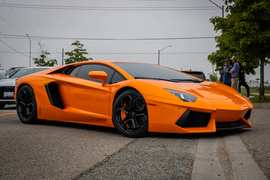
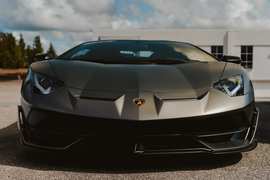
Lamborghini Revuelto: V-12 Power Meets Electric Precision
Lamborghini’s successor to the iconic Aventador has arrived as the Revuelto, a hypercar that joins the exclusive club of vehicles producing over 1,000 horsepower. Remarkably, the Revuelto achieves this feat without sacrificing its naturally aspirated V-12 engine, thanks to a plug-in hybrid system that enhances both performance and drivability.
Technical Specifications
The Revuelto’s powertrain combines a 6.5-liter naturally aspirated V-12, which revs to nearly 10,000 rpm, with three electric motors. Two motors drive the front wheels, while the third is integrated into the eight-speed dual-clutch transmission to assist the V-12. This setup generates a staggering system output of 1,015 horsepower. The 3.8-kWh lithium-ion battery pack ensures consistent performance and recharges rapidly, allowing for full utilization of the hybrid power during performance driving.
Daily Drivability
Beyond its staggering performance, the Revuelto offers a significant improvement in daily drivability compared to its predecessor. Lamborghini has addressed the notorious unrefined operation of the Aventador’s automated single-clutch transmission by incorporating a new dual-clutch gearbox and the smooth, predictable power delivery of the hybrid system. The result is a hypercar that is both a technological marvel and a joy to drive in everyday situations. Add in vastly improved ergonomics and the signature Lamborghini flair, and the Revuelto emerges as a seriously compelling Italian hybrid that requires few compromises, provided the buyer’s budget is substantial enough. The fusion of the roaring V-12 with the instant torque of electric motors creates a unique driving experience that is both brutal and refined.
Aston Martin Valkyrie: A Road-Legal Le Mans Contender
The Aston Martin Valkyrie appears to be a phantom from a Le Mans racetrack, yet it is one of the most exclusive, street-legal hypercars available on the market. This jaw-dropping vehicle is more than just a statement piece; it is a technological masterpiece that pushes the boundaries of hybrid performance.
Raw Power and Aerodynamics
The Valkyrie is powered by a 6.5-liter naturally aspirated V-12 engine that produces 1,001 horsepower on its own and revs to a searing 11,000 rpm. This massive internal combustion engine is supplemented by a KERS-style hybrid system that adds another 141 hp and 207 lb-ft of torque, for a total system output of 1,139 horsepower and 682 lb-ft of torque. All of this power is sent to the rear wheels in a car with a curb weight of less than 3,000 pounds, making it one of the most extreme lightweight performance cars in the world.
The Valkyrie’s aerodynamic figures are equally astonishing: 2,425 pounds of downforce at speeds between 137 and 220 mph, which is nearly half a ton more than a Formula 1 car. This incredible downforce allows the Valkyrie to handle corners with unprecedented grip and stability, even at extreme velocities.
Extreme Performance Engineering
Developed in collaboration with Red Bull Racing’s Adrian Newey, the Valkyrie is the culmination of extreme engineering principles. The car’s carbon monocoque chassis and carbon-fiber bodywork are designed to minimize weight, while the five-link suspension systems at both the front and rear are paired with pushrod-activated Multimatic dampers. These advanced suspension components ensure that the car can handle as well as it accelerates, providing a driving experience that is both visceral and precise.
The Valkyrie’s hybrid system, while contributing to overall power, is also designed to improve efficiency and reduce emissions. However, its primary mission is to enhance performance,

 Electrified Velocity: Supercars That Redefine Hybrid Performance in 2025
The evolution of hybrid technology has long been associated with eco-conscious commuters and fuel-saving strategies. However, a dramatic shift has occurred in the automotive landscape. In 2025, electric assistance is no longer the sole domain of efficient sedans; it has infiltrated the hypercar segment, creating vehicles that marry breathtaking speed with cutting-edge electrification. As manufacturers push the boundaries of performance engineering, we see a proliferation of hybrid supercars that shatter old perceptions and set new benchmarks for speed, style, and raw power.
The Electrification Revolution in Supercar Design
The narrative around hybrid cars began to shift during the early 2000s, spearheaded by the widespread adoption of models like the Toyota Prius and Honda Insight. While these vehicles championed efficiency and low emissions, they did little to excite performance enthusiasts. The term “hybrid” became synonymous with understated performance, a notion that most supercar aficionados eagerly dismissed.
However, as battery technology advanced, the integration of electric motors moved beyond basic fuel economy and into the realm of high performance. The latest generation of supercars are leveraging the unique strengths of electrification—instantaneous torque, precise energy management, and enhanced efficiency—to produce vehicles that can outperform their internal combustion counterparts. The surge in demand for electrification has pushed even traditionally naturally aspirated marques to electrify their flagship models, leading to some of the most extreme and exciting road-legal machines ever conceived.
This article explores the evolution of hybrid performance, highlighting some of the most significant developments that have redefined the supercar segment. We will examine the technology behind these vehicles, their performance metrics, and the impact they have had on the automotive industry.
Chevrolet Corvette ZR1X: American Muscle Reimagined
The Chevrolet Corvette has long been a symbol of American automotive prowess, consistently punching above its weight class in performance and value. The ZR1X, however, pushes this ethos to an entirely new dimension. This powerhouse combines the blistering performance of the ZR1’s twin-turbocharged V-8 with an advanced hybrid system, resulting in a vehicle that sets new records for American production cars.
Electrified Velocity: Supercars That Redefine Hybrid Performance in 2025
The evolution of hybrid technology has long been associated with eco-conscious commuters and fuel-saving strategies. However, a dramatic shift has occurred in the automotive landscape. In 2025, electric assistance is no longer the sole domain of efficient sedans; it has infiltrated the hypercar segment, creating vehicles that marry breathtaking speed with cutting-edge electrification. As manufacturers push the boundaries of performance engineering, we see a proliferation of hybrid supercars that shatter old perceptions and set new benchmarks for speed, style, and raw power.
The Electrification Revolution in Supercar Design
The narrative around hybrid cars began to shift during the early 2000s, spearheaded by the widespread adoption of models like the Toyota Prius and Honda Insight. While these vehicles championed efficiency and low emissions, they did little to excite performance enthusiasts. The term “hybrid” became synonymous with understated performance, a notion that most supercar aficionados eagerly dismissed.
However, as battery technology advanced, the integration of electric motors moved beyond basic fuel economy and into the realm of high performance. The latest generation of supercars are leveraging the unique strengths of electrification—instantaneous torque, precise energy management, and enhanced efficiency—to produce vehicles that can outperform their internal combustion counterparts. The surge in demand for electrification has pushed even traditionally naturally aspirated marques to electrify their flagship models, leading to some of the most extreme and exciting road-legal machines ever conceived.
This article explores the evolution of hybrid performance, highlighting some of the most significant developments that have redefined the supercar segment. We will examine the technology behind these vehicles, their performance metrics, and the impact they have had on the automotive industry.
Chevrolet Corvette ZR1X: American Muscle Reimagined
The Chevrolet Corvette has long been a symbol of American automotive prowess, consistently punching above its weight class in performance and value. The ZR1X, however, pushes this ethos to an entirely new dimension. This powerhouse combines the blistering performance of the ZR1’s twin-turbocharged V-8 with an advanced hybrid system, resulting in a vehicle that sets new records for American production cars.