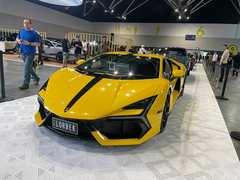
The Apex Predators: A Definitive Guide to the World’s Top Supercars and Hypercars
The lines between what constitutes a “supercar” and a “hypercar” have become increasingly blurred in the 21st century. There’s no universally agreed-upon threshold that transforms a production road car into an elite hypercar. However, for the purposes of this comprehensive analysis, we define these vehicles as machines that marry extreme, world-leading performance with breathtaking aesthetic design.
In 2025, the automotive landscape is more dynamic than ever. Manufacturers are pushing the boundaries of internal combustion, hybridization, and electric propulsion to deliver vehicles that defy gravity and redefine the concept of speed. This article delves into the most compelling production road cars—those that set benchmarks for acceleration, top speed, and aerodynamic innovation.
Whether you’re an armchair enthusiast, a prospective buyer, or simply fascinated by the pinnacle of automotive engineering, prepare to be captivated by the ultimate collection of supercars and hypercars that dominate the market today.
The Icon of the 21st Century: Bugatti Chiron
Few names resonate with the same level of prestige and performance as Bugatti. The Chiron, the undisputed successor to the legendary Veyron, has firmly established itself as the benchmark for modern hypercars. It represents the apex of luxury, craftsmanship, and raw power in a single, breathtaking package.
The Chiron’s design is a masterful blend of artistic expression and functional aerodynamics. It is an aesthetically perfect expression of its mechanical heart—a quad-turbocharged, 8.0-liter W16 engine. This powertrain is an engineering marvel, producing a staggering 1,500 horsepower at 6,000 rpm. This immense output allows the Chiron to rocket from 0 to 60 mph in approximately 2.5 seconds, pushing the speedometer toward a governed top speed of 261 mph (420 km/h).
With a lightweight chassis constructed from carbon fiber, the Chiron is not just about power; it is about balance and precision. The meticulous attention to detail extends to the interior, which is crafted with the finest materials, including hand-stitched leather, polished aluminum, and precious woods. It is a cabin designed to cocoon the occupants in unparalleled luxury while they experience automotive performance that borders on the unbelievable.
Bugatti has maintained a strategy of limited production for its flagship models. The Chiron is slated for a run of 500 units, ensuring that its exclusivity matches its performance. Starting prices are reported to be in the range of $3 million, a figure that reflects the bespoke craftsmanship, the cutting-edge technology, and the engineering prowess required to create such a masterpiece. For those seeking the ultimate expression of luxury and speed, the Chiron remains the undisputed gold standard.
The Track-Focused Extreme: Bugatti Bolide
While the Bugatti Chiron represents the pinnacle of road-legal hypercar luxury, the Bugatti Bolide stands as a testament to extreme, track-only performance. This machine is less a car and more a hyper-focused weapon designed to obliterate lap times. The Bolide is a drastic departure from the Chiron’s stately elegance, embracing raw, functional aerodynamics that prioritize downforce and speed above all else.
The Bolide’s exterior is a symphony of exposed carbon fiber and aero elements that evoke images of fighter jets. Its “X” design language and aggressive diffuser create an aesthetic that is as visually arresting as it is aerodynamically efficient. The cabin is sparse and purpose-built, stripping away non-essentials to save weight and sharpen the driving experience.
At its core, the Bolide utilizes an evolution of the Chiron’s W16 engine. However, with the removal of weight restrictions and the use of 110-octane racing fuel, power output surges to a breathtaking 1,600 horsepower. The car is designed to achieve speeds exceeding 310 mph, but its true brilliance lies in its acceleration and handling capabilities. The immense power-to-weight ratio allows the Bolide to achieve lateral G-forces that few road cars can comprehend, making it a formidable force on any circuit.
Production of the Bolide is strictly limited to 40 units worldwide, cementing its status as an ultra-exclusive collectible. This scarcity, combined with its extreme performance, justifies its starting price of around $4.7 million. The Bolide is not for the faint of heart; it is a pure driver’s machine that redefines the limits of what a production-based car can achieve on a racetrack.
The Master of Efficiency: McLaren Speedtail
In the modern era, efficiency and raw power must coexist, and no manufacturer embodies this philosophy better than McLaren with its Speedtail. A spiritual successor to the legendary McLaren F1, the Speedtail represents the evolution of the hypercar into a grand tourer—a vehicle that delivers blistering speed without sacrificing comfort or practicality.
The Speedtail’s silhouette is instantly recognizable—long, sleek, and teardrop-shaped, it is designed to cleave through the air with minimal resistance. The signature element of the Speedtail is its unique cockpit layout. Borrowing from the F1, the driver sits in the center, with two passenger seats slightly offset to the rear. This central driving position provides the driver with an unparalleled view of the road, enhancing control and immersion.
Under the hood, the Speedtail employs a sophisticated hybrid powertrain. It combines a bespoke 4.0-liter twin-turbocharged V8 engine with a high-capacity electric motor, producing a combined output of 1,050 horsepower. This setup not only delivers instant torque for exhilarating acceleration but also offers the ability to travel short distances on electric power alone, making the Speedtail a surprisingly refined urban cruiser.
The car accelerates to 60 mph in just 2.9 seconds, and its aerodynamic optimization allows it to reach a top speed of 250 mph (402 km/h). McLaren is limiting the production of the Speedtail to a mere 106 units, a nod to the production run of the original F1. As one of the most technically advanced and aerodynamically efficient road cars ever built, the Speedtail commands a premium price, starting at over $2 million. It is the perfect marriage of cutting-edge engineering, sustainable performance, and understated British elegance.
The Ultimate Hybrid: Aston Martin Valkyrie
The Aston Martin Valkyrie is the product of a visionary collaboration between British marque Aston Martin and the legendary Red Bull Racing Formula 1 team. Conceived under the guidance of Adrian Newey, one of Formula 1’s most revered aerodynamicists, the Valkyrie is less a road car and more a street-legal race car. It represents a quantum leap in hypercar development, blurring the lines between a production vehicle and a Le Mans prototype.
At the heart of the Valkyrie lies a naturally aspirated V12 engine developed by Cosworth. This 6.5-liter masterpiece produces an incredible 1,176 horsepower and revs to an astonishing 11,100 rpm. This powertrain is not only staggeringly powerful but also incredibly lightweight, contributing to the car’s overall curb weight of just 2,350 pounds (1,066 kg).
The Valkyrie’s design is a masterclass in aerodynamic efficiency. The bodywork features intricate aero channels and a massive rear diffuser, generating downforce that presses the car into the tarmac at high speeds. The cabin is minimalist and functional, featuring carbon fiber construction and racing-style seats. The doors open upwards in a scissor-style motion, adding a touch of dramatic flair to the already exotic aesthetic.
Production of the Aston Martin Valkyrie is limited to 175 units, including the track-only AMR variant. The starting price for this groundbreaking machine is approximately $3.2 million. The demand for the Valkyrie has been overwhelming, with all available units reportedly spoken for through pre-order. It stands as one of the most extreme and desirable road-legal track cars ever conceived, representing the very best of Formula 1 technology applied to a consumer vehicle.
The Power-to-Weight Icon: Koenigsegg One:1
Koenigsegg is a name synonymous with pushing the boundaries of performance and engineering innovation. The Swedish manufacturer has consistently produced some of the fastest and most extreme hypercars in the world, and the One:1 is a prime example of its philosophy. The name itself—One:1—perfectly encapsulates the car’s defining feature: a one-to-one power-to-weight ratio.
To achieve this incredible benchmark, the Koenigsegg One:1 weighs in at 1,360 kg (2,998 pounds) and produces 1,360 horsepower (1,341 hp). This is accomplished through the use of a potent 5.0-liter twin-turbocharged V8 engine, supplemented by carbon fiber construction and titanium exhaust systems to save weight. The car accelerates from 0 to 60 mph in 2.6 seconds, and its aerodynamic package allows for a claimed top speed of 273 mph (439 km/h).
The One:1’s design is functional and aggressive. It features a large, active rear wing that generates massive downforce, while the bodywork is sculpted to optimize airflow. Despite its extreme performance, Koenigsegg has managed to maintain a degree of luxury in the interior, which features carbon fiber trim, premium leather, and a host of advanced technologies.
Production of the Koenigsegg One:1 is extremely limited, with only seven units ever produced. This rarity, combined with its groundbreaking performance, has made it one of the most sought-after collector cars in the world. Each unit is

 The Apex Predators: A Definitive Guide to the World’s Top Supercars and Hypercars
The lines between what constitutes a “supercar” and a “hypercar” have become increasingly blurred in the 21st century. There’s no universally agreed-upon threshold that transforms a production road car into an elite hypercar. However, for the purposes of this comprehensive analysis, we define these vehicles as machines that marry extreme, world-leading performance with breathtaking aesthetic design.
In 2025, the automotive landscape is more dynamic than ever. Manufacturers are pushing the boundaries of internal combustion, hybridization, and electric propulsion to deliver vehicles that defy gravity and redefine the concept of speed. This article delves into the most compelling production road cars—those that set benchmarks for acceleration, top speed, and aerodynamic innovation.
Whether you’re an armchair enthusiast, a prospective buyer, or simply fascinated by the pinnacle of automotive engineering, prepare to be captivated by the ultimate collection of supercars and hypercars that dominate the market today.
The Icon of the 21st Century: Bugatti Chiron
Few names resonate with the same level of prestige and performance as Bugatti. The Chiron, the undisputed successor to the legendary Veyron, has firmly established itself as the benchmark for modern hypercars. It represents the apex of luxury, craftsmanship, and raw power in a single, breathtaking package.
The Apex Predators: A Definitive Guide to the World’s Top Supercars and Hypercars
The lines between what constitutes a “supercar” and a “hypercar” have become increasingly blurred in the 21st century. There’s no universally agreed-upon threshold that transforms a production road car into an elite hypercar. However, for the purposes of this comprehensive analysis, we define these vehicles as machines that marry extreme, world-leading performance with breathtaking aesthetic design.
In 2025, the automotive landscape is more dynamic than ever. Manufacturers are pushing the boundaries of internal combustion, hybridization, and electric propulsion to deliver vehicles that defy gravity and redefine the concept of speed. This article delves into the most compelling production road cars—those that set benchmarks for acceleration, top speed, and aerodynamic innovation.
Whether you’re an armchair enthusiast, a prospective buyer, or simply fascinated by the pinnacle of automotive engineering, prepare to be captivated by the ultimate collection of supercars and hypercars that dominate the market today.
The Icon of the 21st Century: Bugatti Chiron
Few names resonate with the same level of prestige and performance as Bugatti. The Chiron, the undisputed successor to the legendary Veyron, has firmly established itself as the benchmark for modern hypercars. It represents the apex of luxury, craftsmanship, and raw power in a single, breathtaking package.