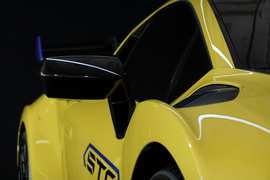
Top 10 Supercars and Hypercars in the World for 2025
Irresistible Machines of Power and Beauty
In the rarefied atmosphere of automotive performance, the lines between \”supercar\” and \”hypercar\” are often delightfully blurred. There isn’t a hard-and-fast threshold where one becomes the other, but for our purposes, we can safely say these titans of the road possess breathtaking characteristics combined with jaw-dropping aesthetics. Forget what you thought you knew about speed—the current generation of hypercars is rewriting the rulebook. From mind-boggling horsepower figures to mind-bending acceleration times and aerospace-inspired aerodynamics, these are the machines that make asphalt melt and expectations vanish.
This isn’t just about raw numbers, though. We’re talking about engineering marvels that blend bleeding-edge technology with raw emotional appeal, resulting in vehicles that are as much rolling art as they are instruments of pure velocity. Let’s dive into the world of automotive excellence and explore the 10 most impressive supercars and hypercars on the planet in 2025.
Bugatti Chiron: The Enduring Icon
Bugatti stands as a beacon of automotive excellence, boasting one of the most formidable lineups of supercars and hypercars ever conceived. Within this pantheon of performance, the Chiron commands singular attention. It is the proud, and arguably heavy, successor to the legendary Veyron, carrying the torch of Bugatti’s engineering legacy forward and establishing the foundation for a slew of subsequent models that push the boundaries even further.
Indeed, the very concept of the Chiron was a masterstroke of engineering. By incorporating an impossibly lightweight, yet incredibly powerful, core, the designers unlocked the potential to reach a staggering top speed of 275 mph (443 km/h). This staggering capability is powered by the mighty W16 engine, enhanced with quad-turbocharging, which unleashes a colossal 1,500 horsepower at 6,000 rpm. To contextualize this power, the Chiron can rocket from 0 to 60 mph (0-97 km/h) in approximately 2.5 seconds, a number that feels borderline physics-defying for a vehicle of its mass.
The exterior design is equally awe-inspiring. The elegance of the Chiron embodies the very definition of what a hypercar should look like—understated in its complexity but executed with an almost balletic aerodynamic grace. There’s a certain timelessness to its form, a purity that avoids the overly aggressive angularity seen in some competitors. The production run is intentionally limited, with only 500 units planned for global distribution. This exclusivity drives the price to stratospheric levels, with the base model starting at around $2.5 million, a price that can easily escalate further depending on the level of buyer customization. It remains one of the benchmarks in the automotive world, a true testament to engineering might.
The Evolution: Bugatti Bolide and the Spirit of Innovation
While the Chiron remains a cornerstone of Bugatti’s lineup, the company consistently innovates, creating even more specialized iterations. One such evolution is the Bugatti Bolide, a model that pushes the boundaries of what a Bugatti can be. Externally, the Bolide is drastically different from the Chiron, adopting a raw, exposed carbon fiber shell with aggressive aerodynamic elements that are designed to maximize downforce and minimize drag. Looking at the Bolide, it is genuinely difficult to believe it is a real-world production vehicle; it looks more like a protagonist from a next-generation racing simulator than a road-legal machine.
Beneath that dramatic skin lies a modified version of the W16 engine, delivering 1,850 horsepower when fueled with racing-grade gasoline. This beast of an engine is theoretically capable of pushing the hypercar to 310 mph (499 km/h). While testing has yielded slightly lower figures, exceeding 400 km/h remains an impressive statement of intent and solidifies its place among the coolest and fastest supercars in existence.
The exclusivity of the Bolide is extreme. Production is strictly limited to just 40 units worldwide, which explains the staggering starting price of $4.7 million. These are not cars for the faint of heart or the shallow of pocket. Bugatti has mastered the art of engineering performance with exclusivity, and both the Chiron and the Bolide stand as monumental achievements in the automotive industry.
McLaren Speedtail: The Aerodynamic Masterpiece
McLaren has carved a niche for itself by prioritizing lightweight construction, driver-focused dynamics, and aerodynamic purity, and the McLaren Speedtail perfectly embodies this philosophy. Often referred to as the spiritual successor to the legendary McLaren F1, the Speedtail presents a premium, flowing exterior that genuinely looks like it is moving even when stationary. The design, reminiscent of a droplet of water frozen in motion or a supersonic projectile, speaks volumes about its intended purpose: extreme speed.
What truly sets the Speedtail apart is its unique cabin layout. Following the precedent set by the F1, the driver sits in the center of the cockpit, with two passenger seats flanking them and set slightly further back. This configuration isn’t just for show; it optimizes the driving experience by placing the pilot at the focal point of the machine.
Powering this sleek marvel is a hybrid powertrain that masterfully combines a potent V8 turbocharged engine with a high-performance electric motor. The combined output of these systems reaches a phenomenal 1,050 horsepower, enabling the supercar to reach a breathtaking top speed of 250 mph (403 km/h). Its acceleration is equally blistering, capable of sprinting from 0 to 60 mph (0-97 km/h) in just 2.9 seconds.
The production of the Speedtail is strictly limited to 106 units, a number that directly references the number of F1 cars that were produced. This exclusivity drives the price to astronomical levels, with the starting cost exceeding $2.2 million, depending on the configuration and optional extras chosen by the discerning owner. It is a remarkable feat of engineering that blends luxury, performance, and a truly unique driving experience.
Aston Martin Valkyrie: The Hybrid Hypercar
In the rapidly evolving landscape of hypercar technology, Aston Martin has made a bold statement with the Valkyrie. This hybrid hypercar is defined by its extreme lightness and hyper-responsive acceleration. It takes approximately 2.5 seconds for the Valkyrie to surge from 0 to 60 mph (0-97 km/h)—a figure that places it among the fastest accelerating cars ever built. This incredible performance is made possible by its groundbreaking powertrain, which combines a high-revving V12 engine with an electric motor system to produce a total output of 1,176 horsepower.
But where the Valkyrie truly shines is in its lightweight construction. Weighing in at a mere 2,270 lbs (1,030 kg), it is one of the lightest hypercars on the planet. This featherweight status, combined with its carbon fiber body and sophisticated aerodynamic elements, allows it to reach speeds well in excess of 200 mph (320 km/h). The cockpit features a two-seat configuration, with the doors opening upward in a dramatic gullwing fashion, adding to the exclusivity and theatre of the driving experience.
The total production run is strictly capped at 175 units, and the starting price for these marvels of engineering is $3.2 million. Reports indicate that all units have been allocated or sold via pre-order, making this an exceptionally rare machine that few will ever have the privilege of owning or even seeing in person. Aston Martin has truly created a road-legal Formula 1 car, a testament to their dedication to pushing the boundaries of performance and aerodynamics.
Koenigsegg One:1: The Physics-Defying Vision
The philosophy behind the Koenigsegg One:1 is embedded directly in its name, derived from the Swedish manufacturer’s pursuit of a perfect 1:1 power-to-weight ratio. According to the designers’ vision, each kilogram of the car’s weight should theoretically be matched by an equivalent amount of horsepower. While the exact figure hovers slightly below this ideal at 0.99974 horsepower per kilogram, the resulting concept works magnificently. This extreme balance of low mass and impressive power enables the hypercar to achieve startling speeds despite not having the most powerful engine in this highly competitive ranking.
Indeed, the Koenigsegg One:1 accelerates from 0 to 60 mph (0-97 km/h) in a mere 2.6 seconds, and the maximum claimed top speed reaches an astonishing 267 mph (430 km/h). The actual weight and power figures align almost perfectly, measuring 1,360 horsepower and 1,360 kilograms, respectively.
Interestingly, the One:1 features a substantial rear spoiler, a feature that has become increasingly rare in modern hypercars. Nevertheless, Koenigsegg chose to emphasize traditional aerodynamic downforce-generating principles. Only 7 units of this hypercar were produced, and each one commands a price exceeding $2 million. It remains a testament to the innovative thinking that defines the Koenigsegg brand, a hypercar that challenged the established norms of automotive engineering.
The Evolution: Koenigsegg Jesko Absolute and the pursuit of Speed
Koenigsegg continues to innovate, recently unveiling the Jesko Absolute, a model that aims to shatter previous speed records. Equipped with a 5-liter twin-turbo

 Top 10 Supercars and Hypercars in the World for 2025
Irresistible Machines of Power and Beauty
In the rarefied atmosphere of automotive performance, the lines between \”supercar\” and \”hypercar\” are often delightfully blurred. There isn’t a hard-and-fast threshold where one becomes the other, but for our purposes, we can safely say these titans of the road possess breathtaking characteristics combined with jaw-dropping aesthetics. Forget what you thought you knew about speed—the current generation of hypercars is rewriting the rulebook. From mind-boggling horsepower figures to mind-bending acceleration times and aerospace-inspired aerodynamics, these are the machines that make asphalt melt and expectations vanish.
This isn’t just about raw numbers, though. We’re talking about engineering marvels that blend bleeding-edge technology with raw emotional appeal, resulting in vehicles that are as much rolling art as they are instruments of pure velocity. Let’s dive into the world of automotive excellence and explore the 10 most impressive supercars and hypercars on the planet in 2025.
Bugatti Chiron: The Enduring Icon
Top 10 Supercars and Hypercars in the World for 2025
Irresistible Machines of Power and Beauty
In the rarefied atmosphere of automotive performance, the lines between \”supercar\” and \”hypercar\” are often delightfully blurred. There isn’t a hard-and-fast threshold where one becomes the other, but for our purposes, we can safely say these titans of the road possess breathtaking characteristics combined with jaw-dropping aesthetics. Forget what you thought you knew about speed—the current generation of hypercars is rewriting the rulebook. From mind-boggling horsepower figures to mind-bending acceleration times and aerospace-inspired aerodynamics, these are the machines that make asphalt melt and expectations vanish.
This isn’t just about raw numbers, though. We’re talking about engineering marvels that blend bleeding-edge technology with raw emotional appeal, resulting in vehicles that are as much rolling art as they are instruments of pure velocity. Let’s dive into the world of automotive excellence and explore the 10 most impressive supercars and hypercars on the planet in 2025.
Bugatti Chiron: The Enduring Icon