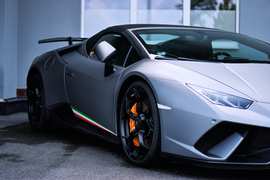
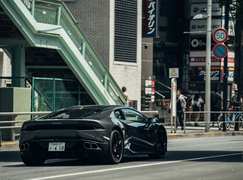
The Apex Predators: Top 10 Supercars & Hypercars Redefining Performance in 2025
The automotive world is a perpetual arms race, and at its sharpest edge sit the supercars and hypercars—machines born not of practicality, but of pure performance, aerodynamic obsession, and unbridled power. In 2025, the lines between these two elite categories continue to blur, but one thing remains constant: the pursuit of the ultimate speed, the most exhilarating driving experience, and the most breathtaking design.
As a lifelong automotive enthusiast and someone who has witnessed the evolution of these icons firsthand, I can tell you that what we are seeing today is not just an iteration of existing models; it’s a paradigm shift. Electrification is no longer a footnote but a fundamental pillar of performance, hybrid powertrains are pushing past the 1,000-horsepower mark with ease, and manufacturers are investing astronomical sums into active aerodynamics that make cars behave more like fighter jets than road vehicles.
For years, the discussion revolved around the pure mechanical spectacle of internal combustion engines—the symphony of a naturally aspirated V12 or the intoxicating roar of a twin-turbo flat-six. While those legends are certainly cherished and remain in production for the most exclusive collectors, the current landscape is dominated by hybrid-electric dominance and extreme lightweight construction. The new definition of a hypercar isn’t just about speed; it’s about a complete technological ecosystem that pushes the boundaries of what the human body and mind can process.
To compile this list, I’ve considered not just raw horsepower or top-speed statistics, which are often digitally limited or theoretical, but also the real-world performance envelope, the technological innovation, the emotional impact, and the sheer rarity of these automotive masterpieces. This is a curated selection of the Best Supercars and Hypercars in the World for 2025, reflecting the very latest in automotive engineering and performance benchmarks.
Bugatti Chiron: The Legacy Lives On
Even as Bugatti moves toward a new era of hybrid hypercars, the Bugatti Chiron remains the definitive benchmark for what a road-legal hypercar should feel like. It is the spiritual successor to the legendary Veyron, but it took the concept to a level that few believed was achievable.
The heart of the Chiron is its colossal quad-turbocharged W16 engine. This engineering marvel, displacing 8.0 liters and producing a thunderous 1,500 horsepower in its standard configuration, allows the Chiron to explode from 0 to 60 mph in approximately 2.5 seconds. While Bugatti has since introduced more potent variants like the Super Sport, the standard Chiron is the icon that established this level of performance as the new normal.
What truly sets the Chiron apart is its unparalleled blend of terrifying velocity and luxurious refinement. It is a car that can be driven comfortably at 150 mph on the Autobahn one minute and then effortlessly cruising through city streets the next. The craftsmanship in the cabin is second to none, utilizing the finest materials, hand-stitched leather, and precision-machined aluminum accents. However, the Chiron is ultimately defined by its engineering prowess. The car’s electronic speed limiter typically caps at 261 mph (420 km/h), but under controlled conditions, the Super Sport variant has demonstrated speeds exceeding 304 mph (490 km/h), proving its mettle in the extreme speed arena.
In 2025, Bugatti is transitioning toward hybridization with the groundbreaking Tourbillon model, but the Chiron remains the foundation upon which this dynasty was built. It represents a golden age of gasoline-powered hypercars that will forever be etched in automotive history.
Pagani Huayra R / Utopia: The Art of Speed
While many manufacturers focus on raw numbers, Pagani focuses on a philosophy: “Where beauty and technology become one.” The Huayra R, specifically the track-focused R variant, epitomizes this ethos with its brutal beauty and engineering perfection. The company’s focus has also expanded to include road-legal homologation in the form of the Pagani Utopia, which replaces the legendary Huayra.
The Huayra R is a pure track weapon. Powered by a custom-developed, naturally aspirated 6.0-liter V12 engine crafted by HWA, it produces 850 horsepower and revs to an ear-splitting 9,000 rpm. This engine, combined with the car’s extremely light carbon-titanium monocoque construction, yields a power-to-weight ratio that is truly astounding. The car weighs only 2,315 lbs (1,050 kg), making it feel incredibly nimble and responsive on the track. The Huayra R is more than just a fast car; it is an auditory masterpiece—the symphony of its screaming V12 is unlike anything else on four wheels.
Shifting focus to the road, the Pagani Utopia represents the next evolution of Pagani’s design language while retaining the mechanical purity that fans adore. Instead of hybridization or forced induction, the Utopia is powered by a Pagani V12 that delivers 864 horsepower. What makes the Utopia unique, however, is its commitment to driving engagement. It features a seven-speed manual transmission with a gated shifter—an absolute rarity in the modern hypercar world. This focus on driver involvement is what defines Pagani’s approach in 2025: delivering visceral, emotional experiences that transcend mere speed figures.
Both models demonstrate Horacio Pagani’s unwavering commitment to crafting automotive art. The Utopia is not just a car; it’s a sculpture that you can drive, a rolling masterpiece that proves that sometimes, the most meaningful innovation is the retention of traditional craftsmanship in a technologically advanced world.
Koenigsegg Jesko: The Definition of Speed
When it comes to the absolute zenith of internal combustion engine technology, Koenigsegg is the name that comes to mind. The Swedish manufacturer has built its reputation on breaking barriers, and the Koenigsegg Jesko stands as the pinnacle of this philosophy. It is not just a car; it is a manifesto of what’s possible when engineering meets obsession.
The Jesko has been designed with one goal in mind: to be the fastest production car in the world. This is achieved through the phenomenal Jesko Absolut variant, which is Koenigsegg’s answer to top-speed supremacy. This car is equipped with a twin-turbocharged 5.0-liter V8 engine that produces an astonishing 1,600 horsepower when running on E85 biofuel. This engine, combined with a revolutionary 9-speed light-speed transmission and an ultra-lightweight monocoque structure weighing just 2,900 lbs (1,320 kg), enables the Jesko to hit a theoretical top speed that could potentially exceed 330 mph (531 km/h).
What makes the Jesko so groundbreaking in 2025 is its aerodynamic innovation. The design is an exercise in efficiency, featuring an elongated rear profile and active aerodynamic elements that work in harmony with the chassis to minimize drag and maintain stability at extreme velocities. The interior is a masterpiece of futuristic design, featuring wraparound windshields that provide 360-degree visibility and a clean, minimalistic cockpit that puts the driver in full control.
Koenigsegg has always been about pushing boundaries. While the world has shifted toward hybridization and electric power, the Jesko is a celebration of internal combustion efficiency taken to its absolute limit. It is a testament to Swedish engineering excellence and the relentless pursuit of pure speed, making it a worthy contender for the top spot on this list.
McLaren Speedtail: The Electric Hypersonic Future
McLaren has always been at the forefront of aerodynamic innovation, but the Speedtail represents a dramatic leap into the future of hypercar performance. This vehicle is not just a fast car; it is a paradigm shift in how performance is delivered, bridging the gap between extreme speed and hybrid efficiency.
The Speedtail is powered by a hybrid powertrain that combines a twin-turbocharged 4.0-liter V8 engine with a high-performance electric motor. The total output of this system reaches an impressive 1,050 horsepower, allowing the car to rocket from 0 to 60 mph in just 2.8 seconds. But it is the top speed that truly defines this car: the Speedtail is electronically limited to 250 mph (403 km/h), a speed that is achievable in a seamless blend of power sources.
The most striking feature of the Speedtail is its design. With an elongated teardrop shape reminiscent of a fighter jet, the car is a study in pure aerodynamics. The cabin is arranged in a three-seat configuration with the driver positioned in the center—a layout inspired by the McLaren F1—providing an unparalleled driving experience. The interior features cutting-edge technology, including digital displays and adaptive lighting, creating a futuristic and immersive environment.
One of the most revolutionary aspects of the Speedtail is its active aerodynamics. Retractable spoilers and flexible tail sections automatically adjust based on the car’s speed, optimizing downforce and drag in real-time. This technological sophistication ensures that the car maintains stability at its highest speeds while providing a refined and comfortable ride on the road.
The Speedtail is a limited-production hypercar, with only 106 units being made worldwide. This exclusivity, combined with its groundbreaking technology and iconic design, makes it one of the most desirable and collectible hypercars of the modern era.

 The Apex Predators: Top 10 Supercars & Hypercars Redefining Performance in 2025
The automotive world is a perpetual arms race, and at its sharpest edge sit the supercars and hypercars—machines born not of practicality, but of pure performance, aerodynamic obsession, and unbridled power. In 2025, the lines between these two elite categories continue to blur, but one thing remains constant: the pursuit of the ultimate speed, the most exhilarating driving experience, and the most breathtaking design.
As a lifelong automotive enthusiast and someone who has witnessed the evolution of these icons firsthand, I can tell you that what we are seeing today is not just an iteration of existing models; it’s a paradigm shift. Electrification is no longer a footnote but a fundamental pillar of performance, hybrid powertrains are pushing past the 1,000-horsepower mark with ease, and manufacturers are investing astronomical sums into active aerodynamics that make cars behave more like fighter jets than road vehicles.
For years, the discussion revolved around the pure mechanical spectacle of internal combustion engines—the symphony of a naturally aspirated V12 or the intoxicating roar of a twin-turbo flat-six. While those legends are certainly cherished and remain in production for the most exclusive collectors, the current landscape is dominated by hybrid-electric dominance and extreme lightweight construction. The new definition of a hypercar isn’t just about speed; it’s about a complete technological ecosystem that pushes the boundaries of what the human body and mind can process.
To compile this list, I’ve considered not just raw horsepower or top-speed statistics, which are often digitally limited or theoretical, but also the real-world performance envelope, the technological innovation, the emotional impact, and the sheer rarity of these automotive masterpieces. This is a curated selection of the Best Supercars and Hypercars in the World for 2025, reflecting the very latest in automotive engineering and performance benchmarks.
The Apex Predators: Top 10 Supercars & Hypercars Redefining Performance in 2025
The automotive world is a perpetual arms race, and at its sharpest edge sit the supercars and hypercars—machines born not of practicality, but of pure performance, aerodynamic obsession, and unbridled power. In 2025, the lines between these two elite categories continue to blur, but one thing remains constant: the pursuit of the ultimate speed, the most exhilarating driving experience, and the most breathtaking design.
As a lifelong automotive enthusiast and someone who has witnessed the evolution of these icons firsthand, I can tell you that what we are seeing today is not just an iteration of existing models; it’s a paradigm shift. Electrification is no longer a footnote but a fundamental pillar of performance, hybrid powertrains are pushing past the 1,000-horsepower mark with ease, and manufacturers are investing astronomical sums into active aerodynamics that make cars behave more like fighter jets than road vehicles.
For years, the discussion revolved around the pure mechanical spectacle of internal combustion engines—the symphony of a naturally aspirated V12 or the intoxicating roar of a twin-turbo flat-six. While those legends are certainly cherished and remain in production for the most exclusive collectors, the current landscape is dominated by hybrid-electric dominance and extreme lightweight construction. The new definition of a hypercar isn’t just about speed; it’s about a complete technological ecosystem that pushes the boundaries of what the human body and mind can process.
To compile this list, I’ve considered not just raw horsepower or top-speed statistics, which are often digitally limited or theoretical, but also the real-world performance envelope, the technological innovation, the emotional impact, and the sheer rarity of these automotive masterpieces. This is a curated selection of the Best Supercars and Hypercars in the World for 2025, reflecting the very latest in automotive engineering and performance benchmarks.