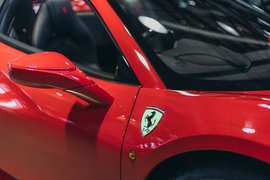
The Ferrari 296 GTB: Shaping the Future of Hybrid Performance in 2025
In the highly competitive landscape of 2025’s exotic car segment, few names resonate with the historical depth, engineering pedigree, and pure driving emotion of Ferrari. For over seven decades, Maranello has consistently pushed the boundaries of what is possible on the road and track. Yet, even against the backdrop of their own ambitious legacy, the Ferrari 296 GTB, first unveiled in 2022, represented a seismic shift in the manufacturer’s direction. As the automotive world accelerates into a new era of electrification, the 296 GTB remains a dominant force and a clear benchmark for newcomers like the highly anticipated Lamborghini Temerario.
Having spent more than a decade deeply immersed in the automotive world—observing trends, evaluating engineering innovations, and experiencing these magnificent machines firsthand—it’s undeniable that Ferrari didn’t just embrace hybrid technology with the 296 GTB; they perfected it. They forged a seamless integration of internal combustion and electric power, creating a driving experience that surpasses previous expectations.
This in-depth review explores the key factors that make the Ferrari 296 GTB a seminal achievement in automotive engineering. We will dissect its revolutionary powertrain, advanced chassis dynamics, sophisticated aerodynamics, and the significant impact it has had on the competitive supercar market. We’ll analyze its ingenious engineering, its unparalleled driver engagement, and its strategic position in an increasingly crowded segment, all while considering its lasting appeal as a premium automotive investment in an industry grappling with the transition toward sustainable performance.
The Core of Innovation: A Groundbreaking V6 Hybrid Powertrain
Departing from the multi-award-winning twin-turbo V8 that had defined Ferrari’s mid-engined road cars, the Ferrari 296 GTB introduced an entirely new engine architecture. It features a highly innovative twin-turbo V6 engine paired with a potent electric motor. This transition was far more than just a technological downsizing; it was a masterclass in engineering re-imagination. At the heart of the 296 GTB lies a completely new, 120-degree V6 engine. This engine incorporates a “hot-vee” turbocharger layout, where the turbochargers are positioned within the engine’s V-angle. This design significantly reduces exhaust runner lengths, which dramatically minimizes turbo lag and produces an immediate, visceral throttle response that is virtually unheard of in forced induction engines.
On its own, this V6 engine produces an astounding 654 horsepower (bhp) and 546 lb-ft of torque. However, the true brilliance of the Ferrari 296 GTB is revealed in its seamless integration with a rear-mounted electric motor, which adds an additional 165 bhp and 232 lb-ft of torque. The combined output is a staggering 819 bhp—a figure that would have been unimaginable from a V6 just a few years ago. While Ferrari typically refrains from publishing a combined peak torque figure due to the intricate coordination between the two power sources, the sensation during acceleration unequivocally confirms that the total is immense. This advanced V6 hybrid powertrain represents the pinnacle of modern high-performance engineering, offering blistering acceleration alongside the capability for up to 15 miles of pure electric driving. This “e-Manettino” functionality allows for quiet, emissions-free urban commutes—a luxury previously unthinkable for a car of this caliber—before unleashing its full, electrifying power on the open road or track.
Furthermore, the V6 engine itself benefits from a 30kg weight reduction compared to its V8 predecessors, contributing to the car’s exceptional agility. It is expertly paired with an eight-speed twin-clutch gearbox, ensuring lightning-fast gear changes and an engaging driving experience. For those considering a premium automotive technology showcase, the Ferrari 296 GTB represents a compelling choice for supercar ownership and luxury automotive investment.
Crafted for Velocity: Aerodynamic and Chassis Innovation
Beyond its groundbreaking powertrain, the Ferrari 296 GTB features a completely new aluminum chassis, meticulously engineered for optimal handling dynamics. A 50mm reduction in wheelbase compared to previous V8 models, combined with a slightly forward seating position for the occupants, translates into a car that feels more compact and responsive from behind the wheel.
Maranello’s expertise in active aerodynamics reaches new heights with the 296 GTB. Unlike some predecessors that focused primarily on reducing aerodynamic drag, this vehicle masterfully employs active aerodynamics to significantly increase downforce. A deployable rear wing, emerging from the car’s elegant rear section, is responsible for generating up to 100kg of downforce at 155 mph. However, the true engineering magic happens underneath the car. Ferrari has dedicated meticulous attention to the underbody, where the majority of the downforce is generated. The precise channeling of airflow, the sophisticated rear diffuser design, and the optimized ground clearance work in concert to create a ground-hugging effect that enhances stability and grip at extreme speeds.
Managing heat, which is critical in a hybrid supercar of this magnitude, is done meticulously. Twin radiators in the front handle engine and gearbox cooling, supported by two additional condensers for the high-voltage battery pack. Hot air is strategically vented underneath the car to prevent interference with the intercoolers’ airflow, while small ducts below the headlamps efficiently channel air to cool the brakes. Even the roofline features an integrated wing that creates a “virtual” rear screen, guiding airflow to the car’s rear as if by a physical surface. This holistic approach to airflow management underscores the Ferrari 296 GTB’s cutting-edge automotive engineering.
Ferrari’s electronic chassis systems have always been at the forefront of performance vehicle development, and the 296 GTB introduces a new level of sophistication. The innovative six-axis sensor, 6w-CDS, replaces conventional yaw sensors, providing an unprecedented understanding of the car’s movements across X, Y, and Z planes, including both acceleration and rotational speed. Combined with a sensor mounted directly on the steering rack, this system precisely measures driver input and, crucially, the real-time grip levels at the tire contact patches. This data is fed into other critical systems such as Side Slip Control (SSC) and the active E-Diff, maximizing cornering speed while maintaining impeccable stability and driver confidence. Furthermore, a new ABS-evo system, integrated into the brake-by-wire system, significantly shortens braking distances and improves trail braking performance, especially when driving in RACE mode or above. This comprehensive suite of advanced driver assistance systems (ADAS) ensures that the Ferrari 296 GTB remains incredibly manageable, making even novice drivers feel like seasoned racers.
The Assetto Fiorano Advantage: Unleashing Track Dominance
For the driving purist seeking to extract every ounce of performance from their Ferrari 296 GTB, the optional Assetto Fiorano package is an essential upgrade. This track-focused package replaces the standard dampers with high-performance Multimatic units, specifically derived from those used in GT racing applications. The impact on the dynamic driving experience is profound, offering an even tighter, more controlled ride that is crucial for circuit performance.
Beyond the suspension upgrades, the Assetto Fiorano package introduces additional carbon aerodynamic elements on the nose, boosting front downforce by an extra 20 kg. Weight reduction is also a key benefit, with more carbon fiber integrated into the cabin (e.g., door panels) and exterior components, shaving off 12 kg. Opting for the Lexan rear engine cover further reduces weight by an additional 3 kg. For those who demand the ultimate grip, the Michelin Pilot Sport Cup 2 R tires are available, replacing the already excellent standard Pilot Sport 4S tires. Aesthetically, Assetto Fiorano cars can also be distinguished by an optional exterior graphics package, a tasteful nod to the iconic 250LM from the 1960s, embodying bespoke automotive design with a rich heritage. These enhancements solidify the Ferrari 296 GTB’s position as a formidable track weapon while retaining its magnificent road manners.
Behind the Wheel: A Driving Revelation
The moment you settle into the driver’s seat of the Ferrari 296 GTB, its purpose becomes immediately clear. A double press on the steering wheel boss activates the vehicle’s systems, and the car defaults to Hybrid mode, silently gliding away on electric power alone. The damping is remarkably sophisticated, providing a surprisingly comfortable ride for a supercar, making long-distance journeys a genuine pleasure. The “frunk” even offers a reasonable luggage area, addressing a common practicality concern for supercar owners.
But what truly captivates is the transformation that occurs when both the internal combustion engine and the electric motor are fully engaged. Bury the throttle at low revs in a high gear, and the Ferrari 296 GTB simply rockets forward with an astonishing lack of lag. The instant, relentless surge of power is addictive, making you momentarily question the necessity of the eight-speed gearbox—such is its potency. Yet, working through those eight gears, allowing the V6 to scream toward its 8,500 rpm redline, is an orchestral delight. The acceleration figures—0-62 mph in 2.9 seconds, a top speed of 205 mph—tell only part of the story; the sheer sensation is one of nervous laughter mixed with an insatiable desire for more. The V6 soundtrack, rich with turbo whooshes and a tuneful rasp, adds another layer to the performance drama.
What truly sets the Ferrari 296 GTB apart is its chassis responsiveness. Ferrari’s objective of creating a “fun to drive” car has been met with resounding success. It feels incredibly

 The Ferrari 296 GTB: Shaping the Future of Hybrid Performance in 2025
In the highly competitive landscape of 2025’s exotic car segment, few names resonate with the historical depth, engineering pedigree, and pure driving emotion of Ferrari. For over seven decades, Maranello has consistently pushed the boundaries of what is possible on the road and track. Yet, even against the backdrop of their own ambitious legacy, the Ferrari 296 GTB, first unveiled in 2022, represented a seismic shift in the manufacturer’s direction. As the automotive world accelerates into a new era of electrification, the 296 GTB remains a dominant force and a clear benchmark for newcomers like the highly anticipated Lamborghini Temerario.
Having spent more than a decade deeply immersed in the automotive world—observing trends, evaluating engineering innovations, and experiencing these magnificent machines firsthand—it’s undeniable that Ferrari didn’t just embrace hybrid technology with the 296 GTB; they perfected it. They forged a seamless integration of internal combustion and electric power, creating a driving experience that surpasses previous expectations.
The Ferrari 296 GTB: Shaping the Future of Hybrid Performance in 2025
In the highly competitive landscape of 2025’s exotic car segment, few names resonate with the historical depth, engineering pedigree, and pure driving emotion of Ferrari. For over seven decades, Maranello has consistently pushed the boundaries of what is possible on the road and track. Yet, even against the backdrop of their own ambitious legacy, the Ferrari 296 GTB, first unveiled in 2022, represented a seismic shift in the manufacturer’s direction. As the automotive world accelerates into a new era of electrification, the 296 GTB remains a dominant force and a clear benchmark for newcomers like the highly anticipated Lamborghini Temerario.
Having spent more than a decade deeply immersed in the automotive world—observing trends, evaluating engineering innovations, and experiencing these magnificent machines firsthand—it’s undeniable that Ferrari didn’t just embrace hybrid technology with the 296 GTB; they perfected it. They forged a seamless integration of internal combustion and electric power, creating a driving experience that surpasses previous expectations.