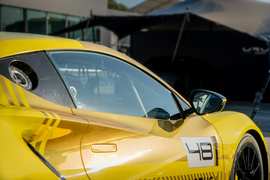
From Pavement to Podium: Cars Where Racing Pedigree Shapes the Street-Legal Experience
As someone who has spent the last decade at the intersection of motorsports and production vehicle development, I’ve witnessed a profound symbiotic relationship. It’s a dynamic where the crucible of competitive racing doesn’t just inspire design; it fundamentally recalibrates engineering, pushing materials, aerodynamics, and powertrain performance to their breaking points. What emerges from this high-stakes laboratory isn’t merely a winner’s trophy; it’s a tangible blueprint that filters down to the machines we park in our driveways.
Today, the pursuit of speed on the track continues to be a powerful engine for innovation on the road. The relentless demand for victory in series like Formula 1, Le Mans, and IMSA forces manufacturers to innovate under extreme duress. Every lap is a data point, every failure a lesson, and every victory a validation of their technology. This relentless push for performance on the racetrack inevitably translates into what the average driver experiences—even if the road connection is often indirect.
But the influence runs deeper than just engineering. A manufacturer’s success in motorsport acts as a powerful brand accelerant. A win on Sunday isn’t just about pride; it creates a halo effect that directly impacts sales on Monday. This ‘win on Sunday, sell on Monday’ philosophy remains a cornerstone of automotive marketing, offering consumers an emotional shortcut to performance credibility.
For the everyday driver, the connection to motorsport often comes through the engine. While few will ever experience the G-forces of a Le Mans prototype or the downforce of an F1 car, owning a vehicle that shares a powertrain with a legendary racer provides a visceral link to that thrilling world. These cars transform the daily grind into an opportunity to experience performance technology born from pure, unadulterated competition.
This article dives into the world of production cars that carry the unmistakable DNA of the racetrack, exploring how the relentless pursuit of speed and engineering excellence has shaped some of the most compelling vehicles ever built for public roads.
From Race-Ready Tech to Everyday Thrills: A Look at How Competition Shapes Road Cars
The impact of motorsport on automotive engineering is a continuous narrative of evolution. Every victory, every lap, and every innovative solution contributes to a richer tapestry of automotive capability. Let’s explore some iconic examples where this direct lineage from the track to the showroom is most evident, showcasing how the relentless pursuit of speed and performance has shaped some of the most compelling production cars ever built.
The Lamborghini Estoque: A Wild Supercar Dream That Never Happened
One of the most captivating automotive tales revolves around the Lamborghini Estoque. Unveiled as a concept at the 2008 Paris Motor Show, the Estoque was a bold vision of a four-door, V10-powered supercar that represented Lamborghini’s most ambitious pivot in decades. It was an audacious departure from the brand’s traditional two-door layout, proposing to meld the raw power and extreme aesthetics of a Lamborghini with the practicality of a sedan.
The Estoque was more than just a styling exercise; it was envisioned as a technical powerhouse. The concept was slated to feature a 5.2-liter V10 engine, essentially an evolution of the powerplant found in the Lamborghini Gallardo. This engine was already proven in racing series, providing a solid foundation for a performance-oriented luxury sedan. While the concept promised a 0–60 mph time of under four seconds and a top speed exceeding 200 mph, it faced a critical dilemma: the financial crisis.
Following the acquisition of Lamborghini by Audi, the brand was undergoing a strategic review. The potential for a four-door supercar was a massive divergence from the traditional Lamborghini DNA, which centered on low-slung, two-door exotics. The market consensus among executives was that pursuing a sedan would dilute the brand’s exclusive image. The production cost estimates for a vehicle with such bespoke engineering were also prohibitive.
Ultimately, the Lamborghini Estoque was never brought to market. While the concept was a testament to Lamborghini’s engineering audacity and its willingness to push the boundaries of its own identity, the economic climate and strategic priorities led to its cancellation. The vision of a supercar that could compete with Porsche Panamera and Maserati Quattroporte was shelved, but the memories of this radical concept linger as a reminder of how close Lamborghini came to redefining its market segment.
Alfa Romeo Montreal: The V8 Heartbeat of a Sports Prototype
The Alfa Romeo Montreal stands as a testament to the enduring appeal of a sonorous V8 engine. Nestled beneath its sculpted hood lies a 2.6-liter V8, a powerplant with direct lineage to Alfa Romeo’s formidable Tipo 33 sports prototype. This endurance racer was a regular competitor in legendary events like the Targa Florio and the grueling 24 Hours of Daytona, embodying the pinnacle of sports car racing in its era.
While recalibrated for street legality and comfort, the Montreal’s V8 retains a significant portion of its motorsport character. It eagerly spins to 7,000 RPM, delivering a spirited 200 horsepower that, when combined with its striking design, cemented the Montreal’s status as an understated yet potent icon of the Alfa Romeo marque. This vehicle exemplifies how exotic racing technology can be successfully adapted for consumer enjoyment, offering a unique blend of performance and Italian flair.
BMW’s M Division: Engineering Excellence Forged in Competition
BMW’s M division, synonymous with performance, has consistently leveraged its motorsport heritage to create automotive legends. The iconic BMW M1, a mid-engined marvel, was powered by the legendary 3.5-liter inline-six M88 engine. This powerplant was a direct offshoot of BMW’s highly successful racing programs, most notably finding a home in the M1 ProCar series.
This racing pedigree wasn’t confined to a single model; the M88 engine later found its way into the esteemed E24 M6 and E28 M5, bestowing them with exceptional performance capabilities. Furthermore, the four-cylinder S14 engine that propelled the E30 M3, a titan of touring car racing, drew significant inspiration from the M88 and the turbocharged M12 Formula 1 engines.
This cross-pollination of engineering across different racing disciplines and production cars highlights BMW’s commitment to transferring championship-winning technology directly to its performance vehicles, solidifying its reputation for producing driver-focused automobiles. The development of the BMW M3 price and the availability of high-performance parts for these classic models continue to attract enthusiasts seeking authentic motorsport experiences.
Chevrolet Camaro ZL1: A Can-Am Beast Unleashed on the Streets
The 1969 Chevrolet Camaro ZL1 represents a bold fusion of racing ambition and street-legal muscle. Its heart is a formidable 427 cubic-inch (7.0-liter) V8, an engine originally conceived for the demanding world of Can-Am racing. This all-aluminum powerhouse, remarkable for its era, was engineered for extreme performance.
While capable of an astonishing 500 horsepower in its race trim, the road-going version was artfully detuned to a still-impressive 430 horsepower. The ZL1 package transformed the Camaro from a mere pony car into a legitimate drag strip terror, a street-legal monster capable of exhilarating acceleration. This engine’s prowess also extended to the competitive arena, finding its way into various race cars competing in the SCCA Trans-Am series.
With a production run of only 69 units, the Camaro ZL1 remains an exceptionally rare and highly coveted collector’s item, a tangible link to an era of uncompromising American performance. For collectors and enthusiasts interested in the Chevrolet Camaro ZL1 price, it represents a significant investment in automotive history.
Ferrari Dino 206 GT: A V6 Prelude to Prancing Horse Excellence
The Ferrari Dino 206 GT, though bearing a name separate from its famed parent marque, introduced a groundbreaking V6 engine that echoed Ferrari’s Formula 2 racing efforts of the 1960s. This compact 2.0-liter V6, while de-tuned for road use, retained a thrillingly high-revving character, imbuing the Dino with a distinct racing spirit that made it an absolute joy to drive on winding roads.
Producing a capable 180 horsepower, this engine provided ample motivation for a car weighing just over 2,000 pounds. The Dino was more than just a beautiful car; it marked Ferrari’s significant foray into mid-engine V6 sports cars, establishing a design and engineering philosophy that would influence subsequent generations of iconic Ferrari models. The Ferrari Dino 206 GT for sale attracts collectors seeking a piece of Ferrari’s evolutionary journey.
Ferrari F50: Formula 1 DNA on Public Roads
The Ferrari F50, conceived to commemorate the Italian marque’s 50th anniversary, represents an audacious elevation of the track-derived engine concept. Its 4.7-liter V12 engine is not merely inspired by racing; it’s a direct descendant of the powertrain used in Ferrari’s 1990 Formula 1 car, the Tipo 641, famously piloted by Alain Prost.
This naturally aspirated marvel is a symphony of mechanical precision, capable of reaching an astonishing 8,500 RPM and unleashing 513 horsepower. The F50 delivers an unvarnished, visceral experience that brings the raw intensity of Formula 1 directly to the street. With minimal modifications required to meet road regulations, the F50 stands as perhaps the closest a street

 From Pavement to Podium: Cars Where Racing Pedigree Shapes the Street-Legal Experience
As someone who has spent the last decade at the intersection of motorsports and production vehicle development, I’ve witnessed a profound symbiotic relationship. It’s a dynamic where the crucible of competitive racing doesn’t just inspire design; it fundamentally recalibrates engineering, pushing materials, aerodynamics, and powertrain performance to their breaking points. What emerges from this high-stakes laboratory isn’t merely a winner’s trophy; it’s a tangible blueprint that filters down to the machines we park in our driveways.
Today, the pursuit of speed on the track continues to be a powerful engine for innovation on the road. The relentless demand for victory in series like Formula 1, Le Mans, and IMSA forces manufacturers to innovate under extreme duress. Every lap is a data point, every failure a lesson, and every victory a validation of their technology. This relentless push for performance on the racetrack inevitably translates into what the average driver experiences—even if the road connection is often indirect.
But the influence runs deeper than just engineering. A manufacturer’s success in motorsport acts as a powerful brand accelerant. A win on Sunday isn’t just about pride; it creates a halo effect that directly impacts sales on Monday. This ‘win on Sunday, sell on Monday’ philosophy remains a cornerstone of automotive marketing, offering consumers an emotional shortcut to performance credibility.
For the everyday driver, the connection to motorsport often comes through the engine. While few will ever experience the G-forces of a Le Mans prototype or the downforce of an F1 car, owning a vehicle that shares a powertrain with a legendary racer provides a visceral link to that thrilling world. These cars transform the daily grind into an opportunity to experience performance technology born from pure, unadulterated competition.
This article dives into the world of production cars that carry the unmistakable DNA of the racetrack, exploring how the relentless pursuit of speed and engineering excellence has shaped some of the most compelling vehicles ever built for public roads.
From Pavement to Podium: Cars Where Racing Pedigree Shapes the Street-Legal Experience
As someone who has spent the last decade at the intersection of motorsports and production vehicle development, I’ve witnessed a profound symbiotic relationship. It’s a dynamic where the crucible of competitive racing doesn’t just inspire design; it fundamentally recalibrates engineering, pushing materials, aerodynamics, and powertrain performance to their breaking points. What emerges from this high-stakes laboratory isn’t merely a winner’s trophy; it’s a tangible blueprint that filters down to the machines we park in our driveways.
Today, the pursuit of speed on the track continues to be a powerful engine for innovation on the road. The relentless demand for victory in series like Formula 1, Le Mans, and IMSA forces manufacturers to innovate under extreme duress. Every lap is a data point, every failure a lesson, and every victory a validation of their technology. This relentless push for performance on the racetrack inevitably translates into what the average driver experiences—even if the road connection is often indirect.
But the influence runs deeper than just engineering. A manufacturer’s success in motorsport acts as a powerful brand accelerant. A win on Sunday isn’t just about pride; it creates a halo effect that directly impacts sales on Monday. This ‘win on Sunday, sell on Monday’ philosophy remains a cornerstone of automotive marketing, offering consumers an emotional shortcut to performance credibility.
For the everyday driver, the connection to motorsport often comes through the engine. While few will ever experience the G-forces of a Le Mans prototype or the downforce of an F1 car, owning a vehicle that shares a powertrain with a legendary racer provides a visceral link to that thrilling world. These cars transform the daily grind into an opportunity to experience performance technology born from pure, unadulterated competition.
This article dives into the world of production cars that carry the unmistakable DNA of the racetrack, exploring how the relentless pursuit of speed and engineering excellence has shaped some of the most compelling vehicles ever built for public roads.