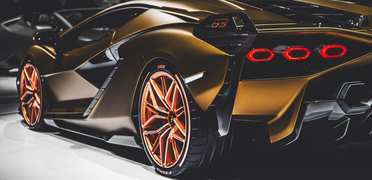
Toyota’s Sports Car Onslaught: Decoding the GR GT, GT3, and Lexus LFA
The whispers about Toyota’s next-generation sports car lineup—the GR GT, GR GT3, and the all-new Lexus LFA Concept—finally culminated in a full-scale reveal. After years of speculation, the unveiling provided a clear picture of the company’s aggressive pivot into the high-performance arena. What emerged from the presentation wasn’t just a new trio of cars; it was a strategic declaration about the future of Toyota’s brand, its commitment to motorsports, and its unique manufacturing philosophy.
The timing is crucial. Amid a global automotive landscape dominated by electric vehicles (EVs) and the rapid rise of Chinese brands, Toyota is doubling down on what it does best: building driver-focused, technologically advanced machines. But this time, they’re doing it with unprecedented ambition, tackling multiple high-performance sub-genres simultaneously.
The GR GT: A Masterclass in Engineering Prowess
At the heart of Toyota’s offensive lies the GR GT, the spiritual successor to the legendary Supra. This isn’t just a facelift or a badge-engineered model; it’s a bespoke, ground-up creation engineered with a singular focus: raw, uncompromising driving performance. The GR GT is set to hit the streets around 2027, likely as a 2028 model year vehicle, serving as the homologated production version of the GR GT3 race car. This timeline suggests a steady progression, allowing Toyota to refine the road car based on lessons learned from the track.
Pricing and Positioning: Breaking the $200,000 Barrier
While Toyota remains tight-lipped about the exact sticker price, it has provided enough clues to suggest the GR GT will be a premium proposition. During the technical briefings, Chief Program Manager Takashi Doi pointed to the pricing of competitors like the Porsche 911 GT3, Mercedes-AMG GT, and Aston Martin Vantage S.
Using a weight-to-power ratio analysis, the GR GT’s claimed 641 horsepower and 3,858-pound curb weight place it squarely in the ultra-high-performance segment.
| Vehicle | Curb Weight | Horsepower | Weight/Power | Base Price |
| :— | :— | :— | :— | :— |
| 2028 Toyota GR GT | 3,858 lbs | 641 hp | 6.0 lb/hp | N/A |
| 2026 Porsche 911 GT3 | 3,278 lbs | 502 hp | 6.2 lb/hp | $235,500 |
| 2026 Porsche 911 Turbo S | 3,859 lbs | 701 hp | 5.5 lb/hp | $275,650 |
| 2026 AMG GT Pro 4Matic | 4,299 lbs | 603 hp | 7.1 lb/hp | $202,200 |
| 2026 Aston Martin Vantage S | 3,847 lbs | 671 hp | 5.7 lb/hp | $235,000 |
Given this competitive set, it is highly probable that the GR GT will command a price exceeding $200,000. This moves it out of the enthusiast-next-door territory and firmly into the realm of luxury performance coupes.
The Fiendish Powertrain: A Symphony of Mechanical and Electric Ingenuity
The engine bay of the GR GT reveals a level of engineering complexity rarely seen in modern production cars. Toyota has opted for an all-aluminum V8 engine with forged internals, turbocharged to produce an estimated 641 horsepower and 627 lb-ft of torque.
What truly sets the GR GT apart is its fiendishly complicated transaxle. This setup involves sending power from the engine, located in the front, through a carbon-fiber-reinforced plastic (CFRP) torque tube to a rear-mounted bell housing. This housing contains the hybrid system’s electric motor and an eight-speed transmission.
This U-turn in layout reduces the overall powertrain length, but more importantly, it signals a philosophical shift. While electric vehicles boast simplified powertrains, Toyota is demonstrating its mastery of mechanical complexity. This powertrain isn’t just about power; it’s about providing drivers with maximum control.
Advanced Driver Aids: Will It Drift?
A key question for any high-performance sports car is the level of electronic intervention. Toyota has confirmed that the GR GT will feature multiple driving modes, though the specific names remain under wraps. A look at the steering wheel reveals a dial labeled ‘Sport Boost,’ indicating an enhanced power delivery option.
Crucially, a button labeled ‘TRC/VSC’ (Traction and Stability Control) with an ‘Off’ option confirms that drivers will be allowed to completely disable these systems. This is a critical detail for enthusiasts who demand the purest driving experience.
When asked about the potential for future high-performance variants—such as a Nürburgring Edition, GRMN, GT R, or GT3 RS—Doi-san offered a classic but telling response: \”Obviously, we can’t talk about future product, but variations and improvements is something we’re always looking for. And that’s crucial, very important for a sports car.” This implies a roadmap for higher-output versions down the line, catering to the most demanding performance enthusiasts.
The GR GT3: Race-Ready Precision and High-Speed Innovation
The GR GT3 concept showcases Toyota’s commitment to bringing motorsports technology directly to the consumer. This race car serves as the development mule for the GR GT, ensuring that the road car is built to the highest performance standards. It is a no-compromise machine built for the rigors of international GT3 racing, where split-second decisions and razor-sharp precision are paramount.
Nürburgring Dominance: A Quest for Redemption
The launch event was underpinned by a narrative of redemption. Chairman Akio Toyoda, affectionately known as ‘Morizo,’ highlighted Toyota’s past struggles at the Nürburgring Nordschleife. He spoke candidly about being humiliated by faster, better-handling sports cars, and how that frustration became the driving force behind the GR GT and GT3 projects.
Toyota is not just participating in the Nürburgring; it is seeking to conquer it. While Doi-san was diplomatic about specific lap targets, the implication is clear: the GR GT will not be the one getting passed on the ‘Green Hell.’ Given that various Porsche 911 GT3 and AMG GT models have already shattered the 7-minute barrier, achieving a sub-7-minute lap is not just an aspiration—it is a prerequisite for this level of performance.
The Lexus LFA: A Return to Electrified Supercar Excellence
The return of the Lexus LFA represents the pinnacle of Toyota’s grand strategy. Positioned as a halo car that will define the brand’s future, this new LFA will be an electric supercar that pushes the boundaries of automotive technology and luxury. However, the journey to market is expected to be a long one.
Availability and Pricing: The Wait Continues
Toyota representatives indicated that the production LFA is still several years away from market availability. This extended development timeline is understandable, given the complexity of integrating the latest electrification technology into a flagship supercar.
The original LFA, launched in 2010, debuted at a staggering $375,000 and reached $445,000 for the Nürburgring Edition. While Doi-san acknowledged the shift in the market since the V10 LFA departed, he also implied that the new electric LFA will need to be priced less than $350,000 to remain competitive.
The market for electric luxury sports coupes is still nascent. While vehicles like the Lucid Air Sapphire, Rolls-Royce Spectre, and Cadillac Celestiq exist, none fit the specific profile of the LFA. The electric hypercar segment, featuring vehicles like the Rimac Nevera and Lotus Evija, operates in the $2.3 to $2.4 million range—a price point far beyond Lexus’s traditional target. The closest competitor, the rumored second-generation Tesla Roadster, is estimated to be in the $200,000 to $250,000 range, assuming it materializes.
Solid-State Batteries: The Game-Changing Technology
One factor that could significantly influence the LFA’s pricing and capabilities is the potential adoption of solid-state battery (SSB) technology. While no one at the launch confirmed this officially, Toyota has been aggressively pursuing SSB development since 2020 through its joint venture with Panasonic, Prime Planet Energy & Solutions, Inc.
In 2024, Toyota announced plans for SSB technology to arrive between 2027 and 2028, featuring a range of 621 miles (1,000 km) and charging times of approximately 10 minutes. This level of performance would represent a massive leap forward, and for a flagship LFA, it could be the perfect technological showcase.
Solving the Packaging Dilemma
Integrating a high-capacity battery into a low-slung supercar poses a significant engineering challenge. Traditional lithium-ion cells are bulky and heavy, requiring a ‘skateboard’ chassis design.

 Toyota’s Sports Car Onslaught: Decoding the GR GT, GT3, and Lexus LFA
The whispers about Toyota’s next-generation sports car lineup—the GR GT, GR GT3, and the all-new Lexus LFA Concept—finally culminated in a full-scale reveal. After years of speculation, the unveiling provided a clear picture of the company’s aggressive pivot into the high-performance arena. What emerged from the presentation wasn’t just a new trio of cars; it was a strategic declaration about the future of Toyota’s brand, its commitment to motorsports, and its unique manufacturing philosophy.
The timing is crucial. Amid a global automotive landscape dominated by electric vehicles (EVs) and the rapid rise of Chinese brands, Toyota is doubling down on what it does best: building driver-focused, technologically advanced machines. But this time, they’re doing it with unprecedented ambition, tackling multiple high-performance sub-genres simultaneously.
The GR GT: A Masterclass in Engineering Prowess
At the heart of Toyota’s offensive lies the GR GT, the spiritual successor to the legendary Supra. This isn’t just a facelift or a badge-engineered model; it’s a bespoke, ground-up creation engineered with a singular focus: raw, uncompromising driving performance. The GR GT is set to hit the streets around 2027, likely as a 2028 model year vehicle, serving as the homologated production version of the GR GT3 race car. This timeline suggests a steady progression, allowing Toyota to refine the road car based on lessons learned from the track.
Pricing and Positioning: Breaking the $200,000 Barrier
While Toyota remains tight-lipped about the exact sticker price, it has provided enough clues to suggest the GR GT will be a premium proposition. During the technical briefings, Chief Program Manager Takashi Doi pointed to the pricing of competitors like the Porsche 911 GT3, Mercedes-AMG GT, and Aston Martin Vantage S.
Using a weight-to-power ratio analysis, the GR GT’s claimed 641 horsepower and 3,858-pound curb weight place it squarely in the ultra-high-performance segment.
| Vehicle | Curb Weight | Horsepower | Weight/Power | Base Price |
Toyota’s Sports Car Onslaught: Decoding the GR GT, GT3, and Lexus LFA
The whispers about Toyota’s next-generation sports car lineup—the GR GT, GR GT3, and the all-new Lexus LFA Concept—finally culminated in a full-scale reveal. After years of speculation, the unveiling provided a clear picture of the company’s aggressive pivot into the high-performance arena. What emerged from the presentation wasn’t just a new trio of cars; it was a strategic declaration about the future of Toyota’s brand, its commitment to motorsports, and its unique manufacturing philosophy.
The timing is crucial. Amid a global automotive landscape dominated by electric vehicles (EVs) and the rapid rise of Chinese brands, Toyota is doubling down on what it does best: building driver-focused, technologically advanced machines. But this time, they’re doing it with unprecedented ambition, tackling multiple high-performance sub-genres simultaneously.
The GR GT: A Masterclass in Engineering Prowess
At the heart of Toyota’s offensive lies the GR GT, the spiritual successor to the legendary Supra. This isn’t just a facelift or a badge-engineered model; it’s a bespoke, ground-up creation engineered with a singular focus: raw, uncompromising driving performance. The GR GT is set to hit the streets around 2027, likely as a 2028 model year vehicle, serving as the homologated production version of the GR GT3 race car. This timeline suggests a steady progression, allowing Toyota to refine the road car based on lessons learned from the track.
Pricing and Positioning: Breaking the $200,000 Barrier
While Toyota remains tight-lipped about the exact sticker price, it has provided enough clues to suggest the GR GT will be a premium proposition. During the technical briefings, Chief Program Manager Takashi Doi pointed to the pricing of competitors like the Porsche 911 GT3, Mercedes-AMG GT, and Aston Martin Vantage S.
Using a weight-to-power ratio analysis, the GR GT’s claimed 641 horsepower and 3,858-pound curb weight place it squarely in the ultra-high-performance segment.
| Vehicle | Curb Weight | Horsepower | Weight/Power | Base Price |