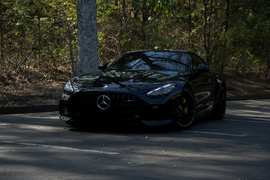
Toyota’s Sports Car Offensive: Unpacking the GR GT, GT3, and Lexus LFA
Toyota has unleashed a trio of halo vehicles that promise to redefine the Japanese automaker’s performance identity. The reveal of the Lexus LFA Concept, the GR GT, and the GR GT3 race car has ignited the automotive world, signaling a major shift in Toyota’s strategy. We had the rare opportunity to get up close with these engineering marvels and engage with the minds behind them, including chief program manager Takashi Doi and the dedicated engineering teams. While some questions were met with deflected answers, the overarching message is clear: Toyota is committed to nurturing these projects from concept to production, making the journey as significant as the destination.
GR GT: Price, Availability, and Performance Blueprint
The GR GT, slated to arrive around 2027 as a potential 2028 model, is the homologated road-going version of the GR GT3 race car. This timing suggests the production racer could hit the track shortly thereafter, although we’ve seen other manufacturers—like Ford with its latest GT—delay road car homologation in favor of early motorsport competition.
When pressed about pricing, Program Manager Doi referenced models like the Porsche 911 GT3 and Mercedes-AMG GT with comparable specifications to guide expectations. Using the GR GT’s claimed 641 horsepower and a 3,858-pound curb weight, we arrive at a weight-to-power ratio of 6.0 lb/hp. Here is how the GR GT stacks up against a competitive set of high-performance grand tourers:
| Vehicle | Curb Weight | Horsepower | Weight/Power | Base Price |
| :— | :— | :— | :— | :— |
| 2028 Toyota GR GT | 3,858 lb | 641 hp | 6.0 lb/hp | N/A |
| 2026 Porsche 911 GT3 | 3,278 lb | 502 hp | 6.2 lb/hp | $235,500 |
| 2026 Porsche 911 Turbo S | 3,859 lb | 701 hp | 5.5 lb/hp | $275,650 |
| 2026 AMG GT Pro 4Matic | 4,299 lb | 603 hp | 7.1 lb/hp | $202,200 |
| 2026 Aston Martin Vantage S | 3,847 lb | 671 hp | 5.7 lb/hp | $235,000 |
Note: These prices are for comparison purposes only and reflect estimated market values.
Based on this competitive landscape, the GR GT is almost certainly going to be priced north of $200,000.
Performance Engineering and Driving Dynamics
The GR GT features a complex, electromechanical hybrid powertrain with an integrated mechanical limited-slip differential (LSD). This sophisticated setup is designed to deliver highly engaging driving dynamics and enable the kind of tire-shredding theatrics that performance enthusiasts crave. Expect thick black burnouts, smoky donuts, and eye-watering drifts.
When asked directly, “Will it drift?” and whether there would be a dedicated drift mode, Doi-san confirmed his team is developing various driving modes but remained tight-lipped on their specific names. However, a glimpse at the GR GT’s steering wheel reveals some clues. A knob on the right side includes the words ‘Sport Boost,’ a common feature in performance cars designed to unlock additional power or responsiveness.
Mirroring this on the lower left side is a button labeled ‘TRC/VSC’ (Traction Control/Vehicle Stability Control) with the option to turn it ‘Off.’ When questioned about the possibility of completely disabling traction and stability controls, Doi eventually confirmed that drivers would indeed have this capability.
Looking ahead, we inquired about the potential for future higher-performance variants of the GR GT. With established Nürburgring variants like the Nürburgring Edition or GRMN (a nod to the Lexus LFA’s final iteration), along with GT R and GT3 RS models offered by other manufacturers, Toyota was asked about its future plans. Doi replied, “Obviously we can’t talk about future product, but variations and improvements is something we’re always looking for. And that’s crucial, very important for a sports car.”
The Nürburgring Nordschleife: Redemption from Humiliation
The 24 Hours of the Nürburgring played a pivotal role in the GR GT’s development. When Akio Toyoda, also known as “Master Driver Morizo” and the visionary behind Gazoo Racing, introduced the GR GT and GR GT3 at Woven City, he stood before a massive screen displaying the word ‘HUMILIATION’ in bold capital letters. Akio spoke at length about the humbling experience of development laps at the Nürburgring Nordschleife in previous Toyota sports cars, including a fourth-generation Supra, where they were repeatedly overtaken by faster, better-handling machines—predominantly from Germany.
This powerful Japanese concept of leveraging humiliation as a catalyst for improvement directly drove the development of the GR GT and GT3. When asked about the significance of the Nürburgring and whether the team is targeting a specific lap time—such as the sub-7-minute benchmarks recently achieved by the Mustang GTD (6:52), Corvette ZR1 (6:50), and Corvette ZR1X (6:49)—Doi-san declined to take the bait. However, he did affirm the critical importance of the Nürburgring to Toyota, the GR brand, and the company’s motorsports programs. He reiterated Akio’s position that the GR GT would not be the one getting passed on the Green Hell.
Considering the typical modesty of Japanese automotive engineers, we interpret this as a near-declaration that the GR GT will achieve a sub-7-minute lap. This assumption is further bolstered by the fact that various Porsche 911 GT3 and Mercedes-AMG GT models have all easily surpassed this benchmark.
Lexus LFA: Price, Availability, and the Solid-State Conundrum
For enthusiasts captivated by the LFA’s design, the news regarding its production timeline and pricing may be disappointing. The official response from Toyota representatives, including Doi-san, was a noncommittal “several years.” As for the price, we anticipate the new LFA will need to be considerably less than its predecessor, which debuted in 2010 at a stunning $375,000 and was eventually retired at $445,000 for the LFA Nürburgring Edition.
Doi-san acknowledged that the automotive world has shifted since the Lexus V-10 supercar’s departure and that returning as an electric vehicle introduces new complexities. This suggests a subtle hint that the next-generation LFA must fall below the $350,000 mark.
However, we believe it will need to be substantially lower. The market for luxury sports coupes is already minuscule, and there are currently no electric sports coupes priced above $200,000. While there are a small handful of electric luxury and performance vehicles in this price bracket—such as the Lucid Air Sapphire, Rolls-Royce Spectre, and Cadillac Celestiq—none perfectly fit the competitive profile of the LFA. Entering the electric hypercar realm, with vehicles like the Rimac Nevera and Lotus Evija commanding prices between $2.3 and $2.4 million, is decidedly not Lexus territory. The closest competitor in spirit might be the second-generation Tesla Roadster, rumored to be in the $200,000 to $250,000 range, but only if Elon Musk’s vaporware ever materializes.
Could the LFA be a Solid-State Battery Flagship?
There is one complicating factor that could position the LFA as a very high-priced, exotic luxury sports flagship for Lexus: the potential arrival of solid-state battery (SSB) technology. No one at the event would confirm this rumor under direct questioning.
What we do know is that Toyota has been investing in solid-state batteries since 2020, following the establishment of a joint venture with Panasonic named Prime Planet Energy & Solutions, Inc. In 2024, Toyota updated its battery plans, announcing SSB technology is expected to arrive between 2027 and 2028 with a projected range of 621 miles (1,000 km) and charging times of approximately 10 minutes. Obviously, this level of battery performance represents a massive technological leap forward, which is precisely what Lexus may be seeking for its flagship sports car. It could also provide a solution to a significant packaging problem in the electric LFA.
The current industry standard for global EV manufacturing is to place the heavy battery cells, bundled into packs or modules, as low as possible in the vehicle’s floor, usually occupying all the space between the wheels or even extending beyond them in some cases. This architecture is known as a skateboard chassis and was pioneered in production by the Tesla Model S, the first successful mainstream EV, followed by every major EV that has come since.
Keeping the heavy batteries low is excellent for both packaging and handling, as it lowers the center of gravity and gives EVs that planted feeling during cornering. However, this presents two challenges for the Lexus LFA’s production engineers. Firstly, the

 Toyota’s Sports Car Offensive: Unpacking the GR GT, GT3, and Lexus LFA
Toyota has unleashed a trio of halo vehicles that promise to redefine the Japanese automaker’s performance identity. The reveal of the Lexus LFA Concept, the GR GT, and the GR GT3 race car has ignited the automotive world, signaling a major shift in Toyota’s strategy. We had the rare opportunity to get up close with these engineering marvels and engage with the minds behind them, including chief program manager Takashi Doi and the dedicated engineering teams. While some questions were met with deflected answers, the overarching message is clear: Toyota is committed to nurturing these projects from concept to production, making the journey as significant as the destination.
GR GT: Price, Availability, and Performance Blueprint
The GR GT, slated to arrive around 2027 as a potential 2028 model, is the homologated road-going version of the GR GT3 race car. This timing suggests the production racer could hit the track shortly thereafter, although we’ve seen other manufacturers—like Ford with its latest GT—delay road car homologation in favor of early motorsport competition.
When pressed about pricing, Program Manager Doi referenced models like the Porsche 911 GT3 and Mercedes-AMG GT with comparable specifications to guide expectations. Using the GR GT’s claimed 641 horsepower and a 3,858-pound curb weight, we arrive at a weight-to-power ratio of 6.0 lb/hp. Here is how the GR GT stacks up against a competitive set of high-performance grand tourers:
| Vehicle | Curb Weight | Horsepower | Weight/Power | Base Price |
Toyota’s Sports Car Offensive: Unpacking the GR GT, GT3, and Lexus LFA
Toyota has unleashed a trio of halo vehicles that promise to redefine the Japanese automaker’s performance identity. The reveal of the Lexus LFA Concept, the GR GT, and the GR GT3 race car has ignited the automotive world, signaling a major shift in Toyota’s strategy. We had the rare opportunity to get up close with these engineering marvels and engage with the minds behind them, including chief program manager Takashi Doi and the dedicated engineering teams. While some questions were met with deflected answers, the overarching message is clear: Toyota is committed to nurturing these projects from concept to production, making the journey as significant as the destination.
GR GT: Price, Availability, and Performance Blueprint
The GR GT, slated to arrive around 2027 as a potential 2028 model, is the homologated road-going version of the GR GT3 race car. This timing suggests the production racer could hit the track shortly thereafter, although we’ve seen other manufacturers—like Ford with its latest GT—delay road car homologation in favor of early motorsport competition.
When pressed about pricing, Program Manager Doi referenced models like the Porsche 911 GT3 and Mercedes-AMG GT with comparable specifications to guide expectations. Using the GR GT’s claimed 641 horsepower and a 3,858-pound curb weight, we arrive at a weight-to-power ratio of 6.0 lb/hp. Here is how the GR GT stacks up against a competitive set of high-performance grand tourers:
| Vehicle | Curb Weight | Horsepower | Weight/Power | Base Price |