
The Apex Predators: Navigating the Pinnacle of Automotive Velocity in 2025
For decades, the pursuit of ultimate speed has captivated the automotive world, pushing engineers and designers to the very edge of what’s technologically possible. In 2025, this relentless quest for velocity has birthed a new generation of hypercars and supercars that redefine performance benchmarks. As an industry veteran with a decade immersed in this exhilarating domain, I’ve witnessed firsthand the evolution of these titans, each one a testament to human ingenuity and an unwavering desire to break barriers. The conversation around the fastest production cars is no longer a simple race to a higher number, but a complex interplay of groundbreaking engineering, aerodynamic mastery, and raw, unadulterated power.
The primary keyword we’ll be exploring is fastest production cars, a term that encapsulates the ultimate aspiration for any manufacturer venturing into the elite stratum of automotive performance. This isn’t just about theoretical potential; it’s about verifiable, repeatable feats of engineering that translate into astonishing acceleration and blistering top speeds. The pursuit of being the fastest car manufacturer is a constant, driving innovation across the board. When discussing hypercar top speeds, we’re entering a realm where physics itself seems to bend.
The undisputed king of the hypercar realm, consistently pushing the boundaries of what we thought achievable, is the Koenigsegg Jesko Absolut. This Swedish marvel represents the zenith of aerodynamic efficiency and raw powertrain might. While its theoretical top speed of over 310 mph (499 km/h) remains a tantalizing prospect yet to be fully realized on a public road or designated proving ground, its capabilities are undeniable. The Jesko Absolut is a finely tuned instrument of speed, featuring a twin-charged 5.0-liter V8 engine that unleashes an earth-shattering 1,600 horsepower and 1,500 Nm of torque, all while tipping the scales at an astonishingly light 1,390 kg. Its dominance isn’t just a matter of theoretical top speed; it holds a world record that speaks volumes about its track prowess: an almost unbelievable 0-400 km/h (249 mph) and back to zero in a mere 27.83 seconds. This astonishing deceleration capability underscores the intricate balance of its design and its absolute mastery over kinetic energy. Exploring hypercar performance metrics like this offers a glimpse into the sheer engineering brilliance at play.
Emerging from the electric revolution with a thunderous statement is the Yangwang U9 Xtreme. This vehicle represents a monumental leap forward for electric mobility, setting an official record in September 2025 as the world’s fastest production car, achieving a verified top speed of 308 mph (496 km/h) on a German runway. This achievement is a watershed moment, proving that electrification is not only viable but, in some instances, superior when it comes to sheer velocity. The U9 Xtreme is propelled by an ensemble of four electric motors, generating a combined output of an astronomical 3,000 horsepower. This immense power is managed by an advanced 1,200-volt electrical system, a significant upgrade from the typical 400-volt systems found in most passenger EVs. Production of the U9 Xtreme is deliberately limited to just 30 units, with an expected price point exceeding £200,000, placing it firmly in the ultra-exclusive hypercar category. The impact of electric hypercar speed is reshaping the future of automotive performance.
The United States’ legacy of muscle and brute force is powerfully represented by the SSC Tuatara. While its journey to solidify its claim among the fastest street legal cars has been marked by some turbulence, its performance capabilities are beyond question. Powered by a twin-turbocharged V8 engine, the Tuatara can produce up to 1,750 horsepower when running on E85 ethanol. The initial claims of a 331 mph top speed in October 2020 were later rescinded due to a GPS data anomaly, a testament to the critical importance of verifiable data in this arena. However, subsequent tests in early 2022 confirmed its prowess, with a validated top speed of 295 mph (475 km/h). This remarkable figure still firmly plants the Tuatara among the elite contenders for the world’s fastest production cars. The ongoing development of American hypercars continues to be a significant storyline in the automotive landscape.
Bugatti, a name synonymous with automotive luxury and extreme performance, continues to push boundaries with its latest offering, the Bugatti Tourbillon. For those who grew up in the 2000s, the image of a Bugatti Veyron battling fighter jets on television is etched into memory. The Tourbillon carries that prestigious lineage forward. This is not merely a car; it’s a rolling sculpture of engineering excellence. It boasts an 1,800 horsepower V16 hybrid powertrain that propels this £3.2 million luxury missile from 0 to 60 mph in under 2.0 seconds. The Tourbillon’s top speed is officially rated at 277 mph (446 km/h). Given Bugatti’s historical ability to extract extraordinary speeds, as demonstrated by the Chiron surpassing 300 mph, it’s highly probable that an even faster iteration will emerge in the coming years, further solidifying Bugatti’s position as a premium performance car manufacturer. Discussions around Bugatti car speeds inevitably lead to awe and admiration.
Another formidable contender from the United States is the Hennessey Venom F5. This all-American supercar is a direct assault on the top speed records, a testament to American engineering prowess. The Venom F5 is equipped with a colossal 6.6-liter twin-turbocharged V8 engine that churns out an incredible 1,817 horsepower and 1,617 Nm of torque. This formidable power plant enables it to accelerate from 0 to 60 mph in a blistering 2.6 seconds, ultimately reaching a claimed top speed of 272 mph (438 km/h). However, Hennessey has ambitions to push this figure even higher, with a stated target of exceeding 300 mph in future iterations. The ongoing development of high-performance vehicles from American manufacturers continues to be a dominant narrative. If you are looking for a custom performance car builder, Hennessey is certainly a name that comes to the fore.
Bugatti makes another appearance on this elite list with the Bugatti Mistral, which holds the title of the fastest convertible car in the world. This open-top marvel achieves a breathtaking top speed of 270 mph (435 km/h). More significantly, the Mistral marks the end of an era, being the last Bugatti to feature the iconic 8.0-liter quad-turbocharged W16 engine. This legendary engine produces a staggering 1,600 horsepower and 1,600 Nm of torque, delivered to all four wheels via a sophisticated seven-speed automatic transmission. Imagine the sheer exhilaration of experiencing 270 mph with the wind in your hair; it’s an experience that transcends mere transportation. The allure of Bugatti convertible speed is unparalleled.
From Croatia, the Rimac Nevera R continues to redefine electric hypercar performance. Building upon the already groundbreaking standard Nevera, the ‘R’ variant elevates the stakes even further. The power output from its four electric motors has been increased from 1,914 hp to a colossal 2,107 hp, and the top speed has climbed from 256 mph to 267 mph (430 km/h). Its acceleration is equally astounding, achieving 0 to 60 mph in a mere 1.7 seconds. In direct comparisons, such as a drag race against the McMurtry Spierling, the standard Nevera was narrowly defeated. A rematch against the Nevera R promises an even more compelling spectacle, highlighting the fierce competition in the electric supercar market. The pursuit of EV top speed records is a crucial battleground.
Stepping onto the global stage from Japan is Aspark and its remarkable creation, the Owl. This low-volume hypercar manufacturer has produced an electric marvel that demands attention. The Aspark Owl, powered by four electric motors, delivers an impressive 1,953 hp and achieves 0 to 60 mph in a stunning 1.7 seconds, ultimately reaching a top speed of 256 mph (413 km/h). While this figure is exceptional, Aspark also offers a non-road-legal variant, the Owl SP600, which can reportedly achieve 272 mph, showcasing their commitment to pushing the absolute limits of electric propulsion. The emergence of Japanese electric hypercars is a testament to global innovation.
McLaren, a brand with a rich racing heritage, may not have explicitly designed the McLaren Speedtail to chase absolute world records, but its capabilities are undeniable. With a top speed of 250 mph (402 km/h), it stands as the fastest road car the legendary marque has ever produced. Even McLaren’s new flagship, the W1, is projected to reach a top speed of 237 mph. The Speedtail eclipses the performance of its iconic predecessor, the three-seat McLaren F1, in terms of top speed. Its aerodynamically optimized, drag-reducing bodywork, devoid of ostentatious wings, gives it a futuristic, almost otherworldly appearance, evoking imagery from cyberpunk cinema. The thought of transporting two passengers at such velocity is simply mind-boggling. The pursuit of McLaren top speed has always been a hallmark of their engineering.
Sharing the 250 mph (402 km/h) benchmark is the Koenigsegg Regera, another exceptional offering from the Swedish manufacturer. This car represents a unique approach to performance, blending a twin-turbo V8 engine with an electric motor to produce a combined output of 1,500 hp. What sets the Regera apart is its revolutionary single-gear transmission. Unlike conventional vehicles, the Regera can accelerate from a standstill to its maximum speed of 250 mph using the same gear. This innovative design allows for seamless power delivery, whether cruising at lower speeds or unleashing its full potential on a closed course. The engineering behind Koenigsegg’s innovation is always a topic of great interest.
The Aston Martin Valkyrie presents a visually arresting proposition, appearing more like a Le Mans prototype than a road-legal vehicle. Yet, this perception belies its street-legal status. The heart of the Valkyrie is a formidable 6.5-liter V12 hybrid engine, producing a formidable 1,160 hp. This F1-inspired road-racer can sprint from 0 to 60 mph in a mere 2.5 seconds, a feat made even more remarkable by its incredibly light weight, just over a ton. The Aston Martin Valkyrie represents a fusion of race-bred technology and road-going usability, pushing the boundaries of what’s possible in road-legal race cars. The Valkyrie performance figures are staggering.
Beyond these hypercar titans, a segment of exceptionally fast yet more accessible supercars and GT cars also commands attention. These vehicles offer blistering performance while maintaining a degree of everyday usability.
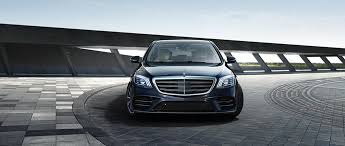
Among the more attainable speed demons, the Mercedes-AMG GT in its latest iteration continues to impress. It refines the excellence of its predecessors, offering exhilarating driving dynamics, striking aesthetics, and a surprising level of practicality for a car capable of reaching 196 mph (315 km/h). Its performance is driven by a potent 4.0-liter twin-turbocharged V8 engine producing 585 hp, accompanied by a truly evocative exhaust note. Discussions about performance GT cars invariably include the AMG GT.
For those seeking a ballistic four-door saloon experience, the Alfa Romeo Giulia Quadrifoglio is an unparalleled choice. This twin-turbo V6-powered sedan delivers a potent 510 hp, channeled exclusively to the rear wheels. It’s capable of reaching 191 mph (307 km/h) and offers a unique blend of exhilarating performance and practicality, allowing you to comfortably take the children to school while providing a soundtrack that’s anything but mundane. The appeal of fast Italian sedans is undeniable.
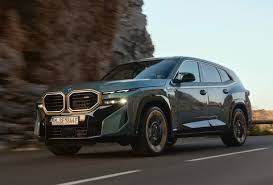
The BMW M8 Competition stands out as a seriously impressive GT car, equally at home on a racetrack as it is on a continent-spanning journey. With the optional M Driver’s Package, it can achieve a top speed exceeding 190 mph (306 km/h). Unlike stripped-out race cars, the M8 Competition prioritizes luxury, featuring a sophisticated infotainment system and exceptional comfort, making it a truly refined grand tourer. When considering luxury performance sedans, the M8 Competition is a top-tier contender.
If the M8 doesn’t quite fit your aesthetic or performance desires, the Audi RS7 Performance presents a compelling alternative. Sharing a similar 4.0-liter V8 heart with the BMW, it may not match the M8’s absolute top speed, but its performance is equally formidable. In direct comparisons, such as quarter-mile drag races, the RS7 has demonstrated its capability, often emerging victorious. The evolution of Audi performance models continues to impress.
Finally, for those seeking a slightly unconventional yet undeniably stylish option, the Lexus LC500 offers a captivating blend of beauty and performance. This gorgeous coupe is powered by a robust V8 engine, delivering a top speed of 168 mph (270 km/h) and accelerating from 0 to 60 mph in 4.6 seconds. The interior provides a luxurious environment for long journeys, and the car’s rapid acceleration ensures an engaging driving experience. The Lexus performance coupe segment is uniquely positioned.
The automotive landscape in 2025 is more diverse and exhilarating than ever before, with the fastest production cars pushing the boundaries of what’s achievable. Whether powered by internal combustion or electric motors, these vehicles represent the pinnacle of automotive engineering and design. As we continue to witness breakthroughs in battery technology, aerodynamics, and powertrain efficiency, the definition of ultimate speed will undoubtedly continue to evolve.
Are you ready to experience the thrill of automotive velocity firsthand? Explore our curated selection of high-performance vehicles and discover the machine that will ignite your passion for speed. Contact us today to schedule a test drive and become part of the future of automotive excellence.