
The Apex Predators of Asphalt: Navigating the Fastest Production Cars of 2025
As an automotive expert who’s spent the better part of a decade immersed in the blistering world of high-performance vehicles, I can tell you that 2025 marks a pivotal year. The landscape of automotive speed is electrifying, quite literally, with traditional combustion engines locking horns with an emergent breed of electric hypercars that are rewriting the rulebook. We’re not just talking about raw horsepower anymore; it’s a sophisticated dance of aerodynamics, advanced materials, intricate power delivery, and cutting-edge software that defines the ultimate velocity machines.
From my vantage point, the quest for the “fastest production car” has never been more intense, nor more diverse. This isn’t just about bragging rights; it’s a relentless push for innovation that trickles down to every vehicle on the road. Today, we’re diving deep into the machines that command respect, cars that shatter perceptions of what’s possible, and the very few that allow you to flirt with the 300 mph barrier. Get ready to explore the market’s most exclusive and fastest street-legal cars, where engineering boundaries are not just pushed, but pulverized.
The Hypercar Hierarchy: Redefining Absolute Speed
In 2025, the elite tier of hypercars is a thrilling mix of established titans and audacious newcomers. These are vehicles engineered for one primary purpose: unfathomable speed, wrapped in bespoke luxury and revolutionary technology.
Yangwang U9 Xtreme – The Electric Paradigm Shift (308 mph / 496 km/h)
Hold onto your seats, because the biggest headline of 2025 in the realm of top speed has undoubtedly been delivered by the Yangwang U9 Xtreme. In a monumental moment for electric vehicles, this Chinese marvel officially claimed the world record for the fastest production car in September 2025, achieving an astounding 308 mph on a meticulously prepared runway in Germany. This isn’t just a win for Yangwang; it’s a seismic shift, proving unequivocally that electric propulsion can not only rival but surpass the highest echelons of combustion performance.
What makes the U9 Xtreme a true technological marvel? It’s driven by an unfathomable four-motor electric powertrain, collectively unleashing an eye-watering 3,000 horsepower. This colossal power is managed by an ultra-efficient 1,200-volt electrical architecture – a stark contrast to the typical 400-volt systems found in most high-performance EVs. This advanced system allows for incredibly rapid power delivery and optimal thermal management, crucial for sustaining such extreme velocities. With only 30 units slated for production, and an expected price point well north of £200,000 (likely translating to over $250,000 USD), the U9 Xtreme isn’t just a car; it’s a statement about the future of performance and a coveted asset for any luxury hypercar investment portfolio.
Koenigsegg Jesko Absolut – The Theoretical Apex (310+ mph / 499+ km/h Theoretical)
While the Yangwang U9 Xtreme holds the official recorded top speed, the Koenigsegg Jesko Absolut remains the undisputed king of theoretical velocity. This Swedish “megacar” is a more powerful, aerodynamically optimized variant of the already insane Jesko, meticulously crafted to achieve one singular, monumental goal: break the 300 mph barrier, and then some.
Under its sleek, elongated carbon fiber shell lies a twin-turbocharged 5.0-liter V8 engine, a marvel of internal combustion engineering, pumping out a staggering 1,600 horsepower and 1,500 Nm (1,106 lb-ft) of torque when fed E85 ethanol. Paired with its incredibly low dry weight of just 1,390 kg (3,064 lbs), the power-to-weight ratio is simply mind-boggling. Christian von Koenigsegg himself has stated this is the fastest car his company will ever build. While the official, independently verified 310+ mph run hasn’t been completed yet (largely due to the challenge of finding a road long and safe enough), the Absolut’s other records, like its astonishing 0-400-0 km/h (0-249-0 mph) sprint in a mere 27.83 seconds, strongly suggest its capability to deliver on that extraordinary promise. For those pursuing the ultimate driving experience and a piece of automotive engineering marvels, the Absolut is the Holy Grail.
SSC Tuatara – America’s Speed Saga (295 mph / 475 km/h)
The pursuit of absolute speed is often fraught with drama, and the story of the SSC Tuatara is a testament to that. Hailing from America’s heartland, SSC North America set out to reclaim the top speed crown for the U.S. Their twin-turbocharged eight-cylinder engine, capable of generating up to 1,750 horsepower on ethanol, is a brutal testament to American V8 prowess.
The initial claim of 331 mph in October 2020 was met with both awe and skepticism, only to be later retracted due to a GPS sensor error. This controversy cast a shadow, but SSC persevered. Through rigorous, independently verified testing in early 2022, the Tuatara ultimately proved its mettle, achieving a verified two-way average of 295 mph. While not reaching the mythical 300 mph mark on that attempt, 295 mph is far from “slow” and firmly cements its position among the world’s fastest. The Tuatara embodies the spirit of relentless pursuit and overcoming adversity, making it a proud flag-bearer for top-tier supercars US engineering.
Hennessey Venom F5 – Texas Takes Aim at 300+ (272 mph / 438 km/h, targeting 300+)
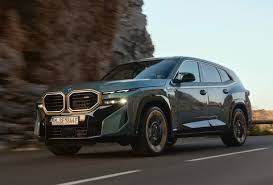
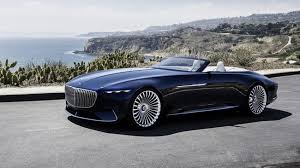
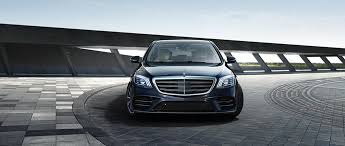
Not to be outdone by their American counterparts, Hennessey Performance Engineering from Texas has their own answer to the speed question: the Hennessey Venom F5. This machine is pure, unadulterated American muscle, honed for stratospheric speeds. Its “Fury” engine, a 6.6-liter twin-turbocharged V8, unleashes a staggering 1,817 horsepower and 1,617 Nm (1,193 lb-ft) of torque.
The F5 is a lightweight, carbon-fiber weapon designed with a singular focus: achieve a verified 300 mph top speed. While it has already clocked an impressive 272 mph in testing, Hennessey has been actively pursuing the 300+ mph goal throughout 2024 and 2025. Given their track record and relentless engineering, it’s highly anticipated that the F5 will either match or exceed that elusive barrier, solidifying its status as an elite automotive brand contender. Its blistering 0-60 mph sprint in just 2.6 seconds is merely a prelude to its high-speed capabilities, making it a potent force in the record-breaking top speed cars category.
Bugatti Tourbillon – The V16 Hybrid Era Begins (277 mph / 446 km/h)
For many, the name Bugatti is synonymous with absolute speed and unparalleled luxury. If you grew up watching the Bugatti Veyron dominate speed records, then the new Bugatti Tourbillon represents the dawn of a magnificent new era for the Molsheim marque. Unveiled to a captivated world in 2024, the Tourbillon is not just a successor; it’s a revolutionary leap forward, especially in a 2025 context where electrification is paramount.
This incredible machine eschews the W16 engine of its predecessors, opting instead for a naturally aspirated V16 hybrid powertrain, delivering a monumental 1,800 horsepower. This sophisticated setup launches the £3.2 million (approximately $4 million USD) luxury missile from 0-60 mph in under 2.0 seconds, on its way to a breathtaking 277 mph top speed. The Tourbillon, named after the intricate mechanism in high-end watches, is a testament to Bugatti’s commitment to both exquisite craftsmanship and uncompromised performance. It represents a bold step into the future, blending old-world luxury with cutting-edge hybrid supercar technology, and for discerning collectors, it’s a prime investment-grade automobile.
Bugatti Mistral – A Grand W16 Farewell (270 mph / 435 km/h)
Before the Tourbillon took center stage, Bugatti gave a glorious send-off to its iconic W16 engine with the Bugatti Mistral. This isn’t just a car; it’s a collector’s piece, the last hurrah for an engine that defined an era of hypercars. And what a farewell it is: the Mistral is the fastest convertible car in the world, capable of a mind-numbing 270 mph with the top down.
Housing the familiar 8.0-liter quad-turbocharged W16 engine, it produces 1,600 horsepower and 1,600 Nm (1,180 lb-ft) of torque, sent to all four wheels via a seven-speed automatic gearbox. The sheer exhilaration of experiencing 270 mph with the wind in your hair is a sensation only a handful of individuals will ever know. The Mistral stands as a monument to internal combustion engineering, a beautiful and incredibly fast swansong to one of the most legendary engines in automotive history, making it highly desirable for exclusive supercar ownership and a testament to automotive innovation 2025 in terms of blending raw power with open-top freedom.
Rimac Nevera R – The Electric Hypercar Unleashed (267 mph / 430 km/h)
Croatia’s Rimac Automobili has quickly established itself as a leader in high-performance electric vehicles, and the Rimac Nevera R takes their electrifying vision to another level. Building upon the already insane Nevera, the ‘R’ variant pushes the boundaries of EV performance even further.
Its four independent electric motors now deliver an astonishing 2,107 horsepower (up from 1,914 hp), propelling it from 0-60 mph in a blistering 1.7 seconds – a time that few, if any, production cars can match. The top speed has also climbed to 267 mph. The Nevera R isn’t just about straight-line speed; it’s a masterclass in dynamic handling, torque vectoring, and cutting-edge battery technology. In an era where “electric” often means compromises, the Nevera R stands as a purebred hypercar, showcasing the future of automotive performance with zero emissions.
Aspark Owl – Japanese Electric Precision (256 mph / 413 km/h)
While perhaps not as widely known as some European giants, the Japanese firm Aspark has quietly made a monumental entry into the hypercar world with the Aspark Owl. This sleek, low-slung electric hypercar is a testament to Japanese engineering precision and an undeniable force in the electric hypercar performance arena.
Powered by four electric motors, the Owl generates a massive 1,953 horsepower, enabling it to match the Nevera R’s scorching 0-60 mph time of 1.7 seconds. Its top speed of 256 mph firmly places it among the fastest cars in the world. It’s important to note that a non-road-legal variant, the Owl SP600, has achieved 272 mph, demonstrating the platform’s extreme capabilities. The road-legal Owl, however, offers a unique blend of exotic design and mind-bending electric acceleration, making it a compelling choice for those seeking next-gen performance cars with an emphasis on sustainability.
McLaren Speedtail – The Hyper-GT Vision (250 mph / 402 km/h)
McLaren has always carved its own path, and the McLaren Speedtail is a prime example of their distinct philosophy. Unlike many of its rivals, the Speedtail wasn’t designed solely to chase outright top speed records. Instead, it was conceived as a “Hyper-GT” – a car that blends extreme velocity with unparalleled luxury and comfort for long-distance cruising. Yet, with a top speed of 250 mph, it holds the title of the fastest road car McLaren has ever built, even surpassing the iconic F1 and the new W1 flagship.
Its futuristic, “liquid metal” bodywork is a masterclass in aerodynamic hypercar design, achieving minimal drag without resorting to obtrusive wings. The legendary three-seat configuration, with the driver positioned centrally, is a direct homage to the F1, offering an unparalleled driving perspective. The Speedtail is a testament to McLaren’s commitment to pushing design and engineering boundaries, offering an incredibly exclusive and fast experience for those who value unique design and a supremely refined journey at warp speed.
Koenigsegg Regera – The Single-Gear Marvel (250 mph / 402 km/h)
Another marvel from the innovative minds at Koenigsegg, the Regera distinguishes itself with its revolutionary Koenigsegg Direct Drive (KDD) system. This groundbreaking transmission effectively eliminates the traditional gearbox, allowing the Regera to go from 0-250 mph in what essentially feels like a single, seamless gear. It’s a truly unique proposition in the hypercar world, delivering a remarkably smooth and immediate power delivery.
Under the hood, the Regera combines a twin-turbo V8 engine with an electric motor, producing a formidable total output of 1,500 horsepower. This hybrid setup not only contributes to its colossal power but also enhances its drivability and responsiveness. Achieving a top speed of 250 mph, the Regera offers a distinct driving sensation that stands apart from any other car on this list. It’s a bold statement in automotive engineering marvels, proving that there’s more than one way to achieve mind-bending speed.
Aston Martin Valkyrie – F1 for the Road (250 mph / 402 km/h)
The Aston Martin Valkyrie looks like it drove straight off a Formula 1 grid and onto the street – because, in essence, it almost did. This isn’t just a supercar; it’s a hyper-aggressive, track-focused weapon that happens to be road-legal. Developed in collaboration with Red Bull Advanced Technologies, the Valkyrie is an extreme expression of aerodynamic performance and lightweight construction.
Behind the driver sits a magnificent 6.5-liter naturally aspirated Cosworth V12 engine, augmented by a hybrid system, producing a combined 1,160 horsepower. Its feather-light weight of just over a metric ton ensures that this power translates into astonishing performance, with a 0-60 mph time of 2.5 seconds and a top speed of 250 mph. The Valkyrie is for the purist, the enthusiast who craves the most direct, visceral connection to a machine, embodying F1-inspired performance and pushing the envelope of what a street-legal car can be.
The Attainable Extremes: Performance Icons for the Discerning Driver
While the hypercar segment defines the pinnacle of speed, there’s another class of vehicles that offers exhilarating performance, track capability, and luxurious comfort, often making them more practical (if still aspirational) for daily enjoyment. These are the high-performance GTs and sedans that effortlessly blend blistering speed with everyday usability in 2025.
Mercedes-AMG GT – German Precision, Unmatched Charisma (196 mph / 315 km/h)
The latest iteration of the Mercedes-AMG GT continues its legacy as a formidable two-seater sports car. For 2025, it has evolved, refining everything that made its predecessor a success. This car is an absolute joy to drive, boasts a sophisticated design, and surprisingly, offers a decent level of practicality for a supercar.
Its heart is a potent 4.0-liter twin-turbocharged V8 engine, delivering 585 horsepower and an exhaust note that’s nothing short of thunderous. Capable of hitting 196 mph, the AMG GT provides a compelling blend of raw power and luxurious refinement, making it a strong contender in the exotic car reviews 2025 discussions and a true embodiment of German engineering excellence.
BMW M8 Competition – The Ultimate Autobahn Stormer (190 mph / 306 km/h)
If you’re seeking a machine that devours continents with as much ease as it carves up a race track, the BMW M8 Competition is an incredibly impressive grand tourer. When equipped with the optional M Driver’s Pack, this luxurious coupe is capable of reaching a commanding 190 mph.
But speed is only one facet of the M8 Competition’s appeal. It’s lavishly appointed with high-end luxury touches, features an advanced infotainment system, and provides exceptional comfort for long journeys. This isn’t a stripped-out racer; it’s a sophisticated high-performance cruiser that delivers speed without sacrificing an ounce of luxury, making it a top choice for those seeking the ultimate driving experience combined with daily usability.
Audi RS7 Performance – Sportback with Supercar Pace (174 mph / 280 km/h)
The Audi RS7 Performance offers a unique proposition: supercar-level straight-line speed wrapped in a practical, executive Sportback body. Sharing the 4.0-liter twin-turbo V8 engine architecture with its BMW rival, the RS7 Performance, while slightly trailing in outright top speed, often proves its mettle in real-world acceleration.
With its advanced Quattro all-wheel-drive system, the RS7 launches with incredible ferocity. During head-to-head drag races, the RS7 Performance often emerges victorious over rivals in the quarter-mile sprint, demonstrating its prodigious power delivery and traction. It’s a compelling choice for those who need the versatility of a four-door luxury sedan but refuse to compromise on blistering performance and a distinct, aggressive aesthetic.
Alfa Romeo Giulia Quadrifoglio – Italian Passion Personified (191 mph / 307 km/h)
For enthusiasts who crave a raw, unfiltered driving experience with an undeniable flair, the Alfa Romeo Giulia Quadrifoglio stands as a magnificent outlier. This ballistic Italian saloon car is powered by a Ferrari-derived twin-turbo V6 engine, unleashing a glorious 510 horsepower, all of which is sent exclusively to the rear wheels.
This RWD setup, combined with its communicative steering and agile chassis, makes the Quadrifoglio an incredibly engaging and rewarding car to drive. It can achieve 191 mph, putting it firmly in sports car territory, yet it offers the practicality of a four-door sedan. It’s a car that truly involves the driver, delivering a symphony of engine notes and a dynamic character that’s hard to find elsewhere. It’s an emotional choice for the driver who values soul and passion above all else.
Lexus LC500 – Japanese Elegance, American Muscle (168 mph / 270 km/h)
In a segment often dominated by German rivals, the Lexus LC500 offers a distinctly elegant and powerful alternative. This gorgeous coupe is a testament to Japanese luxury and craftsmanship, coupled with a distinctly American-flavored, naturally aspirated V8 engine under the hood.
Its 5.0-liter V8 delivers a soulful soundtrack and robust power, propelling the LC500 from 0-60 mph in a swift 4.6 seconds and onto a top speed of 168 mph. The interior is a beautifully crafted sanctuary, making long motorway cruises an absolute pleasure. For those seeking a unique, exquisitely designed, and genuinely rapid grand tourer with a rich exhaust note and unparalleled reliability, the Lexus LC500 stands as an exceptional choice, blending luxury, performance, and a distinctive aesthetic.
The Future of Speed: What’s Next?
As we navigate through 2025, it’s clear the future of speed is a fascinating blend of electrification and advanced aerodynamics, with manufacturers relentlessly pushing the boundaries. The rivalry between electric and combustion power is intensifying, leading to breakthroughs that benefit the entire automotive industry. We’re seeing more sustainable materials, sophisticated AI-driven performance optimization, and increasingly bespoke, limited-edition vehicles that cater to a discerning global clientele. The definition of “fastest” is constantly evolving, challenging engineers and drivers alike to rethink what’s truly possible.
Your Journey into the World of Ultimate Performance Awaits
The pursuit of speed is more than just numbers; it’s about passion, innovation, and the thrill of pushing human and mechanical limits. From the groundbreaking electric hypercars setting new records to the established titans of speed and the exquisite performance GTs that balance power with luxury, 2025 offers an unparalleled selection for the automotive connoisseur.
Are you ready to explore these incredible machines further? Whether you’re contemplating an exclusive supercar ownership, a luxury hypercar investment, or simply yearning to understand the cutting edge of automotive engineering marvels, the journey starts now. Dive deeper into the specs, read comprehensive reviews, and perhaps even experience the unparalleled thrill of these speed demons. The road to automotive excellence is open, and your ultimate driving experience is just a click away.