
The Pinnacle of Performance: America’s Top Supercars for 2025
As a veteran navigating the electrifying currents of the automotive industry for over a decade, I’ve witnessed countless shifts, but none quite as exhilarating and complex as the current supercar landscape of 2025 here in the United States. While the world increasingly pivots towards electrification, a magnificent reprieve has been granted to the low-volume, high-performance segment. We’re living in a veritable golden era, where the visceral roar of a meticulously crafted V12 or the sophisticated hum of a hybrid-assisted V6 still captivates, offering an emotional connection that transcends mere transportation.
The definition of a “supercar” in the modern context is beautifully fluid, yet unequivocally potent. Beyond staggering horsepower figures or blistering 0-60 times, a true supercar commands presence. It’s the machine that can silence a bustling Fifth Avenue, carve through the sweeping canyons of Malibu with surgical precision, or dominate a track day at Laguna Seca. Whether you prefer the long-legged elegance of a grand touring V12, the doors-up theatrics of a mid-engined Italian exotic, or the laser-focused intensity of a track weapon, the market in 2025 offers an unprecedented blend of quality and variety. This isn’t just about owning a fast car; it’s about investing in a piece of “automotive excellence,” a testament to human ingenuity and passion.
And there’s even more to anticipate. The highly anticipated Aston Martin Valhalla is on the horizon, promising a Revuelto-challenging proposition firmly on the “pretty-much-a-hypercar” end of the spectrum. Lamborghini’s astonishing Temerario is poised to face off against the McLaren 750S and Ferrari 296 GTB, boasting over 900bhp from its 10,000rpm-capable twin-turbo V8 and hybrid system. Ferrari’s next track-focused special, the 296 Speciale, is also openly discussed, bringing F80 hypercar technology to eager hands. For now, however, let’s delve into the current benchmark machines that define the “supercar technology 2025” era and set the standard for “performance driving experience” in America.
The Elite Ten: Our Favorite Supercars of 2025
Ferrari 296 GTB
Aston Martin Vantage
Maserati MC20
Porsche 911 GT3 RS Manthey Racing
McLaren 750S
Chevrolet Corvette Z06
Lamborghini Revuelto
Ferrari 12 Cilindri
McLaren Artura
Aston Martin Vanquish
Ferrari 296 GTB: Maranello’s Hybrid Masterpiece
Prices from: Approximately $340,000 USD
Pros: A truly emotive V6 engine, chassis balance that inspires confidence, future-proofed “hybrid supercar” performance.
Cons: The in-car user interface requires a learning curve, hybrid tech adds complexity and weight (though brilliantly masked).
When Ferrari initially announced a V6 for its mainline mid-engined supercar, the purist in me, shaped by years of V8 and V12 worship, harbored a flicker of skepticism. But after extensive time behind the wheel of the 296 GTB – on both our most demanding mountain roads and at dedicated track days – it became undeniably clear: Maranello hasn’t just adapted to the hybrid era; they’ve masterfully redefined it. The 3.0-liter twin-turbo V6, seamlessly integrated with its electric motor, produces a staggering 819 horsepower. What’s truly remarkable isn’t merely the output, but the breathtaking synergy between electric and combustion power, delivering a “performance driving experience” that feels organically connected, despite its digital heart.
The 296 GTB’s chassis is incredibly responsive, translating driver inputs with telepathic precision. This car is playful, inviting you to explore its prodigious limits with a sophisticated array of stability and traction controls that enhance rather than inhibit. It’s an engineering marvel, designed to be thrillingly agile without ever feeling nervous. While the infotainment system might not be Ferrari’s strongest suit, demanding a moment of patience from the driver, it’s a minor quibble when faced with such visceral thrill. The 296 GTB is not just fast; it’s a living, breathing testament to “automotive excellence,” proving that the “future of supercars” is indeed hybrid and incredibly exciting. It’s also shaping up to be a strong candidate for a “collectible supercar” in the years to come.
Alternatives: The McLaren 750S offers a compelling, slightly more analog, raw turbocharged alternative. Looking ahead, the Lamborghini Temerario promises a V8 hybrid that will surely challenge this Ferrari’s reign, pushing the boundaries of what a “hybrid supercar” can achieve.
Aston Martin Vantage: The Brutal Beauty Reborn
Prices from: Approximately $220,000 USD
Pros: Striking aesthetics, immense power from a charismatic V8, a true “luxury sports car” with a sharpened edge.
Cons: Still straddles the line between GT and supercar, less exotic than some dedicated rivals.
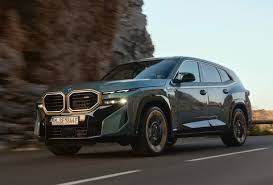
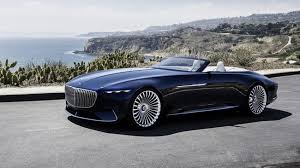
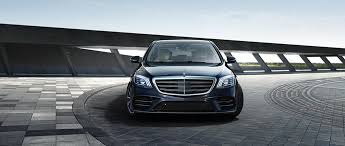
Traditionally, the Aston Martin Vantage gracefully walked the tightrope between a high-end sports car and a genuine supercar. However, the latest iteration, unveiled for 2025, has decisively leaped into the latter category. This isn’t just an update; it’s a re-imagining, designed in lockstep with Aston Martin’s strategic repositioning as a creator of sharper, more explosive, and technologically advanced “high-performance cars.” And the results, frankly, are intense.
Beneath that undeniably beautiful bonnet lies a 4.0-liter twin-turbocharged V8, now generating a colossal 656bhp – a significant jump from its predecessor. The chassis has undergone a comprehensive overhaul, delivering faster reactions, enhanced precision, and a “dynamic prowess” that truly impresses. Despite the enormous power, there’s a surprising natural feel to how the Vantage drives. The suspension is firm but communicative, allowing drivers to lean confidently into its abundant grip, supported by a sophisticated suite of electronics, including variable traction control. It’s a superbly balanced machine, delivering thunderous performance wrapped in an unmistakable Aston Martin elegance. For those seeking “exclusive supercars” that blend British sophistication with raw power, the new Vantage is a compelling choice.
Alternatives: While the latest Vantage has ascended in both price and performance, a Porsche 911 Carrera GTS might offer a more precise, albeit less potent, driving experience. For a true supercar alternative with exotic flair, the McLaren Artura provides greater precision and a more overtly “supercar” aesthetic.
Maserati MC20: The Trident’s Return to Form
Prices from: Approximately $310,000 USD
Pros: Breathtaking design, an enthralling V6 powertrain, delivers a pure, unadulterated “driving pleasure.”
Cons: Brake pedal feel can be inconsistent, less about overt luxury than some competitors.
The Maserati MC20 represents a triumphant return for the Trident to the supercar arena, appealing not just for its glamour or cutting-edge technology, but for the refreshingly pure “driving experience” it delivers. Since its debut, it has captivated enthusiasts, and for good reason. It stands as a testament to elegant design paired with exhilarating performance, a true “Italian exotic” in every sense.
At its core, the MC20 utilizes a carbon fiber monocoque chassis, meticulously crafted by Dallara near Maserati’s Modena factory. Power comes from Maserati’s own “Nettuno” twin-turbocharged V6 engine, featuring a revolutionary Formula 1-derived pre-combustion chamber technology – a first for a road car. This innovation, combined with its twin turbochargers, unleashes 621bhp. But the genius of the MC20 isn’t just in its engine; it’s in Maserati’s chassis tuning. It’s aggressive, sharp, and incredibly agile, yet possesses a surprising pliancy, gliding over imperfections with a delicate composure often found in lighter, less powerful sports cars. It offers a unique character, distinct from its rivals, making every drive immensely satisfying. This blend of “high-performance engineering” and artistic design solidifies its place among 2025’s top-tier “performance cars.”
Alternatives: The Aston Martin Vantage is a strong competitor, offering excellent dynamics and a characterful V8. The McLaren Artura provides a more tech-forward approach with greater precision, sublime steering, and true “supercar exoticism” with its sci-fi aesthetics and dramatic dihedral doors.
Porsche 911 GT3 RS Manthey Racing: The Ultimate Track Weapon
Prices from: Approximately $380,000 USD (including Manthey kit)
Pros: An utterly enthralling naturally aspirated engine, pure race-car-for-the-road aesthetics, unmatched “track-ready performance.”
Cons: Lacks the opulent luxury or outright straight-line drama of some “supercar” rivals, ride can be punishing for daily use.
Let’s momentarily set aside Porsche’s emphatic declaration that the 911 is a sports car, not a supercar. Because, unequivocally, the current 911 GT3 RS, especially when equipped with the Manthey Racing kit, is one of the most desirable and extreme “high-performance cars” available in 2025. This isn’t about mere posing; it’s about pushing the boundaries of what a road-legal 911 can achieve on a circuit.
The GT3 RS is a firm-riding, loud, and intensely focused machine. Its steering is so quick and precise that it demands unwavering attention, particularly on the highway. Inside, the cabin is filled not just with the glorious wail of its 9,000rpm naturally aspirated flat-six, but also with significant road noise from its massive rear tires on anything less than pristine tarmac. However, to drive the GT3 RS is to experience a “performance driving experience” unlike almost any other road car. With “just” 518bhp in this company, the numbers might seem modest, but in terms of raw performance, lap times, and driver engagement, the GT3 RS with the Manthey kit is nearly unbeatable. It’s a “driver-focused machine” that feels capable of battling for a class win at major endurance races, a true testament to “precision engineering.”
Alternatives: The GT3 RS with the Manthey kit operates in a class of its own. Comparisons are more accurately drawn to purpose-built track cars like a McLaren Senna or even a Cup car. For a slightly less extreme, but still highly potent track weapon, a McLaren 620R could be considered.
McLaren 750S: The Apex of Analog Fury
Prices from: Approximately $335,000 USD
Pros: Astonishing performance, sublime balance, gloriously communicative steering, a true purist’s “supercar.”
Cons: The twin-turbo V8 can sound a bit industrial at times, can be spikey at the absolute limit.
In an era increasingly dominated by electrification and “hybrid supercar” powertrains, the McLaren 750S arrives as a refreshing, unadulterated hit of turbocharged fury. Building upon the legendary 720S, a former eCoty winner, the 750S refines an already exceptional formula, creating one of the most exciting and usable “high-performance cars” on the market.
Its familiar 4.0-liter twin-turbo V8 now generates an impressive 740bhp, coupled with shorter gearbox ratios for an even more intense power delivery. Critically, it remains a featherweight by modern standards, tipping the scales at just 1389kg (dry). McLaren’s engineers have meticulously fine-tuned the suspension and steering, imbuing it with hints of the ultra-hardcore 765LT. The results are nothing short of astonishing. The performance is even more eye-opening than before, with an insatiable appetite for revs at the top end. Despite the rear tires occasionally scrambling for grip over bumps, there’s a characteristic calmness to the steering and ride that defines all McLarens. It’s an amazing blend of precision and savagery, showcasing “supercar technology 2025” at its most engaging, offering a superlative “performance driving experience.”
Alternatives: Perhaps the most compelling alternative for the value-conscious enthusiast is a high-quality used 720S, offering much of the 750S’s brilliance at a significantly lower “luxury supercar investment” entry point. In the new market, its most direct rival is the Ferrari 296 GTB, with the forthcoming Lamborghini Temerario poised to join the fray.
Chevrolet Corvette Z06: America’s Roaring Contender
Prices from: Approximately $115,000 USD (base), typically $150,000+ well-optioned
Pros: A screaming naturally aspirated flat-plane crank V8, stunning chassis balance, exceptional track prowess, incredible “value proposition.”
Cons: Steering can lack the ultimate feel of European rivals, can be seen as pricey for a Corvette in some circles.
By adopting a mid-mounted V8 for the C8 generation, Chevrolet fundamentally transformed the Corvette, creating the perfect platform to challenge the established “supercar” order head-on. The track-focused Z06 variant is far from the first hardcore Corvette, but it is, arguably, the most visceral and engaging model yet, especially for the discerning American buyer.
Chevrolet’s engineering team openly credits its inspiration for the sharper Z06 to high-revving European exotics. The newcomer’s 5.5-liter flat-plane crank V8 marks a profound shift in character from traditional American muscle. With an 8,600rpm redline and 661bhp sent exclusively to the rear wheels, the Z06 evokes the response, noise, and drama reminiscent of a Ferrari 458’s naturally aspirated motor. Wider tracks, stiffer springs, and comprehensive aerodynamic modifications work in concert to manage its power and provide immense grip. The result is a thrilling, massively potent “American supercar” that drives like no Corvette before it. It’s an undeniable testament to “high-performance engineering” that stands proudly amongst the world’s elite.
Alternatives: The Z06 is an anomaly in today’s market, championing high-literage and natural aspiration. Its spiritual benchmark, the Ferrari 458, is a used market proposition. The Porsche 911 GT3 is another rare naturally aspirated option. For raw revs and engagement, a McLaren Artura, with its turbocharged V6 redlining just 100rpm lower at 8,500rpm, offers a surprisingly comparable experience.
Lamborghini Revuelto: The V12 Hybrid Statement
Prices from: Approximately $650,000 USD
Pros: Unmistakable design, stratospheric performance, glorious V12 engine, surprising balance and dynamics, an ultimate “statement car.”
Cons: Can be noisy at a cruise, significant dry weight.
Few vehicles on the planet make a more emphatic statement than a V12 Lamborghini. The Revuelto is the latest evolution, and while its design is even more dramatic than the Aventador it replaces, Lamborghini has meticulously refined the recipe to conjure a scintillating “supercar” that feels like a monumental leap forward. This is the “future of supercars” for Sant’Agata Bolognese, blending tradition with cutting-edge “hybrid supercar” technology.
The specification sheet is tantalizing: a new naturally aspirated 6.5-liter V12, centrally mounted within a carbon fiber chassis, combined with three electric motors to generate a staggering 1001bhp. The engine is paired with a new eight-speed dual-clutch gearbox mounted transversely behind it – a world away from the Aventador’s jerky single-clutch unit in terms of smoothness and shift speed. Despite a dry weight of 1772kg, the Revuelto exhibits sparkling response and enormous track capability. Where a Ferrari SF90 feels hyper-alert, the Lambo is more measured and natural to drive, with electric motors on the front axle providing sophisticated torque vectoring to hook cleanly into and out of corners. The Revuelto combines traditional Lamborghini drama with supreme dynamic class, making it a truly great modern “exclusive supercar” and a significant “luxury supercar investment.”
Alternatives: The Revuelto finds direct rivals in the (now discontinued) Ferrari SF90 and the forthcoming Aston Martin Valhalla, though neither can quite match the Lamborghini’s V12 powertrain for sheer emotional excitement. Conversely, the Ferrari 12 Cilindri and Aston Martin Vanquish, while V12-powered, don’t match the Revuelto’s raw “supercar presence,” thrills, and dynamic sophistication. It truly carves out its own niche by sticking to a time-honored Lamborghini formula, brilliantly updated.
Ferrari 12 Cilindri: The Last Roar of the Naturally Aspirated V12
Prices from: Approximately $480,000 USD
Pros: The sheer majesty of a naturally aspirated V12, superb grand touring capabilities, timeless design, an ultimate “luxury supercar investment.”
Cons: Lost some of the overt “superness” compared to its 812 predecessor, noise regulations have slightly muted its full vocal range.
There will come a day when the naturally aspirated V12 Ferrari bids its final farewell, but that day has not yet arrived. The 12 Cilindri (pronounced “Dodici Cilindri,” Italian for “twelve cylinders”) is a glorious celebration of this most fabulous confection: a V12 Ferrari “supercar.” Its 6.5-liter engine foregoes turbos and hybrid assistance, delivering a glorious 819bhp at a heady 9,250rpm. While modern noise regulations have somewhat constrained its full auditory expression, it still sounds sensational, albeit a tad more refined at times.
The design pays homage to the past – note the Daytona-esque front end – and in person, the 12 Cilindri looks every inch the “exclusive supercar.” Yet, there’s a strong grand touring (GT) vibe, with a supple ride, a refined eight-speed transmission, and a beautifully appointed cockpit. But make no mistake, this is far more than just a luxurious cruiser. The 12 Cilindri possesses incredible poise and agility, thanks to quick-witted steering and astonishing levels of dry grip. In the wet, it remains remarkably controllable and far less intimidating than one might expect from an 819bhp rear-drive machine. Available as both a Coupe and a Spider, the 12 Cilindri is a remarkable achievement, a poignant reminder of “automotive excellence” through traditional means, and an instant classic for “collectible supercars.”
Alternatives: The 12 Cilindri is distinct in character from its 812 Superfast predecessor; those seeking the older car’s freneticism might look to the classifieds. In the new market, the Aston Martin Vanquish is its most obvious foil. If the emphasis is purely on “super” for your V12 supercar, the Lamborghini Revuelto is almost without peer.
McLaren Artura: The Next-Gen Plug-in Hybrid
Prices from: Approximately $270,000 USD
Pros: Deliciously communicative steering, beautiful balance and control, efficient “plug-in hybrid supercar” technology.
Cons: The V6 powertrain, while potent, can lack the ultimate character of a V8 or V12 rival.
The McLaren Artura represents the first of McLaren’s new generation of series-production plug-in hybrids. Fundamentally, it retains the core ideological tenets of McLaren Automotive: a carbon fiber monocoque chassis, double-wishbone suspension at all four corners, a mid-mounted twin-turbo engine, and a dual-clutch transmission. However, the Artura introduces significant new elements that provide it with a much-needed distinction within McLaren’s evolving range, positioning it at the forefront of “supercar technology 2025.”
The centerpiece is its hybrid powertrain module, offering an all-electric driving mode for silent urban commutes, alongside a substantial performance boost. This is paired with an all-new Ricardo-built 3.0-liter V6 engine, culminating in a total output of 690bhp and 531lb ft of torque. It sprints to 60mph in a blistering 3.0 seconds and boasts a top speed of 205mph – formidable numbers for a “supercar” that effectively succeeds McLaren’s Sports Series models. In the real world, the Artura feels genuinely new. Trademark McLaren elements, such as the hydraulically-assisted steering and superb driving position, are retained, but there’s a fresh layer of sophistication and complexity that refines the overall experience. While it may not possess the inherent sharpness of a 600LT or the outrageous performance of a Ferrari 296 GTB, as a launchpad for McLaren’s new generation, it is incredibly promising, demonstrating “efficient performance” in a “high-performance car.”
Alternatives: The Artura is a versatile “driver’s car” and supercar. The Maserati MC20 offers a worthy alternative with a bit more old-school supercar charm and sound. The Aston Martin Vantage, in its new pumped-up form, is impossibly talented, even if it lacks the overt exotic flair of a proper mid-engined supercar.
Aston Martin Vanquish: The Ultimate Grand Tourer with Supercar Bite
Prices from: Approximately $460,000 USD
Pros: Astonishing performance and dynamics, a glorious twin-turbo V12 engine, blends luxury with true “driving pleasure.”
Cons: Human-Machine Interface (HMI) still has room for improvement, interior space isn’t vast considering its footprint.
In the words of seasoned automotive journalists, the new Vanquish is heralded as “The best Aston of the last 25 years.” This is high praise indeed, given the plethora of exquisite machinery to emerge from Gaydon. Conventional wisdom suggests that adding turbos can stifle an engine’s vocal cords, but Aston Martin’s engineers clearly never got that memo. The Vanquish’s 824bhp 5.2-liter twin-turbo V12 sounds sensational, ranging from bombastic and guttural to a glorious high-rev howl, all while delivering a 0-60mph time of 3.3 seconds and a top speed of 211mph. These stats are remarkably similar to a certain V12 Ferrari, placing it firmly among “high-performance cars.”
Like the Ferrari 12 Cilindri, the Aston Martin Vanquish masterfully fulfills the grand tourer brief while delivering so much more. In GT mode, it’s supple and refined, its double-wishbone front and multi-link rear suspension ironing out the worst road imperfections. However, select Sport or Sport+ modes, and the car truly awakens. Throttle response sharpens, the pace becomes monumental, and the steering gains a beautiful weight, allowing precise placement despite the Vanquish’s size. Inside, it’s a symphony of leather, comfortable seating, and an excellent sound system. The HMI could be more intuitive, and interior space isn’t cavernous, but these are minor quibbles easily forgiven when that magnificent V12 is singing its heart out. This is “automotive excellence” defined, a potent “luxury sports car” with true supercar capabilities, solidifying its place as a prime “luxury supercar investment.”
Alternatives: The Aston Martin Vanquish and the Ferrari 12 Cilindri are perhaps the closest and fiercest rivals in the “performance car” world right now, both celebrating the V12. For those seeking a V12 supercar with a greater emphasis on raw “supercar presence” and drama, the Lamborghini Revuelto stands almost unrivaled.
The Road Ahead: An Invitation to Experience Excellence
The supercar market in 2025 is a vibrant, thrilling, and diverse landscape, offering unparalleled “automotive excellence” for the discerning enthusiast. From the cutting-edge “hybrid supercar” technology of Ferrari and McLaren to the naturally aspirated purity of Porsche and Corvette, and the grand touring majesty of Aston Martin and Ferrari’s V12s, there truly is a dream machine for every taste. These vehicles are more than just modes of transportation; they are profound expressions of engineering artistry, symbols of passion, and tangible “luxury supercar investments.”
Don’t just read about these incredible machines – experience them. We invite you to explore further, delve into detailed reviews, and perhaps, take the first step towards owning one of these magnificent “high-performance cars.” Visit your local dealerships, schedule a test drive, or engage with our community to discover which of these 2025 titans perfectly aligns with your vision of ultimate “driving pleasure.” The road to unparalleled performance and an unforgettable “performance driving experience” awaits.