
For decades, the philosophical divide between these automotive giants was clear: BMW, “The Ultimate Driving Machine,” championed exhilarating performance and driver engagement, while Mercedes-Benz, with its iconic three-pointed star, was synonymous with unparalleled comfort, opulent interiors, and stately refinement. Yet, the automotive industry never stands still. Both brands have spent years meticulously blurring these lines, with BMW elevating its interior luxury and Mercedes-Benz injecting more dynamism into its driving experience. This comprehensive analytical deep dive will meticulously dissect their offerings across every major segment in 2025, from compact crossovers to flagship electric vehicles, to determine which contender ultimately emerges victorious in this enduring battle for automotive supremacy.
Luxury Compact SUVs: The Urban Elite Clash
The compact luxury SUV segment is a battleground for urban sophistication and versatile utility, and in 2025, it’s a category where BMW continues to assert a dominant position. The BMW X3, with its refined athletic handling and robust powertrain options, stands out as a top contender. Its cabin offers a near-perfect blend of spaciousness, premium materials, and intuitive technology, making it a compelling choice for those prioritizing an engaging driving experience without sacrificing practicality. The BMW X4, a sleeker, coupe-styled variant of the X3, further caters to buyers seeking a more distinctive aesthetic coupled with BMW’s signature driving dynamics.
Mercedes-Benz counters with the GLB and GLC. The GLB, with its unique boxier design, boasts surprising interior versatility, including an available third row, a rare feature in this class. Its driving demeanor leans more towards comfort, offering a serene ride that many luxury buyers appreciate. The Mercedes-Benz GLC, a direct competitor to the X3, offers a plush, elegantly appointed cabin that often sets a benchmark for interior design in its class. Its powertrains are efficient and refined, though its overall driving engagement traditionally trails its Bavarian rival. However, for those prioritizing a cocoon of luxury and a more compliant ride for daily commutes, the GLC remains an incredibly strong option.
Winner: BMW
While Mercedes-Benz makes a strong play with comfort and innovative packaging, BMW’s X3 and X4 models, particularly the X3, continue to offer a more balanced and engaging package for those who value both dynamic driving and practical luxury.
Luxury Electric Cars: Electrifying the Elite Sedans
The shift towards electrification has opened new frontiers for luxury brands, and both BMW and Mercedes-Benz are aggressively expanding their EV lineups. In the luxury electric sedan space, BMW has made significant strides. The BMW i7, serving as the electric counterpart to the 7 Series flagship, is a bold statement. Its futuristic styling, dominant performance figures, and an interior brimming with high-tech features (including an available 31-inch Theatre Screen) position it as a formidable competitor. The BMW i4, an electric interpretation of the engaging 4 Series Gran Coupe, offers a more accessible entry into BMW’s electric performance, blending sporty aesthetics with impressive range and power.
Mercedes-Benz, with its distinct EQ sub-brand, offers the EQE Sedan and EQS Sedan. These vehicles are engineering marvels, renowned for their whisper-quiet cabins, advanced MBUX Hyperscreen interface, and incredibly serene driving dynamics. The EQS Sedan, in particular, showcases Mercedes-Benz’s commitment to opulent luxury in an electric package, delivering an unparalleled sense of tranquility and technological sophistication. While Mercedes-Benz prioritizes a seamless, almost gliding ride experience, BMW often focuses on injecting a sense of traditional driving pleasure, even in its electric offerings.
Winner: BMW
BMW’s i7 and i4, with their compelling blend of performance, luxury, and recognizable brand styling translated into the electric era, slightly edge out Mercedes-Benz’s serene but sometimes polarizing EQ designs. The i7, in particular, offers a more cohesive luxury electric flagship experience from a driving enthusiast’s perspective.
Luxury Electric SUVs: The Silent Giants
The electric SUV segment is booming, and luxury offerings are at the forefront of this revolution. BMW’s iX leads its charge as a distinctive and highly capable electric SUV. While its exterior design has been a point of discussion, its interior is undeniably a masterclass in modern luxury, featuring sustainable materials, a vast panoramic display, and an innovative, spacious cabin that provides powerful acceleration and abundant cargo capacity. It delivers a futuristic yet functional experience.
Mercedes-Benz offers a broader array of electric SUVs, including the EQB, EQE SUV, and EQS SUV. The EQB is an electrified version of the GLB, offering compact practicality. The EQE SUV and EQS SUV, built on dedicated EV platforms, bring Mercedes-Benz’s signature interior elegance and advanced technology to the SUV form factor. The EQS SUV, much like its sedan sibling, offers an incredibly refined ride and an opulent interior, though some critiques point to its substantial price tag and occasionally compromised cargo space compared to rivals. The EQE SUV, while luxurious, has faced some questions regarding its real-world range performance.
Winner: BMW
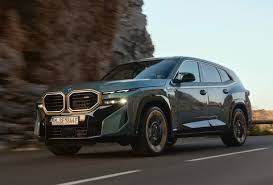
The BMW iX, despite its unconventional aesthetics, delivers a remarkably compelling package of power, space, and cutting-edge technology, making it a strong all-rounder in the luxury electric SUV category. Mercedes-Benz offers variety, but the iX feels more singularly focused and excels in its execution.
Luxury Large Cars: Flagship Grandeur
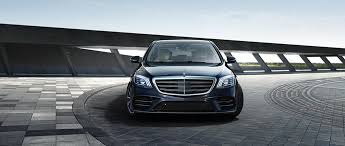
When it comes to full-size luxury sedans, few vehicles in the world command the same respect and admiration as the Mercedes-Benz S-Class. For decades, it has been the definitive standard-bearer for automotive luxury, comfort, and technological prowess. In 2025, the S-Class continues this legacy, offering an interior that truly insulates occupants from the outside world, delivering a ride quality that is simply unparalleled. Its advanced MBUX infotainment system, with its intuitive voice commands and expansive displays, remains a benchmark for user experience.
The BMW 7 Series is BMW’s answer to the S-Class, presenting a modern and distinctive interpretation of a world-class luxury sedan. While it offers an equally powerful and feature-rich infotainment system (iDrive, which has evolved to be highly intuitive), its persona often leans more towards offering a surprisingly engaging driving experience for such a large vehicle, often at the expense of the outright pillowy comfort found in the S-Class. The 7 Series embraces bolder styling and futuristic tech, seeking to redefine luxury rather than simply refine it.
Winner: Mercedes-Benz
In the realm of ultimate luxury large sedans, the Mercedes-Benz S-Class, through its unwavering commitment to sublime comfort, exquisite materials, and groundbreaking technology, retains its crown as the undisputed benchmark.
Luxury Large SUVs: Commanding Presence
For those requiring abundant space, imposing presence, and uncompromising luxury in an SUV, both brands offer compelling options. The BMW X7 scales up the successful attributes of its smaller SUV siblings into a full-size, three-row machine. Its sharp, sophisticated interior comfortably accommodates up to seven adults, particularly in the first two rows, and it offers a surprisingly agile driving experience for its size. The iDrive infotainment system, while initially having a slight learning curve, becomes intuitive with use and offers deep functionality.
Mercedes-Benz brings two strong contenders to this segment: the GLS and the iconic G-Class. The GLS is a direct rival to the X7, offering an incredibly upscale cabin, a supremely refined ride, and a comprehensive suite of luxury features. It emphasizes serene comfort and effortless power. The G-Class, or G-Wagen, stands in a league of its own. It’s a high-class off-road icon, blending military-grade ruggedness with hand-crafted luxury. While its off-road prowess is legendary, these attributes can sometimes compromise its on-road luxury vehicle characteristics compared to the more conventional GLS or X7.
Winner: BMW
The BMW X7 provides a more harmonious blend of luxury, practicality, and dynamic driving for the majority of luxury large SUV buyers. While the GLS is incredibly refined and the G-Class an icon, the X7’s overall package offers broader appeal and a compelling balance.
Luxury Midsize Cars: The Heart of the Sedan Market
The luxury midsize sedan segment is often considered the core of the luxury car market, balancing prestige with everyday usability. In 2025, this category remains a tie due to the distinct strengths of each brand’s offering. The Mercedes-Benz E-Class, much like its S-Class sibling, is a cornerstone of its segment, delivering a ride that is both comfortable and remarkably refined. Its cabin is a technological marvel, showcasing a breathtaking array of digital displays and advanced driver-assistance systems, though some might find the sheer amount of tech initially overwhelming. Mercedes also offers the elegant CLE coupe, a handsome two-door with robust powertrains.
The BMW 5 Series, a perennial favorite, has undergone significant evolution. While historically celebrated for its athletic prowess and steering feedback, the latest iteration still offers a powerful lineup of engines and a sophisticated interior. For 2025, the 5 Series continues to prioritize a dynamic yet comfortable experience, seeking to broaden its appeal beyond just the performance enthusiast. Its cabin technology, though different from Mercedes-Benz, is equally advanced and user-friendly.
Winner: Tie
Both the Mercedes-Benz E-Class and BMW 5 Series represent the pinnacle of midsize luxury. The E-Class excels in comfort and technological opulence, while the 5 Series offers a slightly more engaging driving dynamic, making it a matter of individual preference.
Luxury Midsize SUVs: The Versatile Powerhouses
The midsize luxury SUV segment is highly competitive, offering a blend of family utility, luxury, and often strong performance. The Mercedes-Benz GLE continues to impress in this category. It boasts a spacious and exquisitely refined cabin that seamlessly integrates modern technology without being overbearing. For 2025, updates often include standard all-wheel drive, enhanced infotainment systems, and expanded powertrain options, including sophisticated plug-in hybrids. Its ride quality is supremely comfortable, soaking up road imperfections with ease.
The BMW X5 is an equally revered competitor, known for its upscale interior, powerful engine options, and more athletic handling than its Mercedes counterpart. BMW’s commitment to driver engagement shines through, even in this family-friendly SUV. The X5 often gains advanced driver assistance features, such as active lane-change assist, to enhance convenience and safety. BMW also offers the X6, a sportier fastback version of the X5, for those seeking a more distinctive profile. Mercedes-Benz has its own coupe-styled variant in the GLE Coupe, which shares the GLE’s strong attributes in a sleeker package.
Winner: Mercedes-Benz
The Mercedes-Benz GLE takes the top spot in this intensely competitive category, largely due to its unparalleled blend of interior refinement, cutting-edge yet intuitive technology, and a truly comfortable ride that elevates the luxury SUV experience.
Luxury Small Cars: Entry Point to Excellence
The luxury small car segment serves as an entry point into these prestigious brands, and both offer compelling choices that punch above their weight. The BMW 3 Series has long been the gold standard for compact luxury sedans, and in 2025, it remains an outstanding choice. It’s renowned for its engaging driving dynamics, powerful and efficient engines, and a surprisingly spacious interior and trunk for its class. It perfectly encapsulates BMW’s core philosophy. BMW further expands its small car offerings with the sporty 2 Series coupe and the versatile 4 Series (available as a coupe, convertible, and Gran Coupe).
The Mercedes-Benz C-Class is a formidable competitor, offering a scaled-down version of its larger E-Class and S-Class siblings’ luxury and technology. It provides a more comfortable and composed ride than the 3 Series, with an interior that exudes sophisticated elegance and is packed with advanced features. While the C-Class is supremely comfortable and refined, it often lacks the outright driver engagement that BMW is celebrated for. Mercedes-Benz also offers the CLA, an entry-level coupe-styled sedan that blends nimble handling with a sharp interior and plenty of tech.
Winner: BMW
The BMW 3 Series, with its enduring legacy of driver focus, powerful engine options, and balanced luxury, continues to reign supreme in the small luxury car segment, offering an unmatched blend of excitement and refinement.
Luxury Sports Cars: Adrenaline and Precision
For enthusiasts prioritizing pure driving pleasure and track-ready performance in a luxury wrapper, the sports car segment is where these brands truly flex their engineering muscle. BMW has a distinct edge here, offering a diverse range of performance machines. The M3 sedan and M4 coupe are legendary high-horsepower offerings, known for their blistering speed and track capabilities. The M2 is often considered the most “pure” modern BMW, delivering an unfiltered, thrilling driving experience that harks back to the brand’s performance heritage. For open-air thrills, the Z4 roadster provides an engaging top-down experience.
Mercedes-Benz, while offering potent AMG variants of its standard models, also fields dedicated sports cars like the AMG GT. The GT is an exciting, visceral machine designed for pure exhilaration. The SL roadster, while still a powerful and luxurious droptop, has evolved into more of a grand touring car, prioritizing comfortable long-distance cruising over raw, uncompromised track performance compared to some of BMW’s M offerings.
Winner: BMW
BMW’s comprehensive M lineup, particularly the M2, M3, and M4, provides a broader spectrum of unadulterated performance and driver engagement, making it the clear winner in the luxury sports car category.
Luxury Subcompact SUVs: Style and Urban Agility
The burgeoning subcompact luxury SUV segment caters to urban dwellers seeking a blend of elevated ride height, compact dimensions, and premium features. The BMW X1 stands out as a class leader. It masterfully utilizes its footprint, offering a surprisingly spacious and well-crafted cabin filled with a generous list of standard features. Its handling strikes an excellent balance between comfort and responsiveness, making it nimble for city driving yet composed on highways. BMW also offers the X2, a more style-focused, coupe-like variant that sacrifices a bit of cargo space for a distinctive aesthetic, while still retaining much of the X1’s fun-to-drive character.
The Mercedes-Benz GLA is Mercedes’ entry into this segment. While it offers a lively driving experience and an upscale cabin, it often ranks mid-pack when compared to its rivals. Some critiques point to it being less refined than larger Mercedes-Benz SUVs and possessing less cargo capacity than its BMW counterpart. It’s a stylish option, but the overall package doesn’t quite reach the same heights as the X1.
Winner: BMW
The BMW X1’s exceptional use of space, refined cabin, and balanced driving dynamics firmly place it at the top of the luxury subcompact SUV rankings, offering a more complete and compelling package.
Safety: Prioritizing Protection in 2025
In 2025, safety is paramount, and both BMW and Mercedes-Benz invest heavily in advanced driver assistance systems (ADAS) and robust passive safety features. Their commitment is evident in the stellar safety scores across many of their conventional models. Vehicles like the BMW 2 Series, 3 Series, 5 Series, and X3 consistently earn top marks from safety organizations, featuring comprehensive suites of technology including forward collision avoidance, lane-departure warning, adaptive cruise control, and increasingly sophisticated semi-autonomous driving capabilities.
Similarly, the Mercedes-Benz C-Class, E-Class, GLC-Class, and GLE-Class perform exceptionally well, offering comparable levels of protection and advanced safety features. Both brands are pioneers in integrating sophisticated sensors, cameras, and AI to enhance collision prevention and occupant protection. It’s worth noting that newer models, particularly electric vehicles, are continually undergoing evaluation by safety organizations, reflecting the rapid pace of innovation.
Winner: BMW
While both brands excel, BMW models generally have more widespread and thoroughly evaluated safety scores across their conventional lineup, with many earning near-perfect ratings, giving them a slight edge in this crucial category.
Performance: The Thrill of the Drive
Performance, at its core, defines much of the BMW vs. Mercedes-Benz rivalry. BMW has historically championed the “Ultimate Driving Machine” ethos, and this remains evident across its 2025 lineup. From the agility of the 3 Series to the commanding presence of the 7 Series and 8 Series, BMW vehicles are meticulously engineered to excite the driver. Even their electric offerings, like the i4, i7, and iX, manage to infuse dynamic performance into their eco-friendly powertrains. The M3 and M4 continue to be performance stalwarts, delivering blistering acceleration and razor-sharp handling.
Mercedes-Benz, while traditionally prioritizing comfort, has made immense strides in performance, particularly with its AMG sub-brand. Models like the S-Class offer immense power with effortless delivery, while the AMG GT and SL provide exhilarating driving experiences. The EQS sedan also earns high performance ratings for its seamless, powerful electric acceleration. However, some of Mercedes’ entry-level models, such as the GLA and GLB, tend to prioritize value and comfort over outright performance, leading to a broader range in performance scores across their lineup.
Winner: BMW
BMW’s consistent dedication to driver engagement and athletic performance across almost its entire range, including its electric vehicles and the iconic M division, solidifies its position as the leader in driving dynamics.
Reliability: The Long-Term Promise
Reliability is a critical factor for luxury vehicle ownership, influencing everything from maintenance costs to resale value. Assessing reliability can be complex, but data from sources like J.D. Power provide valuable insights. In 2025, BMW generally shows a stronger and more consistent track record. Many BMW models report strong predicted reliability scores, with vehicles like the X3 and X1 often scoring in the “Great” category (81-90 out of 100), and the 2 Series and 7 Series following closely. BMW’s brand average for reliability tends to be robust, with most conventional models being rated.
Mercedes-Benz models, while offering exceptional quality, have a more varied reliability landscape. While excellent models like the E-Class can score well (often around 81), and the GLA and GLE achieve solid scores (around 80), fewer models in their lineup consistently receive published reliability scores. Both brands offer robust four-year/50,000-mile powertrain warranties. For electric vehicles, BMW provides an eight-year/100,000-mile battery warranty, while Mercedes-Benz often surpasses this with a 10-year/155,000-mile warranty.
Winner: BMW
With a greater number of models reporting strong predicted reliability scores and a higher average brand score, BMW holds a slight edge when it comes to long-term dependability, instilling greater confidence in ownership.
Interior Design & Technology: A Sanctuary or a Cockpit?
The interior of a luxury vehicle is often where the brand’s philosophy is most palpable. In this critical aspect, Mercedes-Benz consistently sets the industry standard. Whether it’s the lavish GLE, the spacious GLS, the technologically advanced E-Class, or the benchmark S-Class, Mercedes-Benz cabins are sanctuaries of comfort, exquisite craftsmanship, and groundbreaking technology. The fit-and-finish across most of its models is impeccable, using premium materials like open-pore wood, fine leathers, and metallic accents. The MBUX infotainment system, with its visually stunning Hyperscreen in some models, remains a user-friendly and visually spectacular interface.
BMW, while offering increasingly luxurious and technologically sophisticated interiors, often approaches cabin design with a more driver-centric philosophy. Models like the X1, X3, and i7 feature outstanding build quality, excellent ergonomics, and cutting-edge technology, including large curved displays and advanced voice control. BMW’s cabins prioritize functionality and a sporty aesthetic alongside luxury. While the materials are top-notch and the design modern, they don’t quite reach the sheer opulence and tranquil atmosphere that Mercedes-Benz consistently delivers.
Winner: Mercedes-Benz
For those who prioritize an interior that embodies ultimate comfort, breathtaking design, and a seamless integration of cutting-edge technology that feels like a private lounge, Mercedes-Benz continues to set the industry benchmark.
The Verdict: Crowned for 2025
After a meticulous analytical comparison across crucial categories in 2025, the rivalry between BMW and Mercedes-Benz remains incredibly close, showcasing the engineering prowess of both German automotive giants. Each brand offers truly exceptional products that push the boundaries of luxury, technology, and performance.
However, when tallying the segment victories and considering overall brand strengths, BMW emerges as the victor in this head-to-head competition. BMW consistently delivers a more compelling blend of engaging driving dynamics, competitive luxury, cutting-edge technology, and robust reliability across a broader spectrum of its vehicles. Its commitment to the driver’s experience, even as it embraces electrification and digital sophistication, provides a slight edge.
Mercedes-Benz, on the other hand, continues to define automotive opulence. Its interiors are truly world-class, often setting the benchmark for comfort, design, and seamless technological integration. Many of its vehicles offer an unparalleled sense of refinement and serenity, appealing to those who prioritize a supremely luxurious and comfortable journey.
As the automotive world races toward even greater levels of electrification, AI integration, and sustainable luxury, it will be fascinating to observe how these two iconic brands continue to innovate and differentiate themselves. For discerning buyers in 2025, both BMW and Mercedes-Benz promise an extraordinary driving experience, but BMW, by winning more categories, demonstrates a slightly more comprehensive and appealing package for a broader range of luxury consumers today.