
Having spent over a decade dissecting the nuances of the luxury automotive market, I’ve watched BMW and Mercedes-Benz consistently push boundaries. BMW, historically celebrated as “The Ultimate Driving Machine,” has always prioritized a dynamic, engaging driving experience. Its focus on precise steering, balanced chassis, and powerful powertrains has cultivated a loyal following of enthusiasts who crave performance. Mercedes-Benz, on the other hand, has carved its niche around unparalleled comfort, sophisticated elegance, and groundbreaking technological innovation, often embodying “The Best or Nothing” philosophy. Its interiors are legendary, often setting industry benchmarks for luxury and serenity.
In 2025, both brands have adapted, evolving their traditional strengths while venturing into new territories. BMW has embraced electrification with models that retain its signature driving feel, while Mercedes-Benz continues to refine its digital ecosystems and plush cabin environments, even within its rapidly expanding EQ electric vehicle lineup. The question remains: as these titans expand their battle across nearly every vehicle segment, from nimble subcompact SUVs to executive electric sedans, which brand truly offers the superior experience for the discerning American buyer? Let’s delve into a comprehensive, analytical comparison to crown the undisputed champion of premium automotive in the current year.
Luxury Compact SUVs: Dynamic Versatility vs. Refined Practicality
The luxury compact SUV segment is arguably one of the most hotly contested, representing many consumers’ entry point into premium ownership. These vehicles blend practicality with luxury, making them ideal for urban environments and weekend escapes.
BMW continues to lead this charge with its venerable X3, a model that has consistently set the standard for athletic handling and a robust powertrain lineup. For 2025, the X3 xDrive30e variant remains a standout, offering an exceptional balance of fuel efficiency and responsive performance thanks to its plug-in hybrid system. Its cabin is spacious and thoughtfully designed, prioritizing driver ergonomics and passenger comfort, while the iDrive 9 infotainment system delivers intuitive control. The X4, with its distinctive coupe-like roofline, offers a sportier aesthetic and an even more engaging drive for those willing to trade a touch of practicality for style.
Mercedes-Benz counters with the GLB and GLC. The GLB, known for its distinctive boxy silhouette, offers surprising interior room and an available third row, a unique proposition in this class. Its MBUX infotainment system, with its impressive voice assistant, remains a technological marvel. The GLC, meanwhile, epitomizes classic Mercedes elegance, boasting a plush cabin and remarkably refined ride quality. Its focus is more on serene comfort and quiet luxury, providing a sanctuary from the outside world.
While both brands offer compelling options, BMW’s X3, with its superior driving dynamics and balanced package, edges out its rivals. Its ability to marry daily usability with genuine driving enjoyment makes it the top choice for those seeking a dynamic compact luxury SUV.
Winner: BMW
Luxury Electric Cars: Performance Electrified vs. Serene Innovation
The electric luxury car segment is witnessing unprecedented growth and innovation, with BMW and Mercedes-Benz making significant strides to challenge established EV players.
BMW’s electric flagship, the i7, is a bold statement, transforming the traditional 7 Series into a dominant electric cruiser. It commands attention with futuristic styling and delivers exhilarating performance, seamlessly blending executive luxury with zero-emission mobility. The i4, an electric interpretation of the engaging 4 Series Gran Coupe, offers a more accessible entry into BMW’s EV performance, retaining the brand’s cherished driving DNA. Both models boast advanced battery technology, supporting rapid charging and offering competitive ranges suitable for varying needs, making them highly attractive for luxury electric vehicle enthusiasts.
Mercedes-Benz’s EQ lineup, particularly the EQE Sedan and EQS Sedan, showcases a different philosophy. These vehicles prioritize a whisper-quiet ride, exquisite interiors, and a seamless digital experience, often featuring the optional MBUX Hyperscreen. The EQS, in particular, redefines luxury with its aerodynamically sculpted body and a cabin that feels more like a lounge than a car. While their naming convention can be a tad intricate, their driving dynamics are incredibly serene, designed to insulate occupants from the road.
When assessing the entire package, especially considering the performance and emotional connection for which luxury buyers often opt, BMW’s i-series, especially the i7 and i4, offers a more compelling, performance-oriented electric driving experience that stays true to its brand heritage.
Winner: BMW
Luxury Electric SUVs: Functional Powerhouses vs. Opulent Electric Sanctuaries
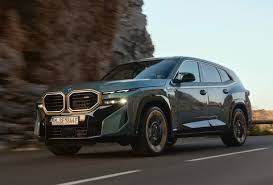
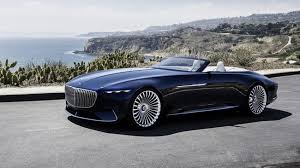
The luxury electric SUV market is rapidly expanding, offering a compelling blend of utility, space, and environmental consciousness. Both German giants are heavily invested here.
BMW’s iX stands as its chief electric SUV, a design statement that polarizes but undeniably delivers. Despite its premium price tag, the iX offers potent acceleration and a remarkably spacious, functional interior packed with cutting-edge technology. Its unique hexagonal steering wheel and floating display underscore its futuristic intent, while cargo and passenger room are generous, making it a highly practical choice for families or those needing ample storage. The iX provides a truly sophisticated electric driving experience, combining power with luxury.
Mercedes-Benz offers a broader, though sometimes confusing, array of electric SUVs: the EQB, EQE SUV, and EQS SUV. The EQB is essentially an electrified GLB, offering a more compact, urban-friendly package. The EQE and EQS SUVs, however, are standalone electric platforms, bringing the luxurious appointments of their sedan counterparts into a higher-riding format. While both boast elegant interiors and the signature MBUX experience, the EQE SUV has faced criticism for its driving range in some configurations, and the EQS SUV, while opulent, comes at a significant premium and sometimes falls short on cargo capacity compared to rivals.
For a balanced blend of utility, technology, and a driving experience that still feels distinctively BMW, the iX takes the lead, offering a more complete and efficient electric luxury SUV package.
Winner: BMW
Luxury Large Cars: Unrivaled Opulence vs. Executive Agility
In the realm of full-size luxury sedans, prestige and presence reign supreme. This is where flagships compete, showcasing the best of what each brand has to offer.
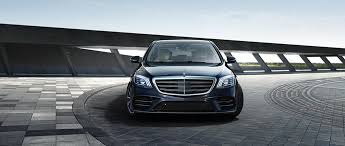
Mercedes-Benz has long been the gold standard with its legendary S-Class. In 2025, the S-Class remains an undisputed champion of comfort and opulence. Its cabin is a masterclass in insulation and refinement, shielding occupants from the outside world with unparalleled serenity. The advanced MBUX infotainment system, constantly updated, understands complex voice commands with uncanny accuracy, creating a seamless user experience. The S-Class isn’t just a car; it’s a mobile executive suite, delivering a ride quality that few can rival.
BMW’s 7 Series, while a close contender, offers a modern take on the executive luxury sedan. It presents a world-class cabin with its own distinct aesthetic and integrates a powerful infotainment system that, while initially demanding a learning curve, offers immense customization and functionality. The 7 Series leans more towards an engaging driving experience, a stark contrast to the S-Class’s unwavering commitment to comfort. It’s designed for the executive who still enjoys taking the wheel.
While the 7 Series offers a compelling argument, the S-Class’s sheer dominance in creating a supremely comfortable and opulent environment, combined with its long-standing reputation as the benchmark for luxury sedans, makes it the clear victor.
Winner: Mercedes-Benz
Luxury Large SUVs: Seven-Passenger Grandeur vs. Off-Road Prowess
For families or those requiring substantial space and capability, luxury large SUVs combine commanding presence with opulent interiors.
BMW’s X7 continues to impress by effectively scaling up the successful attributes of its smaller SUV siblings into a majestic three-row vehicle capable of accommodating up to seven adults in comfort. Its sharp, contemporary interior design, along with spacious first and second rows, ensures a premium experience for all occupants. The latest iteration of the iDrive infotainment system, while sophisticated, has become more intuitive, managing a plethora of features without overwhelming the driver. The X7 embodies refined luxury with impressive on-road dynamics.
Mercedes-Benz fields two distinct large SUVs: the GLS and the G-Class. The GLS is a direct competitor to the X7, offering an equally upscale cabin and a refined, cushioned ride. It is a formidable contender, emphasizing comfort and sophisticated technology. The iconic G-Wagen, or G-Class, stands apart as a high-class off-road machine. While incredibly capable and desirable for its rugged luxury, its off-road focus means some compromises in on-road comfort and overall refinement compared to its more pavement-oriented rivals, positioning it as a niche vehicle rather than a direct competitor across all luxury SUV metrics.
Considering overall luxury, on-road refinement, and practical family utility, the BMW X7 presents a more comprehensive and accessible luxury large SUV package.
Winner: BMW
Luxury Midsize Cars: The Epitome of Balance
The midsize luxury sedan segment is a critical battleground, often representing the heart of each brand’s sedan lineup, blending executive appeal with dynamic performance.
The Mercedes-Benz E-Class, much like its larger S-Class sibling, stands as a cornerstone in its segment. For 2025, it continues to define a comfortable, supremely refined ride coupled with an immensely high-tech cabin. While the sheer volume of technology can sometimes feel overwhelming, its advanced MBUX system and extensive suite of driver-assistance features provide an unparalleled sense of safety and connectivity. Mercedes also offers the elegant CLE, a two-door model with powerful engines, appealing to those seeking style and performance.
BMW’s 5 Series, redesigned for 2024 and carrying into 2025, maintains its revered status, albeit with a slightly different character than its predecessors. While traditionally known for its athletic prowess and sharp steering feedback, the latest generation prioritizes comfort and refinement more than before. It still packs the familiar punch from its potent engine lineup (including compelling hybrid and electric variants), delivering strong acceleration and confident handling. The 5 Series offers a sophisticated blend of executive comfort and dynamic capability, making it a compelling choice.
Given the nuanced evolution of both models and their slightly differing focuses, this segment remains incredibly tight. Both offer compelling reasons for ownership, appealing to slightly different preferences within the luxury midsize space.
Winner: Tie
Luxury Midsize SUVs: Plush Comfort vs. Athletic Practicality
Luxury midsize SUVs represent a sweet spot for many buyers, offering elevated seating, ample cargo space, and a premium experience without the full-size footprint.
The Mercedes-Benz GLE takes the top spot in this fiercely competitive category. For 2025, it continues to evolve with standard all-wheel drive, an updated MBUX infotainment system, and a robust plug-in hybrid model. Its cabin is a spacious, refined sanctuary that seamlessly integrates modern technology without being overly intrusive. The ride quality is sublime, absorbing road imperfections with ease, making every journey exceptionally comfortable. Mercedes also offers the GLE Coupe, providing a sportier, sloped-roof alternative.
BMW’s X5 is equally revered, delivering an upscale interior and handling that is distinctly more athletic than its Mercedes counterpart. For the 2025 model year, the X5 further enhances its appeal with advanced features like active lane-change assist, demonstrating BMW’s commitment to cutting-edge driver assistance. The X5 offers a more engaging drive, appealing to those who desire performance even in an SUV. BMW also provides the X6, the coupe-like sibling to the X5, for buyers seeking a more distinctive profile.
Ultimately, the Mercedes-Benz GLE’s superior blend of comfort, interior luxury, and intuitive technology slightly tips the scales, making it the preferred choice for a truly refined midsize luxury SUV experience.
Winner: Mercedes-Benz
Luxury Small Cars: Driving Purity vs. Compact Sophistication
The small luxury car segment is crucial for attracting new buyers to a brand, offering a taste of premium ownership in a more accessible package.
BMW’s 3 Series has long been the benchmark for small luxury sedans, and in 2025, it continues its legacy. It’s immensely fun to drive, boasting powerful engines, a surprisingly spacious interior, and a class-leading trunk. Its nimble handling and communicative steering make every drive an event, embodying the “Ultimate Driving Machine” ethos in a compact form. BMW also expands its small car offerings with the sporty 2 Series Coupe and the versatile 4 Series (available as a coupe, convertible, and four-door Gran Coupe), catering to a wide array of preferences for performance and style.
Mercedes-Benz counters with the C-Class, a commendable vehicle that prioritizes comfort and elegance. It offers a more cushioned ride and a sophisticated interior experience that mirrors its larger siblings, though it’s not quite as engaging to drive as the 3 Series. Mercedes also offers the CLA, an entry-level car known for its sleek, four-door coupe styling and impressive technology packed into a nimble chassis.
For the pure driving experience and overall dynamic package, BMW’s 3 Series and its siblings maintain their edge.
Winner: BMW
Luxury Sports Cars: Unadulterated Performance vs. Grand Touring Elegance
When it comes to luxury sports cars, the emphasis shifts decisively towards exhilaration, precision, and visceral thrills.
BMW dominates this arena with its M performance division, renowned globally for crafting some of the most exciting driver’s cars. The M3 and M4 are legendary sport sedans and coupes, respectively, delivering ferocious power and track-ready dynamics. The M2, in particular, is often lauded as the most authentic embodiment of BMW’s performance heritage, offering a compact, potent, and incredibly engaging driving experience. For those seeking open-air excitement, the Z4 provides a stylish roadster experience with potent turbocharged engines. BMW’s strength lies in enhancing existing models to extreme performance levels.
Mercedes-Benz, while offering thrilling AMG variants across its lineup, has also traditionally provided dedicated sports cars. The AMG GT, with its aggressive styling and powerful V8 engines, offers an intoxicating driving experience and supercar presence. The SL, historically a two-seater convertible, has evolved into a more grand-touring focused droptop, blending luxurious comfort with ample performance for long-distance journeys.
While Mercedes offers superb dedicated sports cars, BMW’s broader and more deeply entrenched performance lineup, especially within its M division, provides a wider range of truly driver-focused luxury sports cars.
Winner: BMW
Luxury Subcompact SUVs: Maximizing Space and Agility
The subcompact luxury SUV segment offers premium features in a city-friendly footprint, ideal for urban dwellers who still desire an elevated driving position and luxury amenities.
The BMW X1 stands out as a leader in this segment. It masterfully utilizes its compact dimensions to offer a surprisingly spacious and meticulously crafted cabin, equipped with a comprehensive list of standard features. Its handling dynamics strike an impressive balance between comfort for daily commutes and responsiveness for spirited drives, making it a highly appealing option. BMW also offers the X2, a slightly sportier, coupe-like alternative to the X1, which, while sacrificing some cargo space, remains fun and functional.
Mercedes-Benz’s GLA ranks mid-pack among small SUVs. While it delivers a fun-to-drive experience and an upscale cabin, it doesn’t quite reach the same level of refinement as other Mercedes SUVs, and its cargo space is somewhat limited. The GLA is a stylish contender, but BMW’s offering feels more complete in terms of utility and driving dynamics.
BMW’s X1, with its superior blend of space utilization, standard features, and balanced driving dynamics, secures the win in the subcompact luxury SUV category.
Winner: BMW
Safety: Proactive Protection vs. Comprehensive Assurance
In 2025, safety is paramount, and both BMW and Mercedes-Benz are at the forefront of automotive safety technology, pushing boundaries with advanced driver-assistance systems (ADAS) and robust passive safety features.
BMW consistently earns stellar safety scores across its lineup. Models like the 2 Series, 3 Series, 5 Series, and X3 are frequently among the top performers in crash tests by organizations like the IIHS and NHTSA (where applicable for 2025 models), achieving near-perfect ratings. They come standard with a comprehensive suite of safety technologies, including forward collision avoidance with pedestrian detection, lane-departure warning, blind-spot monitoring, and increasingly sophisticated semi-autonomous driving capabilities like Highway Assistant, which allows for hands-free driving on certain divided highways.
Mercedes-Benz models, including the C-Class, E-Class, GLC-Class, and GLE-Class, perform nearly as well. Mercedes has been a pioneer in many safety innovations, and its current systems are exceptionally refined, often focusing on predictive safety through its Pre-Safe system, which prepares the vehicle for an impending collision. Their active driver assistance package is robust, offering adaptive cruise control, lane-keeping assist, and highly advanced parking assist features. It’s worth noting that for both brands, new EV models and very recently introduced conventionally powered vehicles often await full safety evaluations by independent organizations.
While both brands offer outstanding safety, BMW’s consistent high ratings across a broader range of models and its proactive integration of cutting-edge ADAS that enhances driver confidence make it the slightly stronger contender.
Winner: BMW
Performance: The Ultimate Driving Experience vs. Effortless Power
Performance defines much of the luxury automotive experience, encompassing everything from engine power and handling to the emotional connection a driver feels with their vehicle.
BMW has built its reputation on delivering an exhilarating driving experience. Across its portfolio, from the iconic 3 Series to the executive 7 and 8 Series, BMW vehicles are engineered to excite behind the wheel. Its lineup of electric cars, including the i4, i7, and iX, also earns some of the highest performance scores, demonstrating that electrification hasn’t diluted the brand’s core ethos. The M3 and M4, along with the M2, remain stalwarts of high-performance luxury, offering precision engineering and a visceral connection to the road that few can match. BMW’s commitment to driving dynamics, with balanced chassis and responsive powertrains, is evident in nearly every model.
Mercedes-Benz also offers impressive performance, particularly in its AMG sub-brand and flagship models. The S-Class, GT, SL, and EQS sedan all achieve high performance ratings, showcasing the brand’s ability to blend power with luxury. While some entry-level models like the GLA and GLB prioritize value over outright performance, the wealth of AMG models available ensures that buyers seeking a racy Mercedes-Benz experience have numerous options, from the powerful C 63 AMG to the track-focused AMG GT Black Series. Mercedes often delivers its power with a more effortless, refined surge, rather than BMW’s more direct, engaging approach.
Overall, BMW’s consistent dedication to delivering a driver-centric experience across its entire lineup, including its electric vehicles, gives it the edge in performance.
Winner: BMW
Reliability: Enduring Quality vs. Sophisticated Engineering
Reliability is a critical factor for luxury vehicle owners, influencing long-term satisfaction and ownership costs. Both brands have made strides in this area, though data can be complex.
BMW generally reports reliability and dependability scores for a wider range of models, and these models often score well. A J.D. Power predicted reliability score, where 81-90 is considered “Great” and 91-100 is “Best,” offers a useful benchmark. Models like the X3 and X1 have earned scores in the mid-80s, while the 2 Series and 7 Series also achieved strong ratings. As a brand, BMW generally averages in the low 80s, signifying a strong commitment to quality and longevity. Most of BMW’s lineup, excluding some newer EVs and niche models, has established reliability data.
Mercedes-Benz has also seen improvements in reliability, though reliability data for its full model range can be more dispersed. Models like the E-Class often score well in the low 80s, with the GLA and GLE also performing commendably in the high 70s to low 80s. Mercedes-Benz vehicles are known for their intricate engineering and advanced systems, which, while enhancing luxury, can sometimes introduce complexity.
Both BMW and Mercedes-Benz vehicles are backed by a competitive four-year/50,000-mile powertrain warranty. For electric vehicles, BMW’s battery packs come with an eight-year/100,000-mile warranty, while Mercedes-Benz offers an even more extensive 10-year/155,000-mile warranty for its EV batteries, reflecting confidence in their electric powertrain longevity.
Considering the broader availability of reliability data and generally consistent strong scores across its model range, BMW shows a slight advantage in overall reliability metrics.
Winner: BMW
Interior: Unparalleled Opulence vs. Driver-Focused Luxury
The interior is where luxury truly comes to life, defining comfort, aesthetics, and technological integration. This is often the most subjective, yet critical, comparison point.
If BMW is synonymous with performance, Mercedes-Benz is the undisputed master of the cabin. Whether it’s the GLE, GLS, E-Class, or the gold-standard S-Class, Mercedes-Benz consistently sets the industry benchmark for automotive interiors. The fit, finish, and selection of materials across most of its models are simply top-notch, often rivaling ultra-luxury brands. Their design philosophy focuses on creating a serene, aesthetically pleasing, and technologically advanced environment, with features like ambient lighting, luxurious upholstery, and the intuitive MBUX system contributing to an unparalleled sense of indulgence.
BMW has made significant strides in interior design and quality, with bright spots like the X1, X3, and i7 offering outstanding cabins in terms of build quality, material selection, and ergonomic design. The fit-and-finish across many BMW models is excellent, and their focus on driver orientation remains a core strength, with controls often angled towards the pilot for optimal engagement. However, while BMW interiors are highly commendable and technologically advanced, they generally don’t quite reach the sheer level of opulent luxury and groundbreaking aesthetic achieved by Mercedes-Benz vehicles.
For absolute cabin comfort, material quality, and overall luxurious ambiance, Mercedes-Benz continues to reign supreme.
Winner: Mercedes-Benz
The Verdict: A Battle of Enduring Philosophies
The rivalry between BMW and Mercedes-Benz continues to define the premium automotive landscape in 2025. Both brands offer incredibly compelling products, pushing boundaries in performance, technology, luxury, and sustainability. This isn’t just a comparison of cars; it’s a testament to two distinct philosophies of what luxury driving should be.
BMW, true to its heritage, continues to deliver vehicles that are exhilarating to drive, highly refined, and packed with cutting-edge technology. Its consistent wins across many performance-oriented and practical segments, including a strong showing in the rapidly growing electric vehicle space, demonstrate its prowess in crafting a cohesive, engaging driving experience. BMW excels in translating its “Ultimate Driving Machine” ethos into the modern era, successfully blending traditional athleticism with forward-looking innovation.
Mercedes-Benz, on the other hand, remains the undisputed champion of comfort and interior opulence. Its cabins are world-class, often setting the benchmark for luxury and digital integration in their respective segments. For buyers who prioritize a serene ride, exquisite materials, and groundbreaking infotainment systems, Mercedes-Benz offers an unmatched sanctuary on wheels. Its strong showing in large luxury vehicles and specific SUV segments highlights its commitment to ultimate comfort and prestige.
After a thorough analytical review across numerous critical segments, weighing dynamic performance, technological innovation, safety, reliability, and interior luxury, the numbers lean in one direction. While Mercedes-Benz excels in creating an opulent and technologically advanced sanctuary, BMW’s broader consistency in delivering a truly engaging and well-rounded driving experience, coupled with its strong performance across a wider array of categories, including the vital electric vehicle segments, gives it the overall edge.
The Winner Is… BMW
As the automotive world continues its rapid evolution, particularly with the acceleration of electrification and autonomous capabilities, it will be fascinating to observe how these two iconic German brands further adapt and innovate. But for now, for the discerning American consumer in 2025 seeking a blend of performance, technology, and luxury across nearly every segment, BMW holds the slight lead in this timeless luxury car comparison.