
Evolving Philosophies: Performance Meets Opulence in 2025
Traditionally, BMW carved its niche as “The Ultimate Driving Machine,” emphasizing exhilarating performance, precise handling, and a direct connection between driver and road. Its legacy is built on a lineage of sport sedans and coupes that prioritized dynamic capability. Mercedes-Benz, on the other hand, positioned itself with “The Best or Nothing,” a commitment to unparalleled comfort, opulent interiors, and sophisticated luxury. Its vehicles have long been sanctuaries of refinement, boasting plush materials, serene rides, and groundbreaking safety features.
However, as 2025 unfolds, these distinct personas have begun to converge. BMW has significantly elevated its interior design, material quality, and technological offerings, aiming for a more holistic luxury experience without sacrificing its driving DNA. Concurrently, Mercedes-Benz has injected more dynamism into its lineup, particularly with its AMG performance division and increasingly engaging driving characteristics across its core models. The lines blur, making the choice more complex and nuanced, often coming down to subtle differences in execution and target priorities.
Segment-by-Segment Showdown: A 2025 Perspective
Let’s dissect how these luxury juggernauts fare across key vehicle categories, assessing their latest 2025 iterations and market positioning.
Luxury Compact SUVs: Agile Utility Meets Premium Craftsmanship
The compact luxury SUV segment remains a fiercely contested battleground, catering to urban dwellers and small families seeking versatility without compromise on luxury. For 2025, BMW continues to impress with its X3, which, with an updated infotainment suite and refined powertrain options, maintains its edge. Its spacious, attractive cabin, combined with athletic handling and robust engine choices (including the increasingly popular plug-in hybrid xDrive30e), positions it as a top contender. The coupe-like X4 offers a sportier, more distinctive aesthetic for those who prioritize style.
Mercedes-Benz’s GLB offers a unique proposition with its optional third-row seating, a rare feature in this class. While it lags slightly in overall driving dynamics compared to the X3, its plush cabin and advanced MBUX system are strong selling points. The more traditional GLC, also updated for 2025 with enhanced fuel efficiency and a supremely comfortable ride, presents a formidable challenge, particularly for buyers who prioritize interior serenity and sophisticated design. Overall, BMW’s X3 lineage continues to hold a slight lead due to its blend of practicality and engaging performance. Many consumers are exploring luxury car lease deals for these models due to rapid technological advancements.
Luxury Electric Cars: The Silent Revolutionaries of 2025
The electric vehicle (EV) segment is where the future of luxury is being forged, and both BMW and Mercedes-Benz are heavily invested in showcasing their premium automotive technology. For 2025, BMW’s i7 stands as its electric flagship, an audacious statement of intent with its bold, futuristic styling and dominant performance. As the EV counterpart to the 7 Series, it integrates cutting-edge tech like the Theatre Screen and a truly commanding presence. The i4, an electric interpretation of the engaging 4 Series Gran Coupe, further solidifies BMW’s commitment to dynamic EVs, offering spirited driving in a more compact package.
Mercedes-Benz, with its EQ lineup, emphasizes serene driving dynamics and opulent cabins. The EQE Sedan and EQS Sedan both represent the pinnacle of electric luxury, distinguished by their “Hyperscreen” digital interface and exceptional comfort. However, Mercedes-Benz’s sometimes-confusing naming convention and the EQS’s considerable price tag can be points of consideration. While both brands offer compelling electric luxury sedans, BMW’s i7 and i4, with their direct lineage to established performance models, often resonate more with traditional luxury buyers seeking an electrified driving experience.
Luxury Electric SUVs: The Family-Friendly Future
The electric SUV market is booming, catering to families and adventurers seeking sustainable luxury. BMW’s iX continues to be a standout for 2025. Despite its polarizing design, its powerful acceleration, exceptionally spacious and functional interior, and cutting-edge technology make it a compelling choice. It masterfully blends practicality with innovative design, offering ample room for passengers and cargo.
Mercedes-Benz offers a broader, though sometimes less distinct, range of electric SUVs: the EQB, EQE SUV, and EQS SUV. The EQB, an EV version of the GLB, offers a compact entry point, while the EQE and EQS SUVs bring the luxury and tech of their sedan counterparts to an SUV format. While their interiors are elegant, the EQE SUV’s range can be a point of contention, and the EQS SUV, while luxurious, often faces criticism for its subpar cargo capacity compared to rivals. BMW’s iX often feels more cohesive in its execution, securing a lead in this burgeoning category.
Luxury Large Cars: Executive Elegance Redefined
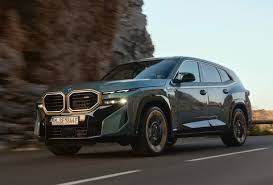
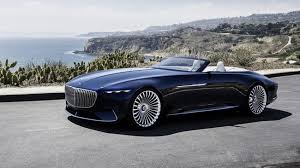
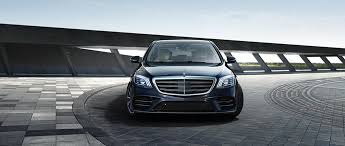
When it comes to the pinnacle of executive sedans, few cars command the same respect as the Mercedes-Benz S-Class. For 2025, the S-Class remains the undisputed benchmark for comfort, refinement, and opulence. Its cabin is a serene cocoon, shielding occupants from the outside world, offering unparalleled materials and the advanced MBUX system that responds intuitively to voice commands. It’s truly a masterclass in upscale interior design.
BMW’s 7 Series, redesigned with a bold, contemporary aesthetic, offers its own compelling take on a world-class cabin and powerful infotainment. While it presents a more engaging handling experience than the comfort-focused S-Class, the learning curve for its advanced systems can be steeper. For the ultimate in passenger comfort and sheer automotive presence, the S-Class still reigns supreme, a prime example of automotive innovation dedicated to luxury. Buyers often consider luxury car financing options for these high-tier models.
Luxury Large SUVs: Three-Row Grandeur
For those needing substantial space without sacrificing luxury, the large SUV segment is crucial. BMW’s X7 adeptly scales up the brand’s signature attributes into a commanding three-row machine capable of seating up to seven adults in comfort. Its sharp interior design and comfortable first and second-row seating make it an excellent choice for discerning families. The iDrive infotainment system, while sophisticated, requires some acclimatization.
Mercedes-Benz counters with the GLS, a direct competitor to the X7, offering an equally upscale cabin and a refined ride. The iconic G-Class (G-Wagen), while an aspirational high-class off-road vehicle, sometimes compromises overall luxury and on-road comfort due to its rugged architecture. For a balanced blend of luxury, space, and dynamic performance in a three-row package, the BMW X7 often edges out the competition.
Luxury Midsize Cars: The Core of the Luxury Sedan Market
This segment represents the sweet spot for many luxury buyers, balancing performance, comfort, and prestige. For 2025, the Mercedes-Benz E-Class continues its legacy as a cornerstone of the midsize luxury segment. It offers a comfortable, refined ride and a hyper-technological cabin, though the sheer volume of tech can sometimes feel overwhelming. Its extensive list of advanced driver-assistance systems is a significant draw. Mercedes also offers the handsome CLE two-door, updated with robust powertrains.
BMW’s 5 Series, though redesigned for 2024 (and carrying into 2025 with further refinements), has evolved. While historically known for its athleticism, the latest iteration emphasizes comfort and technology more, with some purists noting a slight reduction in steering feedback compared to its predecessors. Nonetheless, it still delivers the familiar punch from its potent engine lineup. This segment often results in a tie, as the choice between the E-Class’s technological opulence and the 5 Series’ refined dynamism is largely a matter of personal preference. Both represent excellent executive sedan reliability.
Luxury Midsize SUVs: Versatility Meets Premium Standards
Midsize luxury SUVs are among the most popular vehicles today, offering a blend of space, comfort, and capability. The Mercedes-Benz GLE (alongside the Porsche Cayenne) frequently earns top honors. Its spacious, refined cabin seamlessly integrates modern technology without feeling overbearing. For 2025, the GLE features standard all-wheel drive, further updated infotainment, and enhanced plug-in hybrid options, making it a compelling package.
BMW’s X5 is equally revered, boasting an upscale interior and more athletic handling than its Mercedes counterpart. The 2025 model year sees the X5 further enhance its ADAS with features like active lane-change assist, maintaining its competitive edge. BMW also offers the X6, a distinctive fastback SUV, mirrored by Mercedes-Benz’s GLE Coupe (formerly the GLE 53). While both offer exceptional options, the GLE’s ability to blend sophisticated tech with genuine comfort gives it a slight advantage for many buyers. When searching for the best luxury SUVs 2025, these two are always at the top.
Luxury Small Cars: Entry Point to Premium Driving
The small luxury sedan segment often serves as an entry point into these prestigious brands. BMW’s 3 Series has long been the gold standard, and its 2025 iteration continues that tradition. It remains fun to drive, boasts powerful engines, offers a surprisingly spacious interior, and a class-leading trunk. It outshines the still-commendable Mercedes-Benz C-Class, which prioritizes comfort and a luxurious interior over the 3 Series’ more engaging dynamics.
BMW further diversifies its offerings with the sporty 2 Series coupe and the versatile 4 Series (available in coupe, convertible, and four-door Gran Coupe forms). Mercedes-Benz’s entry-level CLA also packs a lot of tech into a sharp-looking interior but doesn’t quite match the dynamic prowess of BMW’s smaller offerings. For sheer driving enjoyment and a balanced luxury experience in a compact form, BMW maintains its lead.
Luxury Sports Cars: Adrenaline and Precision
When the focus shifts purely to performance and driving exhilaration, BMW often takes the lead. For 2025, BMW’s M division continues its legacy of delivering high-performance luxury vehicles. The M3 and M4 are renowned sport sedans and coupes, while the M2 embodies the purest essence of BMW’s performance heritage. For open-air thrills, the Z4 roadster offers a blend of performance and flair.
Mercedes-Benz offers dedicated sports cars like the exciting AMG GT, a truly exhilarating machine. The SL roadster, while sporty, leans more towards a grand-touring car, emphasizing luxurious cruising over raw track performance. While both brands offer incredible machines, BMW’s broader range of performance-focused variants, especially the M-cars, gives it an edge for pure sports car enthusiasts.
Luxury Subcompact SUVs: Efficiency and Urban Elegance
The subcompact luxury SUV segment prioritizes urban maneuverability and fuel efficiency without skimping on premium touches. For 2025, BMW’s X1 stands atop the rankings. It maximizes its compact footprint with a sharp, well-crafted cabin, a generous list of standard features, and a handling dynamic that perfectly balances comfort and responsiveness. The X2 offers a sportier, albeit less spacious, alternative.
The Mercedes-Benz GLA, while fun to drive and featuring an upscale cabin, often ranks mid-pack. It’s not quite as refined as other Mercedes SUVs and struggles with cargo space compared to rivals. The X1’s comprehensive package of space, features, and driving dynamics secures BMW’s win in this category.
Holistic Brand Metrics for 2025
Beyond individual segments, several overarching factors influence the perceived value and ownership experience of these luxury brands.
Safety: Redefining Automotive Security
Both BMW and Mercedes-Benz are at the forefront of automotive safety, offering stellar crash test scores and comprehensive suites of advanced driver-assistance systems (ADAS). For 2025, features like enhanced forward collision avoidance, lane-keeping assist, adaptive cruise control, and semi-autonomous driving capabilities are standard or widely available across their lineups. BMW’s 2-Series, 3-Series, 5-Series, and X3 consistently achieve top safety ratings.
Mercedes-Benz’s C-Class, E-Class, GLC-Class, and GLE-Class perform nearly as well, often integrating predictive safety systems that prepare the cabin for an impending collision. It’s worth noting that evaluations for many newer EVs are ongoing. While both are exceptional, BMW’s broader portfolio of highly-rated, conventionally powered vehicles gives it a slight statistical edge in overall safety scores.
Performance: The Thrill of German Engineering
Performance remains a cornerstone for BMW, living up to its “Ultimate Driving Machine” moniker. Across its lineup, from the agile 3-Series to the potent 7-Series and 8-Series, BMW vehicles are engineered to excite. Even its electric models, such as the i4, i7, and iX, garner high praise for their dynamic capabilities. The M3 and M4 continue to be benchmarks in their respective classes.
Mercedes-Benz, while traditionally comfort-oriented, offers incredible performance through its AMG division and top-tier models like the S-Class, GT, SL, and EQS sedan. However, some of its entry-level models, like the GLA and GLB, prioritize value over raw performance. For a consistently engaging and driver-focused experience across the board, BMW retains its performance crown.
Reliability & Ownership Experience: Long-Term Value
Reliability scores can be somewhat inconsistent across the luxury segment. For 2025, BMW generally reports more reliability data, and its models, like the X1, X3, 2 Series, and 7 Series, often score in the “Great” range (81-90 out of 100 on J.D. Power’s predicted reliability scale). As a brand, BMW typically averages well.
Mercedes-Benz has fewer models with reported reliability scores, with an average score that’s slightly lower, though still respectable. Models like the E-Class (81) and GLE (80) demonstrate solid performance. Both brands offer robust four-year/50,000-mile powertrain warranties. For EV batteries, BMW provides an eight-year/100,000-mile warranty, while Mercedes-Benz counters with an impressive 10-year/155,000-mile warranty. While both offer a premium ownership experience, BMW’s broader data and slightly higher average reliability scores give it a minor advantage in this critical area, which is often a key consideration when exploring luxury car financing options.
Interior Design & Technology: The Sanctuary of Luxury
If BMW excels in performance, Mercedes-Benz undoubtedly leads in crafting industry-defining automotive interiors. For 2025, models like the GLE, GLS, E-Class, and the peerless S-Class continue to set the bar for luxury cabins. The fit-and-finish, material quality, ergonomic design, and integration of the next-generation infotainment system (MBUX Hyperscreen) are often unmatched. Mercedes-Benz cabins are truly sanctuaries of comfort and sophistication.
BMW has made significant strides in interior design, with models like the X1, X3, and i7 offering outstanding cabins in terms of build quality and contemporary aesthetics. Its iDrive 9 system is intuitive and responsive. However, while BMW’s interiors are now highly competitive, they generally do not quite reach the same level of perceived opulence and holistic upscale interior design that Mercedes-Benz consistently delivers across most of its premium lineup.
The Electric Future: A Defining Battleground
The shift to electric vehicles (EVs) is not just a technological change; it’s a paradigm shift in brand identity. Both BMW and Mercedes-Benz are pouring vast resources into their EV portfolios, with exciting implications for 2025 and beyond.
BMW’s strategy often involves electrifying existing popular platforms, like the i4 (4 Series) and i7 (7 Series), providing a familiar yet electrified driving experience. This approach helps ease traditional buyers into the EV world while maintaining a clear performance focus. Mercedes-Benz, with its dedicated EQ sub-brand and distinctive designs (like the smooth, aerodynamic EQS), has aimed for a bolder, more futuristic aesthetic, emphasizing quiet luxury and digital immersion.
The competition in battery technology, charging infrastructure, and the seamless integration of digital services will intensify. Both brands are striving to offer comprehensive charging solutions and ecosystem integration, transforming the concept of vehicle ownership. The next few years will definitively show which brand’s EV strategy resonates most strongly with the evolving luxury consumer, particularly as luxury car lease deals become more attractive for these rapidly advancing models.
The Verdict for 2025: A Nuanced Triumph
After a thorough analytical review, the competition between BMW and Mercedes-Benz remains incredibly close, showcasing the best of German engineering excellence. Both brands offer compelling products that excel in different areas, catering to distinct buyer preferences.
However, when considering the breadth of segments and the overall balance of performance, technology, and evolving luxury demands in 2025, BMW slightly edges out Mercedes-Benz in more categories. BMW has successfully infused its “Ultimate Driving Machine” ethos with increased refinement, cutting-edge technology, and improved interior quality, making its vehicles more universally appealing. Its strong performance in the rapidly growing electric SUV and compact luxury segments, combined with its traditional dominance in sports cars and overall driver engagement, gives it the lead.
Mercedes-Benz, with its unparalleled commitment to interior luxury, comfort, and state-of-the-art infotainment, continues to set industry standards in its flagship sedans and larger SUVs. For buyers prioritizing passenger comfort, a serene ride, and absolute opulence, Mercedes-Benz remains the top choice.
Ultimately, the best choice depends on individual priorities. If your preference leans towards dynamic driving, advanced performance, and a slightly more agile luxury experience, BMW will likely win your heart. If supreme comfort, lavish interiors, and groundbreaking digital immersion are paramount, then Mercedes-Benz beckons. Regardless of the choice, discerning buyers in 2025 are presented with an incredible array of options from these two legendary automotive titans, all embodying the highest standards of premium automotive technology and design.