
As an automotive expert with over a decade immersed in this segment, I’ve witnessed firsthand how these marques adapt, innovate, and continue to captivate discerning buyers. This comprehensive analysis dives into the current offerings and future trajectory of BMW and Mercedes-Benz, dissecting their strengths across critical segments and attributes to determine which brand truly stands as the ultimate cornerstone of the luxury market today.
The Philosophical Divide: Performance vs. Plushness
Historically, the distinction between BMW and Mercedes-Benz was often encapsulated by simple yet profound mottos. BMW, “The Ultimate Driving Machine,” honed its craft around a dynamic, driver-centric experience. Their vehicles were lauded for their precise steering, balanced chassis, and engaging powertrains, appealing to enthusiasts who prioritize the connection between car and road.
Mercedes-Benz, on the other hand, cultivated an image of refined elegance and unparalleled comfort. Their cabins were sanctuaries of opulence, designed to cocoon occupants in lavish materials, advanced ergonomics, and serene ride quality. Before the ultra-luxury marques like Bentley or Rolls-Royce entered the conversation, Mercedes-Benz was the gold standard for automotive comfort and prestige.
While these core identities still resonate, both brands have significantly broadened their appeal. BMW has infused more luxury and technology into its lineup, acknowledging that even performance enthusiasts appreciate a refined cabin. Mercedes-Benz has, in turn, sharpened its driving dynamics, offering AMG variants that rival the most potent performance cars on the planet. The lines have blurred, making a direct comparison more intricate and fascinating than ever.
The Segment Showdown: Who Leads Where?
To truly assess their standing in 2025, we must examine their performance across the diverse and ever-growing range of vehicle categories.
Luxury Compact SUVs: Agility Meets Utility
Winner: BMW
The compact luxury SUV segment is a hotbed of activity, blending urban practicality with premium appointments. BMW continues to impress here, particularly with its X3. Entering 2025, the X3 xDrive30e remains a top contender, offering a spacious and well-appointed cabin, surprisingly athletic handling for an SUV, and robust powertrain options, including a compelling plug-in hybrid. Its overall score, often around 8.5/10, reflects a near-perfect blend of attributes.
Mercedes-Benz counters with the GLB and GLC. The GLB (around 8.3/10) provides a unique proposition with its available three-row seating, appealing to those needing extra flexibility. The GLC (typically 7.8/10) boasts a plush interior and efficient powertrains but often trails the X3 in sheer driving engagement. BMW’s X4, a sleeker, coupe-like variant of the X3, further cements its lead with its engaging dynamics, though it sacrifices some practicality.
Luxury Electric Cars: The Silent Revolution
Winner: BMW
The electric vehicle (EV) space is where innovation is most evident, and both German brands are rapidly expanding their lineups. While pioneering brands like Tesla and Lucid garnered early attention, BMW and Mercedes-Benz are now delivering compelling, engaging luxury EVs.
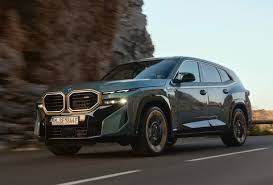
BMW’s i7, the electric sibling to the 7 Series, stands out as its flagship, offering bold, futuristic styling, dominant performance, and an interior packed with groundbreaking technology like its theater screen. The i4, an EV interpretation of the popular 4 Series Gran Coupe, further demonstrates BMW’s ability to infuse electrifying performance with familiar driving characteristics. These models consistently achieve high ratings, with the i7 often reaching 8.3/10 and the i4 at 8.2/10, showcasing their well-rounded appeal.
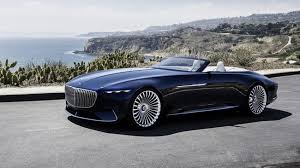
Mercedes-Benz, with its EQE Sedan and EQS Sedan (both around 7.8/10), offers supremely serene driving dynamics and opulent, tech-laden cabins. However, their sometimes confusing naming conventions and design language, while distinctive, haven’t always resonated universally. While luxurious, they often feel more focused on comfort and futuristic aesthetics rather than BMW’s blend of performance and luxury.
Luxury Electric SUVs: Family-Friendly Electrification
Winner: BMW
The luxury electric SUV market is booming, catering to families and individuals seeking zero-emission practicality without compromising on prestige. BMW’s iX (around 8.2/10) leads the charge here. Despite its polarizing exterior design, the iX delivers powerful acceleration, a genuinely spacious and functional interior, cutting-edge technology, and ample room for passengers and cargo. Its blend of power, range, and interior comfort makes it a formidable entry.
Mercedes-Benz offers a broader, though less consistently strong, lineup with the EQB, EQS SUV, and EQE SUV. The EQB (7.7/10) is a more compact, urban-focused offering, while the EQS SUV (7.8/10) and EQE SUV (7.2/10) aim for a grander scale. While these models feature elegant interiors and the signature MBUX infotainment, the EQE SUV has faced criticism for a middling driving range, and both the EQS and EQE SUVs sometimes fall short on cargo capacity compared to rivals, including the iX. Their pricing, particularly for the EQS SUV, can also be a significant barrier.
Luxury Large Cars: The Executive Command Center
Winner: Mercedes-Benz
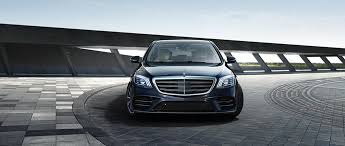
When it comes to the pinnacle of luxury sedans, the Mercedes-Benz S-Class has long been the gold standard, and in 2025, it continues its reign. The S-Class (a stellar 8.8/10) masterfully shields occupants from the outside world, delivering unparalleled comfort, silence, and an interior that feels more like a private jet than a car. Its advanced MBUX infotainment system is incredibly intuitive, responding to complex voice commands with uncanny accuracy, truly embodying the modern luxury experience.
BMW’s 7 Series (8.7/10) finishes just behind, offering its own distinctive take on a world-class cabin with bold design choices and powerful infotainment. While it presents a compelling alternative, especially for those who appreciate more engaging handling in a large luxury sedan, it doesn’t quite match the S-Class’s singular focus on serene, effortless opulence. Mercedes-Benz’s emphasis on chauffeured comfort often gives it the edge in this segment.
Luxury Large SUVs: Grand Scale, Grand Luxury
Winner: BMW
The demand for large, three-row luxury SUVs continues unabated, and BMW’s X7 (8.3/10) effectively translates the brand’s core attributes into a commanding family hauler. It boasts a sharp-looking interior, comfortable seating for adults in the first two rows, and the muscular presence expected of a full-size SUV. While the iDrive infotainment system can have a slight learning curve, its depth of features is undeniable.
Mercedes-Benz offers two prominent large SUVs: the GLS (8.1/10) and the iconic G-Class (7.2/10). The GLS is a direct competitor to the X7, providing an upscale cabin and a refined ride. However, the X7 often nudges ahead in terms of perceived athleticism and cabin design. The G-Wagen, while undeniably prestigious and an off-road legend, sacrifices some on-road luxury refinement due to its rugged architecture, making it a niche choice rather than a direct competitor to the X7’s broader appeal.
Luxury Midsize Cars: The Sweet Spot of Sophistication
Winner: Tie
This segment represents a crucial battleground, balancing luxury, performance, and everyday usability. The Mercedes-Benz E-Class (8.5/10) remains a cornerstone. Like its larger S-Class sibling, the E-Class excels with a comfortable, refined ride and a wildly high-tech cabin, though the sheer volume of technology can sometimes feel overwhelming. Its extensive list of driver-assistance features further solidifies its position. Mercedes also offers the elegant CLE (7.7/10), a handsome two-door with stout powertrains.
BMW’s 5 Series (8.1/10), despite a 2024 redesign that softened some of its legendary steering feedback, still packs a familiar punch from its potent engine lineup. While it might not be as overtly athletic as its predecessors, it remains a highly regarded vehicle, blending luxury with potent performance. The segment is so tightly contested, with both brands offering such compelling, albeit distinct, experiences, that it results in an honorable tie.
Luxury Midsize SUVs: Versatility and Prestige
Winner: Mercedes-Benz
The midsize luxury SUV segment is arguably the most competitive, and the Mercedes-Benz GLE (8.5/10) consistently ranks at the top, often alongside vehicles like the Porsche Cayenne. The GLE’s cabin is a masterclass in blending spaciousness, refinement, and modern technology without becoming overly busy. For 2025, expect subtle refinements building on the 2024 updates, which included standard all-wheel drive, an enhanced infotainment system, and a new plug-in hybrid model.
BMW’s X5 (8.4/10) is equally revered, boasting an upscale interior and more athletic handling than its Mercedes counterpart. For 2025, the X5 enhances its driver-assistance suite with features like active lane-change assist, demonstrating BMW’s commitment to cutting-edge technology. While the X5 is an incredible vehicle, the GLE’s blend of comfort, technology, and sheer luxury often gives it a slight edge in overall appeal for many buyers. BMW also offers the X6 (7.7/10), a coupe-SUV variant, mirroring Mercedes-Benz’s GLE Coupe (often bundled in ratings with the GLE).
Luxury Small Cars: Entry Point to Excellence
Winner: BMW
The BMW 3 Series (8.5/10) has long been the benchmark for small luxury sedans, and its current iteration maintains that legacy. It’s renowned for its engaging driving dynamics, powerful engines, spacious interior, and a surprisingly large trunk for its class. It continues to deliver a compelling blend of sportiness and everyday usability that few can match.
Mercedes-Benz’s C-Class (8.4/10) is a commendable rival, offering a more comfortable ride and an elegant interior that often feels like a miniature S-Class. However, it typically isn’t as engaging to drive as the 3 Series for enthusiasts. BMW also offers the sporty 2 Series Coupe (8.4/10) and the versatile 4 Series (7.9/10), available as a coupe, convertible, and four-door Gran Coupe, providing a wider array of dynamic options at this entry-level luxury point. Mercedes-Benz’s CLA (7.6/10) is another entry-level option, nimble and packed with tech, but it generally lags behind BMW’s offerings in overall refinement and driving enjoyment.
Luxury Sports Cars: Adrenaline and Precision
Winner: BMW
When it comes to pure driving exhilaration and sports car pedigree, BMW maintains a distinct edge. The M3 (7.9/10) and M4 (8.0/10) are legendary sport sedans and coupes, respectively, synonymous with high-performance driving. The M2 (8.6/10) often captures the most authentic spirit of BMW’s performance heritage, delivering unadulterated fun in a compact package. For those seeking open-air thrills, the Z4 (8.5/10) provides a sophisticated roadster experience.
Mercedes-Benz offers dedicated sports cars like the exciting GT (8.1/10) and the luxurious SL (7.9/10) grand tourer. While these are thrilling machines, BMW’s broader range of M performance variants across its core models, combined with its dedicated sports cars, gives it a slight advantage in overall breadth and consistent delivery of pure driving performance. Mercedes-AMG models are phenomenal, but BMW’s core performance philosophy seems to permeate more deeply across its lineup.
Luxury Subcompact SUVs: The Urban Navigator
Winner: BMW
In the increasingly popular subcompact luxury SUV segment, the BMW X1 (8.7/10) stands out. It makes exceptional use of its compact footprint, featuring a sharp, well-crafted cabin with a generous list of standard features. Its handling dynamics strike an impressive balance between comfort and responsiveness, making it ideal for urban environments and weekend escapes. BMW also offers the X2 (8.1/10), a more style-focused variant that’s still fun and functional.
The Mercedes-Benz GLA (7.8/10) ranks mid-pack among its peers. While it’s fun to drive and boasts an upscale cabin, it often isn’t as refined as other Mercedes SUVs and can feel somewhat constrained in cargo space compared to the X1. BMW’s offerings in this segment consistently deliver more comprehensive value and a more refined package.
Cross-Cutting Attributes: Beyond the Segments
Beyond individual model comparisons, several overarching attributes define the luxury experience across both brands.
Safety: Peace of Mind on the Road
Winner: BMW
Both BMW and Mercedes-Benz are at the forefront of automotive safety, offering stellar crash test scores and equipping their vehicles with comprehensive suites of advanced driver assistance systems (ADAS). Features like forward collision avoidance, lane-departure warning, adaptive cruise control, and sophisticated parking aids are standard or widely available.
BMW consistently demonstrates its commitment, with models like the 2 Series, 3 Series, 5 Series, and X3 often achieving top-tier safety ratings from organizations like the IIHS and NHTSA. Mercedes-Benz’s C-Class, E-Class, GLC, and GLE also perform exceptionally well. It’s worth noting that evaluating EVs and very new conventional models can sometimes be delayed by testing organizations. However, across tested models, BMW’s lineup tends to show a slightly broader spectrum of top-tier scores. Investing in advanced driver assistance systems is key for both.
Performance: Engineering for the Enthusiast
Winner: BMW
BMW’s reputation as “The Ultimate Driving Machine” is not merely a marketing slogan; it’s deeply ingrained in their engineering. Across nearly every segment, BMW vehicles are designed to excite from behind the wheel. From the agile 3 Series to the commanding 7 Series and 8 Series, and critically, their electric i4, i7, and iX, the brand consistently prioritizes dynamic driving. The M3 and M4 remain legendary high-performance sports cars.
Mercedes-Benz offers formidable performance, particularly with its AMG sub-brand, and select models like the S-Class, GT, SL, and EQS sedan deliver impressive power and refinement. However, in the broader context of their respective lineups, BMW’s philosophy of engaging driving dynamics seems to permeate a larger percentage of its vehicles, making performance a more consistent brand attribute. Models like the GLA and GLB, while practical, do not prioritize performance in the same way, often earning lower scores in this regard.
Reliability: The Long-Term Investment
Winner: BMW
Reliability scores can often be a mixed bag across luxury brands, but when looking at widely reported data, BMW generally shows a stronger and more consistent performance. J.D. Power’s predicted reliability scores are a key indicator, where 91-100 is “Best,” 81-90 is “Great,” and 70-80 is “Average.”
BMW boasts more models with reported reliability scores, and many achieve “Great” ratings. The X3 and X1 often score 86, while the 2 Series and 7 Series typically earn an 85. As a brand average, BMW often hovers around 82.8, with only newer EVs and niche models like the Z4 lacking widespread data. Mercedes-Benz, while offering excellent build quality, has fewer models with publicly reported J.D. Power scores. Those that do exist, such as the E-Class (81) and GLA/GLE (80), typically fall into the “Average” to “Great” range, with the brand average often around 78. Both brands back their vehicles with a four-year/50,000-mile powertrain warranty, though Mercedes-Benz offers a more generous 10-year/155,000-mile warranty for its EV battery packs compared to BMW’s eight-year/100,000-mile coverage. For overall vehicle dependability, BMW often has the slight edge.
Interior & Technology: The Sanctuary Within
Winner: Mercedes-Benz
If BMW excels in performance, Mercedes-Benz defines the benchmark for cabin comfort and luxury interiors. Across its range, from the GLE and GLS to the E-Class and the segment-leading S-Class, Mercedes-Benz consistently sets the bar. The fit, finish, material quality, and design execution are truly world-class, making many of its cabins among the industry’s finest. The MBUX infotainment system, with its expansive screens, augmented reality navigation, and intuitive voice commands, delivers a seamless and often awe-inspiring technological experience. Premium car interior design is undoubtedly their strong suit.
BMW has made significant strides in interior design and technology, with models like the X1, X3, and i7 offering outstanding cabins in terms of build quality and cutting-edge features. The iDrive system, though still requiring a learning curve for some, is powerful and highly customizable. However, even with these improvements, BMW’s interiors, while excellent, often don’t quite reach the same level of sheer opulence, sensory delight, or intuitive high-tech integration found in a Mercedes-Benz.
The Evolving Landscape: 2025 and Beyond
Both BMW and Mercedes-Benz are navigating the seismic shift towards electrification and digitalization with vigor. By 2025, their EV portfolios are robust, and they continue to invest heavily in battery technology, charging infrastructure, and advanced software platforms. The race for ever-more sophisticated autonomous driving capabilities is also intensifying, with both brands introducing incremental advancements in their ADAS suites. The future of luxury car technology will be defined by their ongoing innovations.
The Verdict: A Nuanced Victory
When the dust settles on this comprehensive comparison, considering all segments and attributes, one brand slightly edges out the other in 2025:
Overall Winner: BMW
While both German luxury automakers offer truly exceptional products, BMW manages to secure more segment victories and consistently outperforms Mercedes-Benz in critical areas like performance, reliability, and several key SUV and EV categories. BMW has demonstrated its ability to craft vehicles that are not only engaging to drive but also highly refined, technologically advanced, and increasingly luxurious. Their disciplined approach to electrification, blending performance with efficiency, has paid dividends.
Mercedes-Benz, on the other hand, remains the undisputed master of interior comfort and opulent design. Its cabins are truly world-class, and many of its vehicles continue to set the standard for refinement and technological integration in their respective segments. For buyers prioritizing absolute comfort, cutting-edge infotainment, and a serene driving experience, Mercedes-Benz often remains the preferred choice.
The rivalry will undoubtedly intensify as the industry pushes further into electric mobility and autonomous features. But for now, BMW’s balanced approach—combining its historic focus on driving dynamics with a rapidly evolving commitment to luxury and technology—gives it the overall edge in more vehicle categories, making it a highly compelling choice for a broad spectrum of luxury buyers in 2025.