
Apex Predators of Asphalt: Decoding the World’s Fastest Production Cars in 2025
As an automotive expert with over a decade immersed in the pulsating world of hypercars, I’ve witnessed the relentless, often audacious, pursuit of speed evolve from engineering marvels to pure, unadulterated automotive art. The year 2025 stands as a testament to this ongoing revolution, where the line between road-legal vehicles and track-focused projectiles blurs with breathtaking velocity. Manufacturers, from established titans to audacious newcomers, continue to push the boundaries of physics, material science, and human ambition.
This isn’t just about raw horsepower anymore; it’s about integrated systems, aerodynamic wizardry, advanced powertrains—both gasoline-powered and electric—and the sheer will to dominate the asphalt. These machines are not merely transportation; they are statements of intent, proving grounds for cutting-edge technologies, and increasingly, coveted investments for discerning collectors.
Let’s dive into the elite echelon, the ultimate speed machines defining the pinnacle of automotive performance in 2025.
Koenigsegg Jesko Absolut – Unverified 310+ mph (499+ km/h) Target
The Koenigsegg Jesko Absolut isn’t just a car; it’s a declaration. Christian von Koenigsegg’s vision for ultimate speed culminates in this aerodynamically optimized, power-dense beast. While its theoretical top speed of 310 mph (or an astonishing 500 km/h) remains an elusive, yet tantalizing, goal in the real world, the engineering prowess behind this Swedish hypercar unequivocally suggests it’s capable.
At its heart lies a twin-turbocharged 5.0-liter V8 engine, an absolute masterpiece of internal combustion. This unit unleashes a staggering 1,600 horsepower and 1,500 Nm (approximately 1,106 lb-ft) of torque when fueled with E85 ethanol. Paired with Koenigsegg’s revolutionary Light Speed Transmission (LST), a nine-speed multi-clutch system that allows for instantaneous gear changes, the power delivery is nothing short of brutal. What truly sets the Absolut apart is its relentless focus on weight reduction and aerodynamic slipperiness. Tipping the scales at a mere 1,390 kg (3,064 lbs), its power-to-weight ratio is simply astronomical. The bodywork is designed for minimal drag, sacrificing downforce for outright straight-line speed. This isn’t a hypercar for the faint of heart; it’s a precision instrument built for a singular purpose: to break the 300 mph barrier definitively. The automotive world holds its breath, anticipating the day Koenigsegg finds the perfect stretch of tarmac to unleash the Absolut’s full, verified potential. Its current validated records, like the mind-bending 0-400-0 km/h run in just 27.83 seconds, are a strong indication of its capabilities, solidifying its place as a prime contender for the ultimate speed crown. For high-net-worth individuals and serious automotive luxury investment portfolios, the Absolut represents a peak achievement in performance vehicle engineering.
Yangwang U9 Xtreme – Official 308 mph (496 km/h)
A seismic shift occurred in the hypercar landscape in September 2025 with the official record-setting run of the Yangwang U9 Xtreme. This moment wasn’t just about another car breaking a speed record; it was a monumental triumph for the electric hypercar technology. With a verified top speed of 308 mph (496 km/h) on a German runway, the U9 Xtreme became a beacon of what next-gen electric powertrains can achieve, signaling a bold future where EVs are not just contenders but outright champions in the top-speed arena.
Underneath its striking, futuristic bodywork, the U9 Xtreme is a marvel of automotive innovation. It’s propelled by an ingenious quad-motor setup, delivering a mind-boggling combined output of 3,000 horsepower. This incredible power is managed by an extremely robust 1,200-volt electrical system—a significant leap from the 400-volt systems found in most high-performance EVs, allowing for faster charging, greater power delivery efficiency, and reduced heat. Its ability to manage such immense energy with precision is a testament to advanced battery thermal management and electric motor development. The U9 Xtreme’s design integrates active aerodynamics and a sophisticated torque vectoring system, allowing its four independent motors to precisely control power to each wheel, translating into unparalleled grip and stability at extreme velocities. With just 30 models earmarked for production, each expected to start north of $250,000, this ultra-exclusive machine is a statement piece, solidifying Yangwang’s bold entry into the global elite performance market and marking a turning point in the electrification of hypercars.
SSC Tuatara – Verified 295 mph (475 km/h)
The SSC Tuatara’s journey to the top has been a dramatic one, marked by ambition, controversy, and ultimately, undeniable achievement. This all-American hypercar is a testament to the raw power that can be extracted from a meticulously engineered internal combustion engine. While early claims of a 331 mph run in October 2020 were later retracted due to a GPS error—a candid admission that earned both criticism and respect within the industry—the Tuatara eventually silenced its skeptics.
In verified tests conducted in early 2022 and further validated since, the Tuatara consistently hit a staggering actual top speed of 295 mph (475 km/h), firmly cementing its place among the world’s fastest. Powering this aerodynamic bullet is a bespoke twin-turbocharged 5.9-liter flat-plane crank V8 engine, developed by Nelson Racing Engines. This powerhouse generates an astonishing 1,750 horsepower when running on E85 ethanol, or 1,350 hp on premium pump gasoline. The Tuatara’s sleek, fighter-jet inspired design isn’t merely for aesthetics; its teardrop shape and minimal frontal area are optimized for extreme aerodynamic efficiency, allowing it to cleave through the air with remarkable grace at speeds that defy belief. This vehicle represents the relentless spirit of American performance vehicle engineering, proving that passion and ingenuity can yield truly world-class results. The Tuatara is a stark reminder that the pursuit of speed often involves overcoming significant hurdles, but the rewards are legendary.
Bugatti Tourbillon – 277 mph (446 km/h)
For generations of enthusiasts, the name Bugatti has been synonymous with automotive grandeur and unparalleled speed. The recently unveiled Bugatti Tourbillon, named after the intricate mechanism in high-end watches, continues this storied legacy, redefining luxury and hyper-performance for 2025. It’s a remarkable fusion of tradition and cutting-edge hybrid technology, marking a bold new chapter for the Molsheim-based marque.
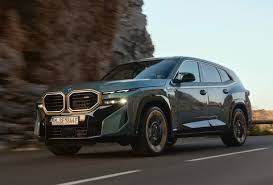
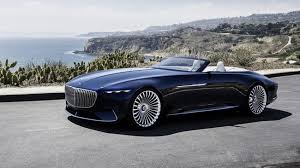

The Tourbillon’s powertrain is an engineering marvel: a naturally aspirated 8.3-liter V16 engine, developed in collaboration with Cosworth, paired with three electric motors. This complex hybrid system collectively churns out an incredible 1,800 horsepower. Two electric motors power the front axle, while a third is integrated into the rear gearbox, providing an instant torque boost and all-wheel-drive traction. This allows the Tourbillon to rocket from 0-60 mph in under 2.0 seconds, a blistering acceleration figure for a car of its opulent stature. Its confirmed top speed of 277 mph (446 km/h) showcases Bugatti’s unwavering commitment to pushing boundaries, even as it embraces electrification. The design, though distinctly Bugatti, evolves the iconic horseshoe grille and C-line signature with more aggressive aerodynamics and a sculpted, almost organic form. Priced well north of $4 million, the Tourbillon is more than a hypercar; it’s a piece of bespoke engineering and a prime example of automotive luxury investment, offering an unparalleled blend of hyper-performance, exquisite craftsmanship, and a powertrain that bridges the gap between the internal combustion era and the electrified future. We anticipate even more potent iterations from Bugatti in the coming years, much like their evolution of the Chiron.
Hennessey Venom F5 – Verified 272 mph (438 km/h), targeting 300+ mph
Hennessey Performance Engineering, based in Texas, has consistently demonstrated an audacious spirit in the quest for ultimate speed, and the Venom F5 is their most focused weapon yet. Designed from the ground up to conquer the 300 mph barrier, the F5 is an American tour de force, built with a single-minded purpose. By 2025, Hennessey has solidified its position with verified runs consistently surpassing 270 mph, and the initial 300 mph target has been, or is on the verge of being, achieved, pushing the boundaries of what’s possible for production vehicles.
The heart of the F5 is “Fury,” a monstrous 6.6-liter twin-turbocharged V8 engine. This bespoke powerplant unleashes an earth-shattering 1,817 horsepower and 1,617 Nm (1,193 lb-ft) of torque. This immense power, combined with its lightweight carbon fiber monocoque chassis (weighing just 1,360 kg or 2,998 lbs), enables the F5 to launch from 0-60 mph in a blinding 2.6 seconds. The car’s name, F5, refers to the most powerful category of tornado, an apt description for its unbridled force. Its aerodynamic profile is meticulously crafted for minimal drag at extreme speeds, ensuring stability and control as it approaches the upper echelons of velocity. For those seeking the pinnacle of track-focused performance and a testament to American automotive engineering breakthroughs, the Hennessey Venom F5 stands as an audacious challenger, perpetually pushing the envelope in the relentless pursuit of ultimate speed.
Bugatti Mistral – 270 mph (435 km/h)
The Bugatti Mistral holds a unique and poignant position in automotive history as the fastest convertible car in the world, capable of a blistering 270 mph. It also represents a significant turning point: the Mistral is the very last Bugatti that will ever feature the legendary 8.0-liter quad-turbocharged W16 engine. This makes it not just a hypercar, but a collectible artifact, a final roar from an engine that defined an era of unparalleled luxury and performance.
Limited to just 99 units, each an exquisite piece of bespoke hypercar market art, the Mistral marries extreme open-top speed with Bugatti’s hallmark opulence. Its W16 engine produces a formidable 1,600 horsepower and 1,600 Nm (1,180 lb-ft) of torque, channeled to all four wheels via a responsive seven-speed automatic gearbox. The engineering challenge of maintaining structural rigidity and aerodynamic stability at 270 mph without a fixed roof is immense, yet Bugatti’s mastery is evident in every curve and component. Driving the Mistral at such speeds, with the wind literally rushing over the cockpit, must be the most exhilarating open-air experience imaginable, a symphony of power and prestige. For collectors and enthusiasts, the Mistral is an ultimate automotive luxury investment, not only for its breathtaking performance but for its status as the glorious swan song of the iconic W16 engine.
Rimac Nevera R – 267 mph (430 km/h)
From the innovative minds at Rimac Automobili in Croatia comes the Nevera R, an even more extreme evolution of what was already a groundbreaking electric hypercar. The original Nevera redefined expectations for EV performance, but the “R” pushes those boundaries into truly insane territory, showcasing the rapid advancements in electric hypercar technology.
The Nevera R features four independent electric motors, one for each wheel, generating an astonishing combined output of 2,107 horsepower—a significant bump from the already potent 1,914 hp of the standard Nevera. This monumental power allows the Nevera R to achieve a verified top speed of 267 mph (430 km/h) and a jaw-dropping 0-60 mph acceleration in a blistering 1.7 seconds, placing it firmly among the fastest accelerating vehicles ever conceived. Rimac’s proprietary battery technology, advanced thermal management systems, and sophisticated torque vectoring (which Rimac calls All-Wheel Torque Vectoring 2) are critical to harnessing this colossal power, ensuring both performance and stability. The Nevera R isn’t just about raw speed; it’s a technological tour de force, demonstrating the true potential of next-gen electric powertrains and proving that electric propulsion can deliver an unparalleled, visceral driver experience. Its relentless pursuit of performance continues to challenge conventional wisdom about what an electric car can be.
Aspark Owl – 256 mph (413 km/h)
The Aspark Owl, hailing from Japan, is a testament to the fact that innovation in the hypercar space isn’t limited to the traditional European powerhouses. This small-volume manufacturer has delivered a truly unique and visually arresting electric hypercar that pushes the limits of design and performance. Often flying under the radar, the Owl represents a fresh perspective on what an elite performance car can offer.
The Owl is a sleek, low-slung EV, almost impossibly sculpted, designed for aerodynamic efficiency and visual drama. Power comes from four electric motors, collectively generating an immense 1,953 horsepower. This translates to an electrifying 0-60 mph time of 1.7 seconds, matching some of the world’s most extreme vehicles, before it blasts on to a road-legal top speed of 256 mph (413 km/h). While Aspark has also demonstrated an even faster, track-only variant, the Owl SP600, which has achieved 272 mph, the road-legal version’s capabilities are remarkable in themselves. The Owl’s focus isn’t just on power; its carbon fiber monocoque chassis, ultra-low ride height, and meticulous attention to detail in its construction exemplify precision automotive engineering breakthroughs. It’s a compelling example of how diverse the landscape of electric hypercar technology has become, offering a distinct blend of Japanese craftsmanship and cutting-edge EV performance.
McLaren Speedtail – 250 mph (402 km/h)
McLaren, a brand steeped in racing heritage, created the Speedtail not merely to chase top speed records, but to redefine the concept of the “Hyper-GT.” Despite this, it remains the fastest road car McLaren has ever built, achieving an extraordinary 250 mph (402 km/h). Its design philosophy is an homage to aerodynamic efficiency and the ultimate grand touring experience, setting it apart in a world often dominated by raw numbers.
The Speedtail is a true spiritual successor to the legendary McLaren F1, most notably in its distinctive three-seat cockpit layout with the driver centrally positioned. This unique configuration enhances both driving engagement and passenger experience. Powering the Speedtail is a hybridized twin-turbocharged 4.0-liter V8 engine, delivering a combined 1,070 horsepower and 1,150 Nm (848 lb-ft) of torque. However, the Speedtail’s true genius lies in its stunning, elongated “streamline” bodywork. Devoid of traditional drag-inducing wings, its seamless carbon fiber panels and active aerodynamic elements (like the flexible carbon fiber “ailerons” at the rear) minimize drag to an absolute minimum, allowing it to slice through the air with unparalleled grace. The Speedtail is an ode to the “art of aerodynamic efficiency,” a testament to McLaren’s commitment to creating not just fast cars, but exquisitely designed, highly functional pieces of collectible performance vehicles. It’s an ultra-exclusive machine, merging extreme speed with luxurious grand touring capability, offering a truly unique driver experience.
Koenigsegg Regera – 250 mph (402 km/h)
The Koenigsegg Regera, meaning “to reign” in Swedish, is another marvel from the innovative minds at Koenigsegg, sharing the 250 mph top speed with the McLaren Speedtail. However, its approach to achieving this velocity is fundamentally different and uniquely Koenigsegg. The Regera completely re-imagined the conventional powertrain, introducing a revolutionary system known as Koenigsegg Direct Drive (KDD).
Unlike any other car on this list, the Regera largely eliminates the traditional multi-gear transmission. It uses a twin-turbocharged 5.0-liter V8 engine, similar to the Jesko, combined with three powerful electric motors, producing a combined output of 1,500 horsepower and an astounding 2,000 Nm (1,475 lb-ft) of torque. This hybrid powertrain is coupled directly to the rear axle via a single fixed-gear ratio, essentially allowing the car to go from 0 to its 250 mph top speed primarily in one continuous surge, much like an electric car. A hydraulic coupling and a small reduction gear manage initial acceleration and low-speed driving. This ingenious KDD system drastically reduces powertrain weight and improves efficiency, delivering a remarkably smooth and linear power delivery unlike anything else. The Regera is a groundbreaking piece of automotive engineering breakthroughs, a bold experiment that proved immensely successful. Its blend of extreme power, pioneering EV performance integration, and radical transmission design secures its place as one of the most technologically fascinating and fastest hypercars in the world, offering an utterly unique driver experience in the realm of elite performance cars.
The Future of Speed: A Relentless Horizon
The year 2025 showcases a fascinating duality in the hypercar world: the continued mastery of internal combustion engines reaching their zenith, and the meteoric rise of electric powertrains pushing boundaries once thought impossible. These machines aren’t just about headline-grabbing top speeds; they represent the pinnacle of automotive innovation, utilizing aerospace-grade materials, advanced aerodynamic research, and sophisticated power management systems. Each car on this list is a testament to engineering brilliance, a symbol of human ambition, and an ultimate statement of luxury and performance.
The pursuit of speed remains an eternal quest, driving technological advancements that will eventually trickle down to more mainstream vehicles. These hypercars are more than just expensive toys; they are laboratories on wheels, constantly redefining the limits of what’s possible.
Which of these breathtaking marvels ignites your passion for speed and engineering excellence? Share your thoughts on these ultimate collectible performance vehicles, or delve deeper into our exploration of future automotive trends and luxury hypercars that continue to redefine the asphalt horizon.